All species › Passerines › Wrens › Band-backed Wren
Position in the tree Birds Aves › Birds with a flexible palate Neognathae › All other modern birds Neoaves › Landbirds Telluraves › Falcons, parrots and passerines Australaves › Falcons and passerines Eufalconimorphae › Parrots and passerines Psittacopasserae
Band-backed Wren | Campylorhynchus zonatus
Tijgerwinterkoning | Matraca tropical
The Band-backed Wren is a large, noisy wren with a black-and-white barred back and a black-spotted breast. It lives in groups in the forest canopy, from the lowlands into the mountains. In the guide area it occurs from south-eastern Mexico to western Panama.

Voice
Harsh, scratchy and rasping calls, often given by the whole group at once. The song is a series of repeated, rattling and chattering phrases.
Recording: Juan Freile — CC BY-NC-SA 4.0 · shortened to the first 60 s, mono · xeno-canto
Identification
17–19 cm. Crown and nape dark greyish-brown with pale streaks, whitish supercilium. Back black with broad dull white to buff bars; wings and tail also barred. Throat and breast whitish with dense black spots; belly, flanks and undertail coverts warm ochre to cinnamon. Bill fairly long and slightly decurved. Juveniles are more vaguely marked and less spotted.
Confusion species
Grey-barred Wren Campylorhynchus megalopterus lives in the highlands of central Mexico and has greyer barred upperparts and paler underparts. Spotted Wren Campylorhynchus gularis has a streaked, not barred, back. Other wrens in the same area are smaller and lack a barred back.
Habitat
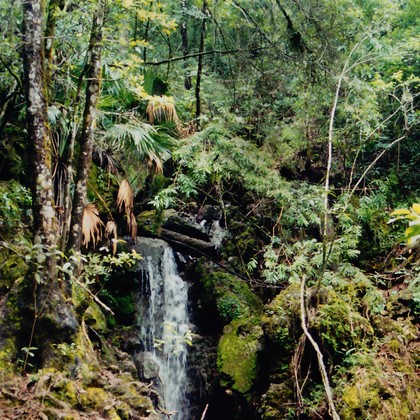
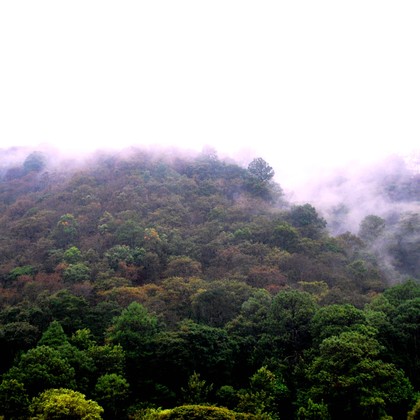
Canopy and edges of humid lowland, foothill and montane forest, also secondary forest, shade coffee and semi-open country with tall trees; in the highlands of Mexico and Guatemala also in pine-oak forest. Groups search for insects and spiders, often among epiphytes and bromeliads. Builds a domed nest in a tree.
Where the bird is most at home, classified by the vegetation units of Mexico and Central America.




Range and movements
From south-eastern Mexico (mainly Veracruz, Oaxaca, Tabasco and Chiapas, and the base of the Yucatán Peninsula) through Belize, Guatemala, Honduras and Nicaragua to Costa Rica and western Panama, mainly on the Caribbean slope; in Mexico and Guatemala also in the highlands. Outside the guide area a separate population in northern Colombia and north-western Ecuador.
- Resident
- dark = core range, pale = thinly spread
How and when to look
Usually first noticed by the noise of a foraging group; search high in trees with many epiphytes.
Conservation status
Not threatened. Common and widespread, also in man-modified landscapes with enough tall trees.
Scientific name
Campylorhynchus zonatus | (Lesson, 1832)
Lesson described the species in 1832 as Picolaptes zonatus; because it was later moved to another genus, the author and year stand in brackets. The genus Campylorhynchus was introduced in 1824 by Spix. Campylorhynchus is Greek, from kampulos 'curved' and rhunkhos 'bill', after the slightly decurved bill. zonatus is Latin for 'banded', after the black-and-white barring of the upperparts. The specimen the first description was based on came from Orizaba, Veracruz, Mexico.