All species › Passerines › Antbirds › Black Antshrike
Position in the tree Birds Aves › Birds with a flexible palate Neognathae › All other modern birds Neoaves › Landbirds Telluraves › Falcons, parrots and passerines Australaves › Falcons and passerines Eufalconimorphae › Parrots and passerines Psittacopasserae
Black Antshrike | Thamnophilus nigriceps
Zwarte mierklauwier | Batará negro
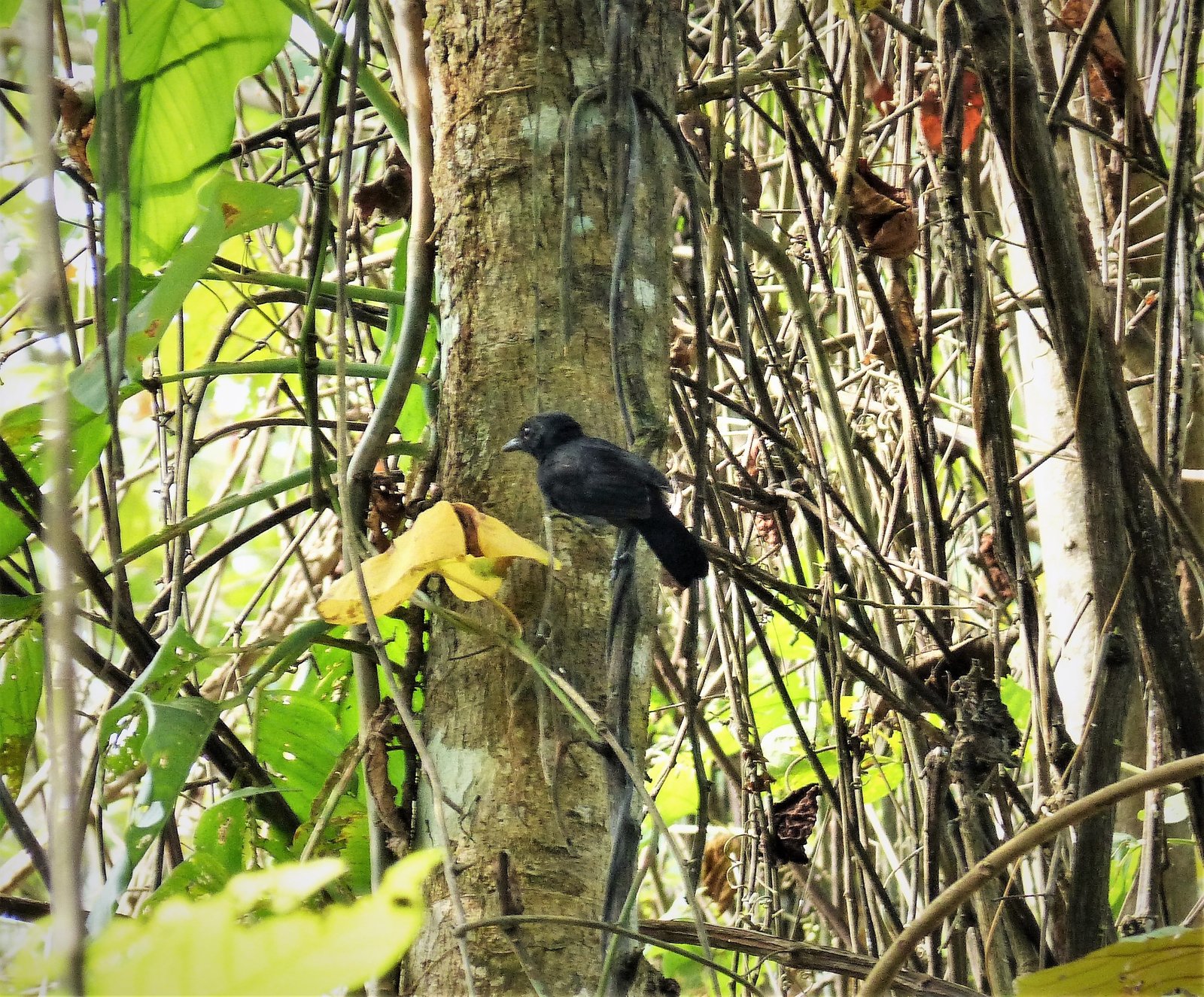
The Black Antshrike is an antshrike of dense thickets at forest edges in eastern Panama and northern Colombia. The male is entirely black; the female has a dark, streaked head and breast and rufous upperparts. It keeps hidden in dense vegetation, often near water.
Voice
Song and calls nasal, as in related antshrikes; often heard before it is seen.
Recording: Kent Livezey — CC BY-NC-SA 4.0 · shortened to the first 60 s, mono · xeno-canto
Identification
15 cm. Male: entirely black, with white on the underwing coverts that shows mainly in flight. Female: head and breast blackish with pale streaks; upperparts, wings and tail rufous; belly brownish. Bill heavy with a hooked tip.
Confusion species
The male Jet Antbird Cercomacra nigricans is also black, but slimmer, with a finer bill, white fringes on the wing coverts and white tail tips. Black-hooded Antshrike Thamnophilus bridgesi lives further west, on the Pacific slope of Costa Rica and western Panama, and has white spots on the wing.
Habitat
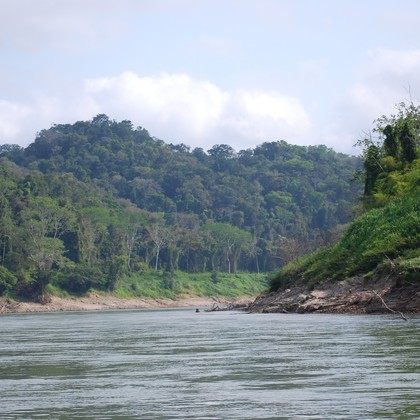
Dense thickets, vine tangles and second growth at forest edges and in clearings in the lowlands, often along rivers and in damp areas. It eats insects and other invertebrates.
Where the bird is most at home, classified by the vegetation units of Mexico and Central America.


Range and movements
In the guide area only in eastern Panama. Outside the guide area in northern Colombia.
- Resident
- dark = core range, pale = thinly spread
How and when to look
Listen first for the song at overgrown forest edges and along rivers in eastern Panama, then wait patiently for the bird to show briefly.
Conservation status
Not threatened. In the guide area local and restricted to eastern Panama.
Scientific name
Thamnophilus nigriceps | Sclater, 1869
Sclater described the species in 1869 and placed it straight away in the genus where it still stands. The genus Thamnophilus was introduced in 1816 by Vieillot. Thamnophilus is Greek, from thamnos 'bush' and philos 'loving': 'bush-lover'. nigriceps is Latin, from niger 'black' and -ceps '-headed', after the male's black head. The specimen the first description was based on came from Barranquilla, Colombia (originally given in error as Bogotá).