All species › Passerines › Wrens › Cozumel Wren
Position in the tree Birds Aves › Birds with a flexible palate Neognathae › All other modern birds Neoaves › Landbirds Telluraves › Falcons, parrots and passerines Australaves › Falcons and passerines Eufalconimorphae › Parrots and passerines Psittacopasserae
Cozumel Wren | Troglodytes beani
Cozumelwinterkoning | Chivirín de Cozumel
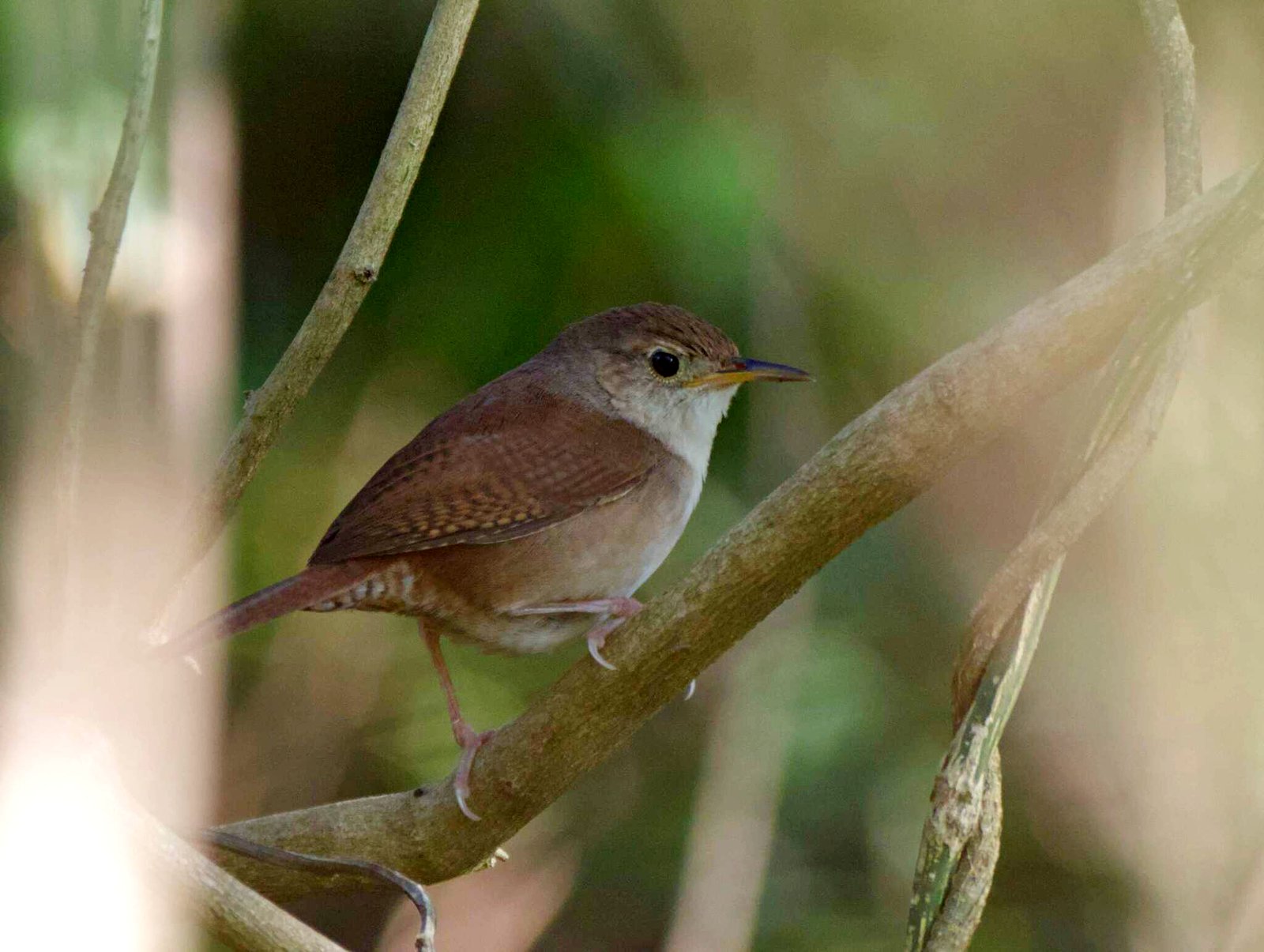
The Cozumel Wren is a house wren found only on the island of Cozumel off the coast of Quintana Roo. It closely resembles the house wrens of the mainland, but is slightly larger and has a longer bill. On the island it is a common resident of scrub, forest edges and gardens.
Voice
A lively, bubbling song of rapid trills and chattering notes, similar to that of other house wrens. Calls include a harsh, rattling chatter.
Recording: Ryan Andrews — CC BY-NC 4.0 · converted to mono · iNaturalist
Identification
12–13 cm. Upperparts warm brown, wings and tail with narrow dark bars. A faint pale supercilium. Throat and breast pale buffy brown, flanks and undertail coverts warmer brown with dark barring. Bill thin, slightly curved and fairly long. The tail is often cocked. Male and female are alike.
Confusion species
No other house wren occurs on Cozumel. Southern House Wren Troglodytes musculus and Northern House Wren Troglodytes aedon on the mainland are slightly smaller and shorter-billed. White-bellied Wren Uropsila leucogastra of the Yucatán Peninsula has white underparts and a white supercilium.
Habitat
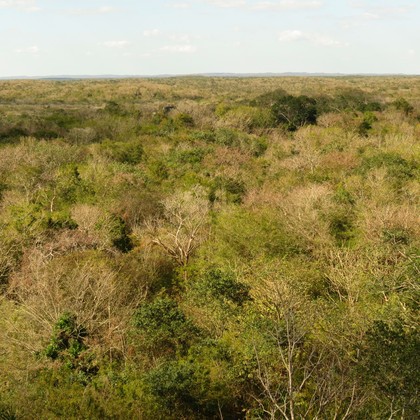
Low semi-deciduous forest, scrub, forest edges and clearings, also gardens and around houses. It forages low in vegetation for insects and spiders. Nests in cavities and crevices.
Where the bird is most at home, classified by the vegetation units of Mexico and Central America.


Range and movements
Endemic to the island of Cozumel in Mexico. Does not occur outside the guide area.
- Resident
- dark = core range, pale = thinly spread
How and when to look
Common on Cozumel and often heard in scrub and gardens; the ferry from Playa del Carmen makes the island easy to reach. Note the long bill.
Conservation status
Not threatened. Its range is limited to a single island, which makes it vulnerable to habitat loss through development and to severe hurricanes.
Scientific name
Troglodytes beani | Ridgway, 1885
Ridgway described the species in 1885 and placed it straight away in the genus where it still stands. The genus Troglodytes was introduced in 1809 by Vieillot. Troglodytes is Greek, from troglē 'hole, crevice' and dyein 'to creep into': 'cave-dweller', after the habit of disappearing into crevices and holes while foraging. beani honours the American ichthyologist Tarleton Hoffman Bean (1846–1916), of the Smithsonian and the US Fish Commission. The specimen the first description was based on came from Cozumel Island, Quintana Roo, Mexico.