All species › Passerines › New World warblers › Fan-tailed Warbler
Position in the tree Birds Aves › Birds with a flexible palate Neognathae › All other modern birds Neoaves › Landbirds Telluraves › Falcons, parrots and passerines Australaves › Falcons and passerines Eufalconimorphae › Parrots and passerines Psittacopasserae
Fan-tailed Warbler | Basileuterus lachrymosus
Waaierzanger | Chipe de roca
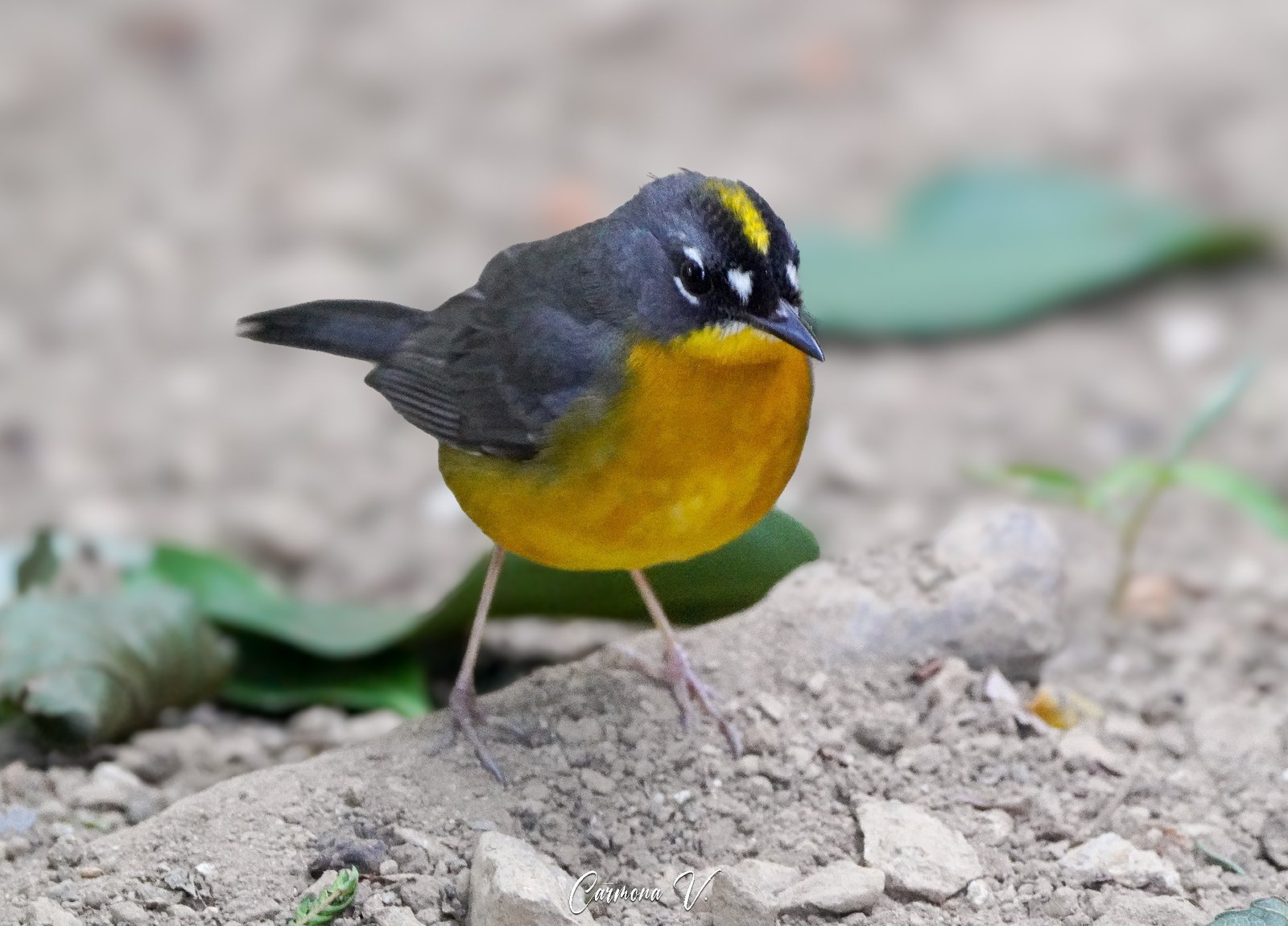
The Fan-tailed Warbler is a large warbler with slate-grey upperparts, ochre underparts and a long, dark, white-tipped tail that it constantly fans. It lives close to the ground in steep, rocky ravines in forest, from western and north-eastern Mexico to Nicaragua.
Voice
The song is a series of clear, whistled notes that rises and often ends with an emphatic, falling note, roughly swee swee swee swee-chew. The call is a high, thin tseep.
Recording: Dario Cantu — CC BY-NC-SA 4.0 · converted to mono · xeno-canto
Identification
14–16 cm. Upperparts slate-grey, head darker with a yellow crown patch bordered with black, white spots in front of and above the eye and a white crescent below it. Throat yellow, breast warm ochre-orange, belly yellow. Tail long and blackish, with white tips to the outer feathers, often fanned and swung from side to side. Sexes alike; young birds duller, with little colour on the head.
Confusion species
Slate-throated Whitestart Myioborus miniatus also fans its tail, but has a red or orange-red belly, much white in the outer tail feathers and a blackish throat. Golden-crowned Warbler Basileuterus culicivorus is smaller, olive-green above, with a yellow crown stripe between black stripes and no white tail tips.
Habitat
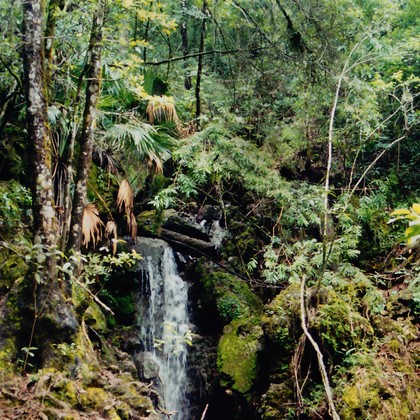
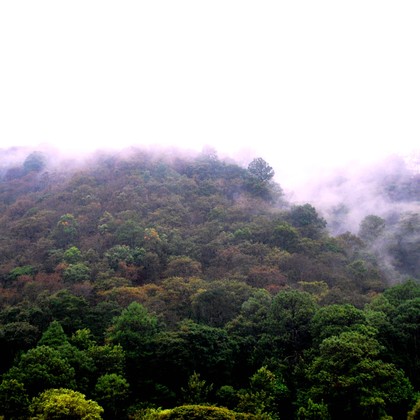
Shady, rocky ravines and stream valleys in humid and semi-dry forest and cloud forest, mainly from about 300 to 2000 m. It searches for insects on the ground and low in the undergrowth, often on boulders and steep slopes, and sometimes follows army-ant swarms.
Where the bird is most at home, classified by the vegetation units of Mexico and Central America.




Range and movements
Endemic to Mexico and northern Central America. On the Pacific slope from southern Sonora and Chihuahua, on the Atlantic slope from southern Tamaulipas and San Luis Potosí, south through Oaxaca and Chiapas to Guatemala, El Salvador, Honduras and Nicaragua.
- Resident
- dark = core range, pale = thinly spread
How and when to look
Best found by listening for the whistled song in wooded ravines; the bird often shows itself on a boulder while fanning its tail.
Conservation status
Not threatened (LC). Locally fairly common, but tied to forest in ravines and therefore sensitive to logging.
Scientific name
Basileuterus lachrymosus | Bonaparte, 1850
Bonaparte described the species in 1850 and placed it straight away in the genus where it still stands. The genus Basileuterus was introduced in 1848 by Cabanis. Basileuterus is Greek, from basileuteros 'more kingly', after the coloured crown stripe recalling a little crown. lachrymosus is Latin for 'tearful', after the white spots before and below the eye, like tears. The specimen the first description was based on came from Laguna Huetulacan, Veracruz, Mexico.