All species › Waders, gulls and terns › Skimmers, noddies, terns and gulls › Glaucous-winged Gull
Position in the tree Birds Aves › Birds with a flexible palate Neognathae › All other modern birds Neoaves › Birds of the elements Elementaves › Cranes and waders Gruimorphae
Glaucous-winged Gull | Larus glaucescens
Beringmeeuw | Gaviota ala glauca
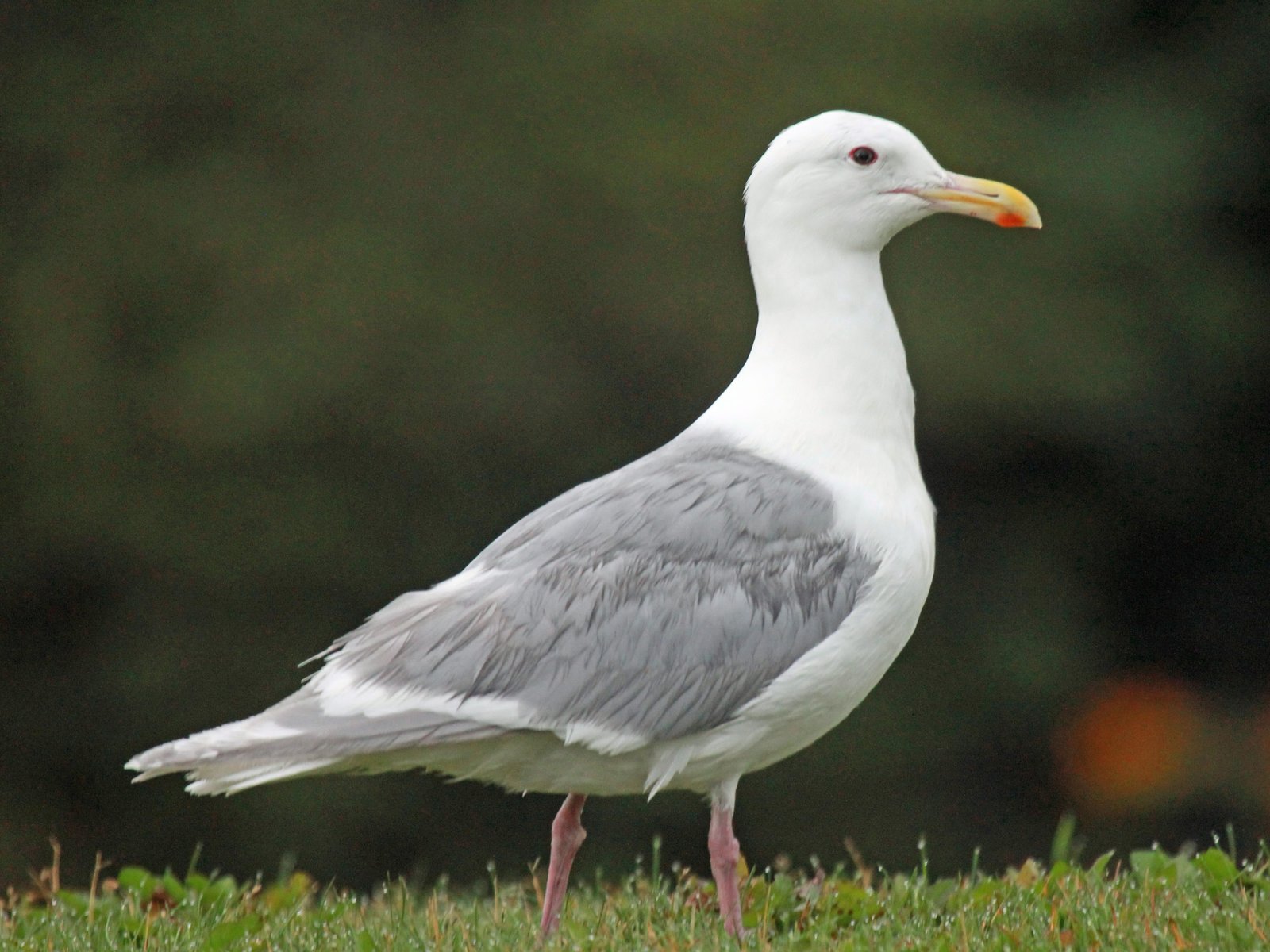
The Glaucous-winged Gull is a large gull of the northern Pacific, with grey rather than black wingtips. It breeds from the Bering Sea to the coast of Washington and winters south to Mexico. In the guide area it is a winter visitor, mainly in northern Baja California and the Gulf of California; most of the birds are immatures.
Voice
A low, hoarse kyow and a long call of laughing notes, lower and slower than that of American Herring Gull.
Recording: Rachel Thurman — CC BY 4.0 · converted to mono · xeno-canto
Identification
61–68 cm, a large, heavy gull with a thick yellow bill with a red spot, pink legs and a dark eye. Adults have a mid-grey mantle and wings, with grey wingtips as dark as the mantle, with white spots. In winter the head and neck are dull brownish-grey mottled. Juveniles are uniform pale grey-brown, with primaries and tail the same tone as the rest of the plumage, and a black bill.
Confusion species
Hybrids with Western Gull Larus occidentalis are common and have darker wingtips and often a darker mantle; they occur regularly in north-western Mexico. Iceland Gull Larus glaucoides is smaller, with a rounder head and a shorter bill. American Herring Gull Larus smithsonianus has black wingtips and a pale eye; its juveniles are darker brown with dark primaries.
Habitat
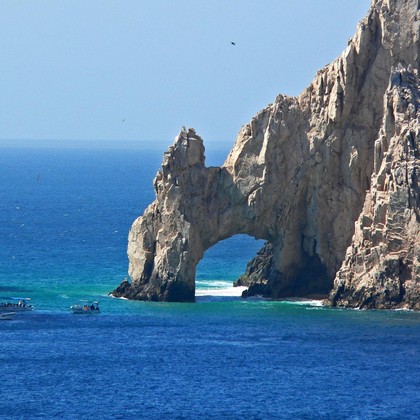
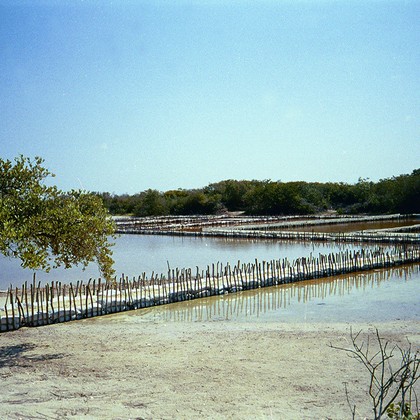
Coastal waters, beaches, rocky coasts, bays, harbours and rubbish dumps; rarely inland. Feeds on fish, invertebrates, carrion and refuse.
Where the bird is most at home, classified by the vegetation units of Mexico and Central America.



Range and movements
In winter mainly along the coast of Baja California and in the northern Gulf of California, and in smaller numbers along Baja California Sur and the coast of Sonora; further south, to Sinaloa, Nayarit, Jalisco and Colima, rare. Outside the guide area the species breeds along the coasts of the northern Pacific, from the Commander Islands and the Bering Sea to Washington, and winters along the Pacific coast to California and Japan.
- Winter visitor (c. Oct–Mar)
- dark = core range, pale = thinly spread
How and when to look
Harbours and beaches near Ensenada and in the northern Gulf of California offer the best chance in winter. The grey wingtips, as dark as the mantle, are the best feature in adults.
Conservation status
Not threatened globally. The population is large and fairly stable. In the guide area a winter visitor with no breeding population.
Scientific name
Larus glaucescens | Naumann, 1840
Naumann described the species in 1840 and placed it straight away in the genus where it still stands. The genus Larus was introduced in 1758 by Linnaeus. Larus is Latin, from Ancient Greek laros, and appears to have referred to a gull or another large seabird. glaucescens is Latin for 'becoming glaucous', from Greek glaukos, after the pale grey wingtips lacking black. The specimen the first description was based on came from North America (not further specified).