All species › Passerines › Swallows › Grey-breasted Martin
Position in the tree Birds Aves › Birds with a flexible palate Neognathae › All other modern birds Neoaves › Landbirds Telluraves › Falcons, parrots and passerines Australaves › Falcons and passerines Eufalconimorphae › Parrots and passerines Psittacopasserae
Grey-breasted Martin | Progne chalybea
Grijsborstpurperzwaluw | Golondrina acerada
The Grey-breasted Martin is a large swallow of open country, villages and towns in the lowlands. Small groups often perch on power lines and rooftops and hunt large insects with alternating quick wingbeats and long glides. In the guide area it breeds from Mexico to Panama.
Voice
A rich, throaty twittering and short, rolling churr calls; singing males give a series of gurgling notes, often in the early morning.
Recording: Jacob Wijpkema — CC BY-NC-SA 4.0 · shortened to the first 60 s, mono · xeno-canto
Identification
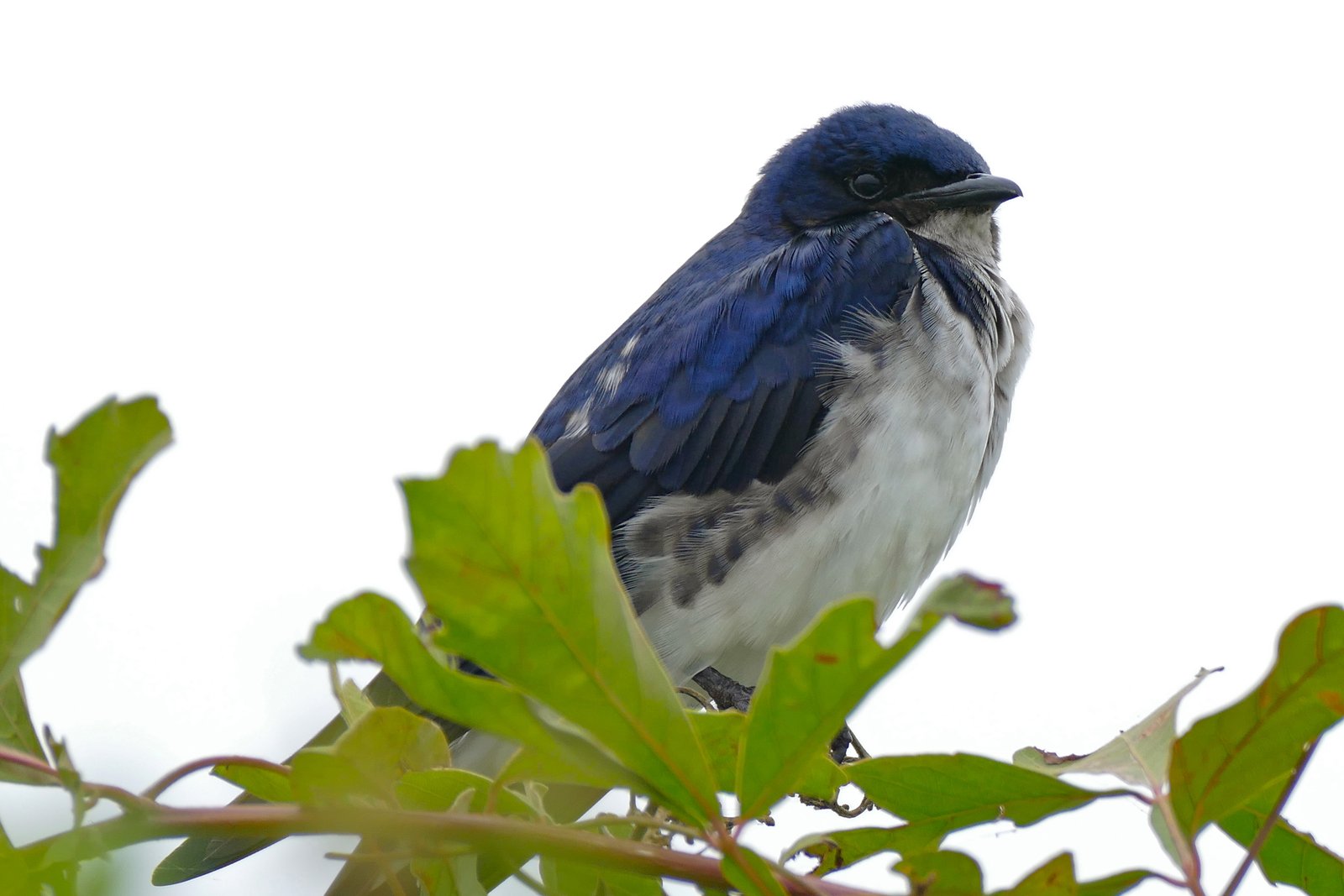
16–18 cm, with broad wings and a clearly forked tail. The male has glossy steel-blue head and upperparts, a grey-brown throat and breast and a white belly. Females and young birds are duller, with less gloss on the back and a dingier grey-brown breast. There is no pale collar on the nape.
Confusion species
Female Purple Martin Progne subis is very similar but has a paler grey band across the forehead and nape and a less sharply defined, often faintly streaked belly; the male is entirely blue-black. Male Sinaloa Martin Progne sinaloae (mountains of western Mexico) has a blue-black throat and breast sharply contrasting with the white belly. Brown-chested Martin Progne tapera has dull grey-brown upperparts without gloss and a white throat with a brown breast band.
Habitat
Open and semi-open country in the lowlands and lower slopes: villages and towns, plazas, pastures with trees, riverbanks, forest edges and coasts; locally higher. It hunts larger flying insects in the air. It nests in cavities: old woodpecker holes, holes in buildings, under roof tiles and in palms.
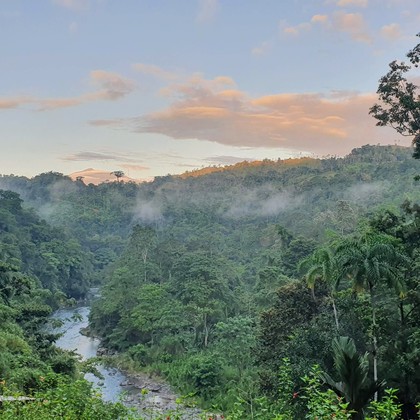
Where the bird is most at home, classified by the vegetation units of Mexico and Central America.




Range and movements
Breeds in much of lowland Mexico and almost all of Central America to Panama. Birds from the north of the range leave after the breeding season; further south the species is present all year. Outside the guide area in much of South America, south to northern Argentina.
- Resident
- dark = core range, pale = thinly spread
How and when to look
Easiest to find on wires and roofs in lowland villages and towns, for example around the central plaza. It is common around the Panama Canal and in the Caribbean lowlands of Costa Rica.
Conservation status
Not threatened. Common and benefits from buildings as nest sites; no serious threats are known in the guide area.
Scientific name
Progne chalybea | (Gmelin, 1789)
Gmelin described the species in 1789 as Hirundo chalybea; because it was later moved to another genus, the author and year stand in brackets. The genus Progne was introduced in 1826 by Boie. Progne (also Procne) is the daughter of King Pandion of Athens in Greek myth, who was turned into a swallow; in Latin also a word for 'swallow'. chalybea is Latin for 'steel-coloured', from Greek khalups 'steel', after the steel-blue gloss of the upperparts. The specimen the first description was based on came from Cayenne, French Guiana.