All species › Passerines › Wrens › Grey-breasted Wood Wren
Position in the tree Birds Aves › Birds with a flexible palate Neognathae › All other modern birds Neoaves › Landbirds Telluraves › Falcons, parrots and passerines Australaves › Falcons and passerines Eufalconimorphae › Parrots and passerines Psittacopasserae
Grey-breasted Wood Wren | Henicorhina leucophrys
Grijze boswinterkoning | Chivirín pecho gris
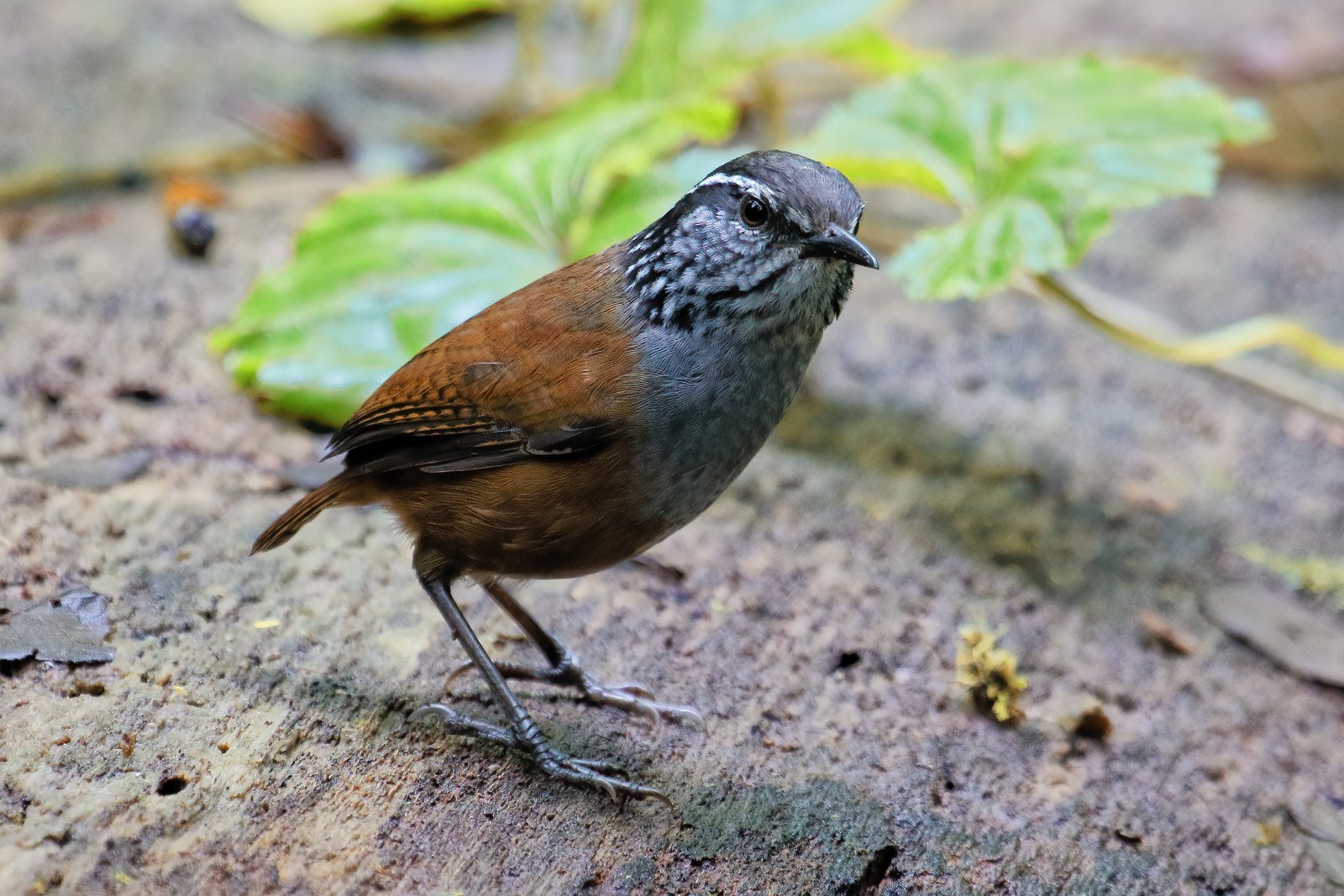
The Grey-breasted Wood Wren is a small, stocky wren of montane forest, with a very short tail, a black-and-white streaked head and a grey breast. It lives in the dense undergrowth of cloud forest, where it is one of the most frequently heard birds.
Voice
A loud, rich and varied series of clear whistled phrases, often in duet; heard almost everywhere in montane forest. Calls a dry tick and a harsh rattle.
Recording: Juan Freile — CC BY-NC-SA 4.0 · converted to mono · xeno-canto
Identification
10–11 cm. Tail very short, often cocked. Crown brown to dark brown, white supercilium, cheeks streaked black and white. Throat white with fine black streaks, breast and belly grey, flanks and lower belly brown. Back chestnut-brown, wings and tail with narrow black bars. Legs fairly long. Sexes alike.
Confusion species
White-breasted Wood Wren Henicorhina leucosticta has a clean white breast and lives lower, mainly in lowland and foothill forest. The nightingale-wrens Microcerculus lack the streaked head. Ochraceous Wren Troglodytes ochraceus and Rufous-browed Wren Troglodytes rufociliatus have a buff or rufous supercilium and a longer tail and forage mainly among moss and epiphytes higher up.
Habitat
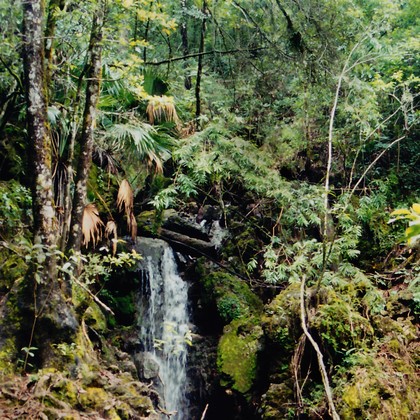
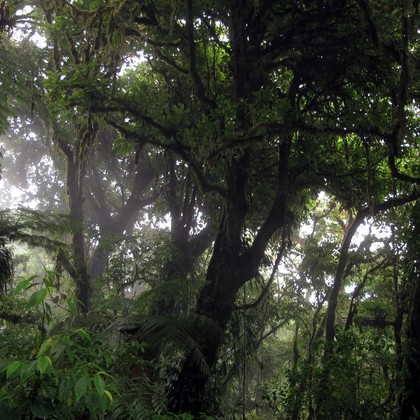
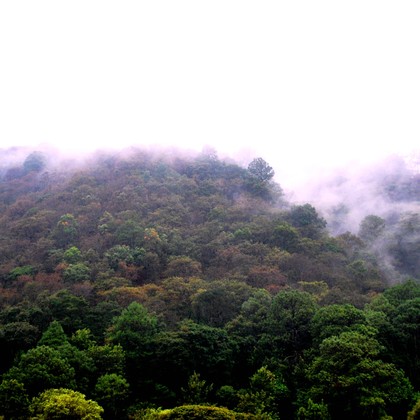
Dense undergrowth, bamboo and thickets in humid montane and cloud forest, also forest edges and scrubby clearings, from the upper foothills to just below the treeline. It forages on and just above the ground for insects and spiders.
Where the bird is most at home, classified by the vegetation units of Mexico and Central America.

Range and movements
Mountains of Mexico, from the west and centre of the country southwards, through the highlands of Central America to western Panama, with scattered populations in eastern Panama. Outside the guide area in the Andes from Venezuela to Bolivia.
- Resident
- dark = core range, pale = thinly spread
How and when to look
Common in cloud forest at Monteverde and in the Talamanca Mountains of Costa Rica, and in the Chiriquí highlands of Panama. Follow the loud song and wait near dense undergrowth.
Conservation status
Not threatened. Widespread and common in montane forest; tolerates forest edges and secondary growth.
Scientific name
Henicorhina leucophrys | (Tschudi, 1844)
Tschudi described the species in 1844 as Troglodytes leucophrys; because it was later moved to another genus, the author and year stand in brackets. The genus Henicorhina was introduced in 1868 by Sclater & Salvin. Henicorhina is Greek, from henikos 'singular, unique' and rhis, rhinos 'nostrils'; a replacement name for the preoccupied Heterorhina ('different nostrils'). leucophrys is Greek, from leukos 'white' and ophrus 'eyebrow', after the white supercilium. The specimen the first description was based on came from Peru (not further specified).