All species › Waders, gulls and terns › Skimmers, noddies, terns and gulls › Lesser Black-backed Gull
Position in the tree Birds Aves › Birds with a flexible palate Neognathae › All other modern birds Neoaves › Birds of the elements Elementaves › Cranes and waders Gruimorphae
Lesser Black-backed Gull | Larus fuscus
Kleine mantelmeeuw | Gaviota sombría
The Lesser Black-backed Gull is a European gull that has wintered in North America in ever larger numbers since the 1970s. It has also increased strongly in the guide area: on the north coast of Yucatán it is locally common in winter, and in Panama it is seen regularly. The birds come from Iceland and north-western Europe, and possibly also from Greenland.
Voice
A low, nasal kyow and a long call of laughing notes, deeper and rougher than that of American Herring Gull.
Recording: Francesco Sottile — CC BY-NC-SA 4.0 · converted to mono · xeno-canto
Identification
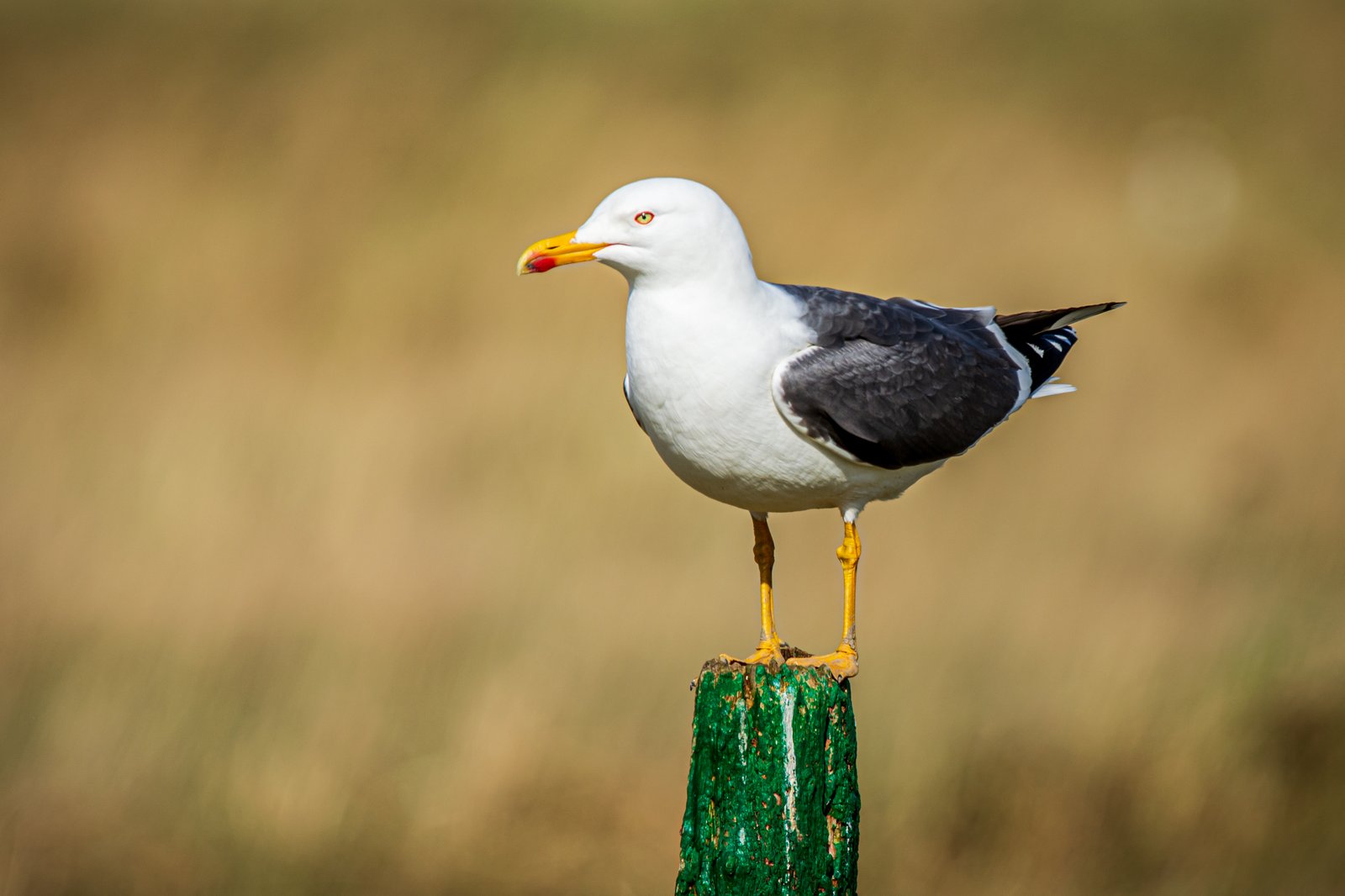
52–64 cm, a slim gull with long wings projecting well beyond the tail, a yellow bill with a red spot, yellow legs and a pale yellow eye. Adults have a slate-grey to blackish mantle and wings, with small white spots in the wingtip and a white trailing edge; in winter the head is densely streaked brown, especially around the eye. Birds in the Americas belong mainly to the subspecies L. f. graellsii, with a slate-grey mantle. Juveniles are dark grey-brown with a black bill, dark inner primaries without a pale window, a white rump and a broad black tail band.
Confusion species
Kelp Gull Larus dominicanus and Western Gull Larus occidentalis are heavier, with a thicker bill, shorter wings and greenish-yellow and pink legs respectively. Yellow-footed Gull Larus livens also has yellow legs, but is heavier and lives in the Gulf of California. Juveniles resemble juvenile American Herring Gulls Larus smithsonianus, which are more uniformly brown, with a pale window in the inner primaries and a darker rump and tail.
Habitat
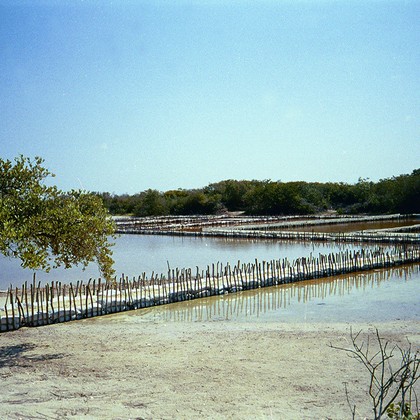
Beaches, lagoons, harbours, estuaries and mudflats, often among other gulls; also at fishing boats and rubbish dumps.
Where the bird is most at home, classified by the vegetation units of Mexico and Central America.



Range and movements
In winter mainly on the north coast of the Yucatán Peninsula, around Progreso, where it is locally common; also in smaller numbers along the Gulf coast from Tamaulipas to Campeche and in Quintana Roo, and rare in north-western and inland Mexico. In Central America scarce on the Caribbean coast of Belize and Honduras and regular, in growing numbers, on the Pacific coast of Panama, with further records from Guatemala to Costa Rica. Outside the guide area the species breeds in Iceland, northern and western Europe and Greenland, and winters from western Europe to West Africa and along the east coast of North America.
- Winter visitor (c. Oct–Mar)
- dark = core range, pale = thinly spread
How and when to look
Flocks of gulls on the beaches and in the harbours of the north coast of Yucatán offer the best chance in winter. The dark mantle and yellow legs on a slim, long-winged gull are the best features.
Conservation status
Not threatened globally. The population is large, and the number of birds wintering in the Americas has increased strongly since the 1970s. In the guide area a winter visitor with no breeding population.
Scientific name
Larus fuscus | Linnaeus, 1758
Linnaeus described the species in 1758 and placed it straight away in the genus where it still stands. He introduced the genus Larus in that same work. Larus is Latin, from Ancient Greek laros, and appears to have referred to a gull or another large seabird. fuscus is Latin for 'dark', black or brown, after the dark mantle and wings. The specimen the first description was based on came from Sweden.