All species › Waders, gulls and terns › Sandpipers and allies › Long-billed Curlew
Position in the tree Birds Aves › Birds with a flexible palate Neognathae › All other modern birds Neoaves › Birds of the elements Elementaves › Cranes and waders Gruimorphae
Long-billed Curlew | Numenius americanus
Amerikaanse wulp | Zarapito pico largo
Long-billed Curlew is the largest shorebird of North America, cinnamon-brown and with an exceptionally long, strongly curved bill. In winter it occurs in Mexico both on the coast and on the grassland and farmland of the plateau. Further south in Central America it is scarce.

Voice
A loud, rising cur-lee and a rapid, whistled series kli-li-li-li, especially when alarmed and in flight.
Recording: Paul Marvin — CC BY-NC-SA 4.0 · converted to mono · xeno-canto
Identification
50–65 cm, of which up to about 20 cm is bill in adult females; males and especially young birds have a clearly shorter bill. The bill is long and strongly decurved, dark with a pink base to the lower mandible. The plumage is warm cinnamon-brown, spotted and barred dark on the upperparts and finely streaked on the neck and breast. The head is fairly plain, without crown stripes. In flight the cinnamon underwing and cinnamon primaries stand out. Legs blue-grey.
Confusion species
Hudsonian Whimbrel Numenius hudsonicus is smaller and greyer, with a shorter bill, a striped crown and a grey-brown underwing. Marbled Godwit Limosa fedoa is almost the same colour but has a straight or slightly upturned bill. Young Long-billed Curlews with short bills resemble whimbrels but lack the clear crown stripes.
Habitat
Mudflats, sandy beaches, saline lagoons and salt pans on the coast; inland open grassland, farmland, fallow land and lake shores on the plateau. Probes deep into mud with its long bill for crabs and worms and on land picks up insects such as grasshoppers and beetles.
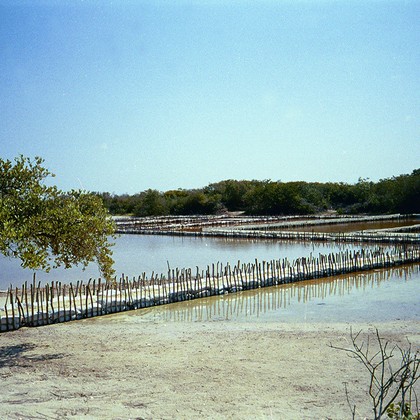
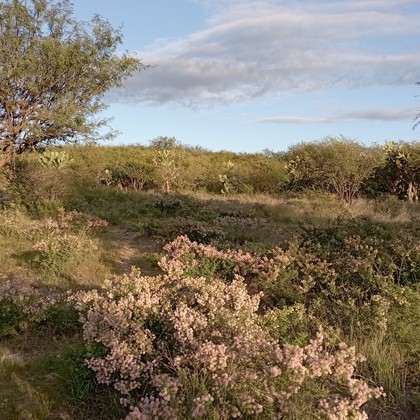
Where the bird is most at home, classified by the vegetation units of Mexico and Central America.



Range and movements
In winter most numerous in Mexico: along the coasts of Baja California, the Gulf of California and south along the Pacific coast, on the plateau of northern and central Mexico, and along the Gulf coast. Further south scarce to rare, in small numbers to Guatemala, El Salvador and Costa Rica and rarely to Panama. Outside the guide area the species breeds on the prairies and dry grasslands of the western United States and southern Canada.
- Winter visitor (c. Oct–Mar)
- dark = core range, pale = thinly spread
How and when to look
The lagoons and mudflats of Baja California and the Gulf of California, and on the plateau grassland and harvested fields, are the best places. The bill length makes the species almost unmistakable, but with young birds a second look at the head and underwing pays off.
Conservation status
Not threatened. The species declined sharply in the nineteenth century through hunting and the conversion of prairie to farmland, and its breeding range has shrunk since then. Loss of grassland on the breeding and wintering grounds is the main threat.
Scientific name
Numenius americanus | Bechstein, 1812
Bechstein described the species in 1812 and placed it straight away in the genus where it still stands. The genus Numenius was introduced in 1760 by Brisson. Numenius is Greek, from neos 'new' and mēnē 'moon', after the bill that recalls a crescent moon; noumēnios is the name of a bird in Hesychius. americanus is Latin for 'American'. The specimen the first description was based on came from New York.