All species › Passerines › Wrens › Rufous-backed Wren
Position in the tree Birds Aves › Birds with a flexible palate Neognathae › All other modern birds Neoaves › Landbirds Telluraves › Falcons, parrots and passerines Australaves › Falcons and passerines Eufalconimorphae › Parrots and passerines Psittacopasserae
Rufous-backed Wren | Campylorhynchus capistratus
Roodrugwinterkoning | Cucarachero dorsirrufo
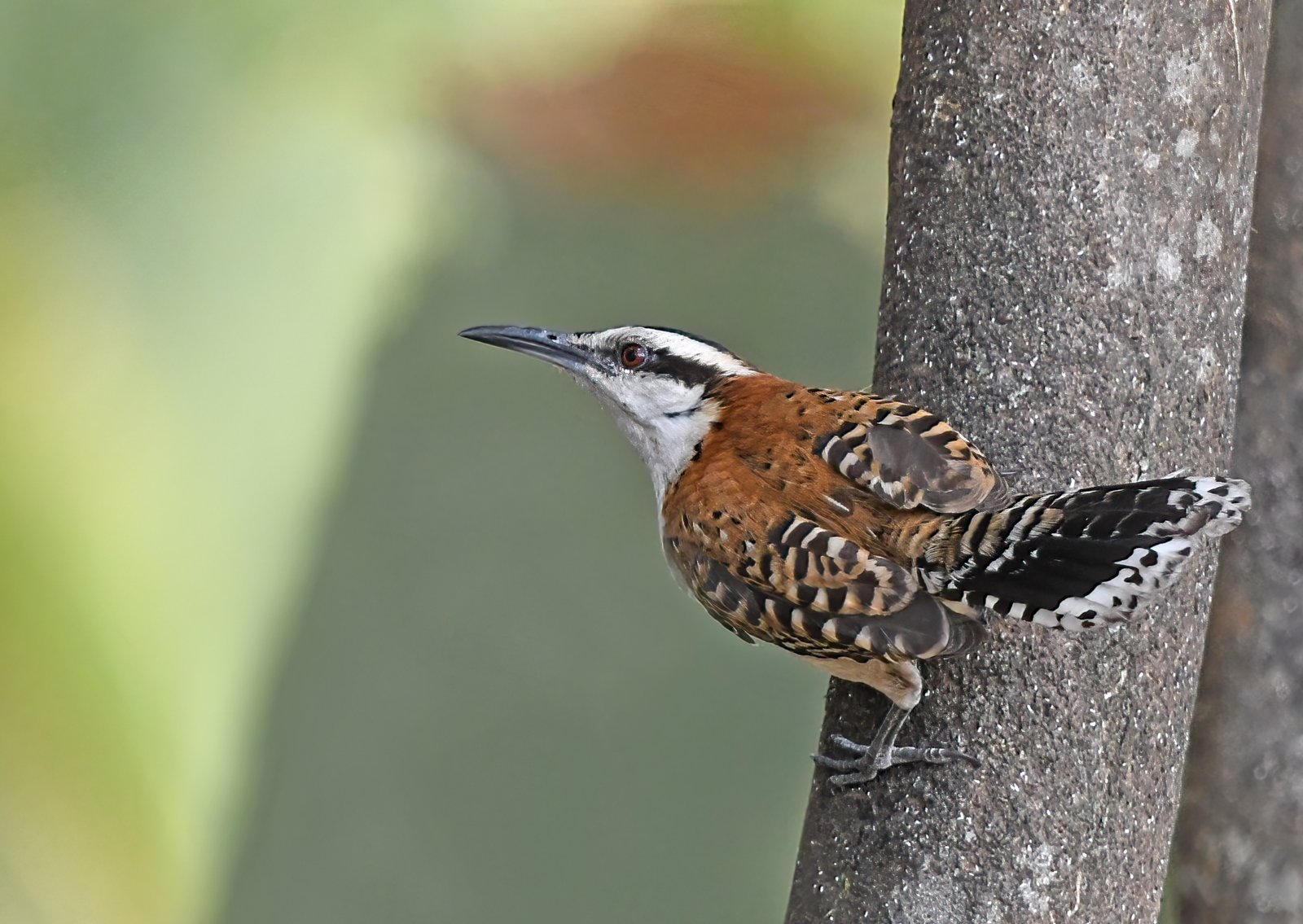
The Rufous-backed Wren is a medium-sized Campylorhynchus with a black crown, a white supercilium and a bright rufous back. It is one of the most familiar birds of the Pacific dry forest of Central America. It was long treated as a form of a single widespread species that has now been split into three species.
Voice
Loud, rhythmic, musical phrases, often as a duet between the partners, and harsh, rasping calls.
Recording: Beatrix Saadi-Varchmin — CC BY-NC-SA 4.0 · shortened to the first 60 s, mono · xeno-canto
Identification
16–18 cm. Crown and eyestripe black, broad white supercilium. Nape and back bright rufous, with some black and white markings on the lower back. Wings and tail with black bars. Underparts whitish to dull buffy white. Bill fairly long and slightly decurved.
Confusion species
Until recently Veracruz Wren Campylorhynchus rufinucha, Russet-naped Wren Campylorhynchus humilis and Rufous-backed Wren Campylorhynchus capistratus were treated as a single species; their ranges do not overlap, so location is the best guide. Banded Wren Thryophilus pleurostictus lives in the same dry forest but is smaller, with a brown crown and black bars on the flanks.
Habitat
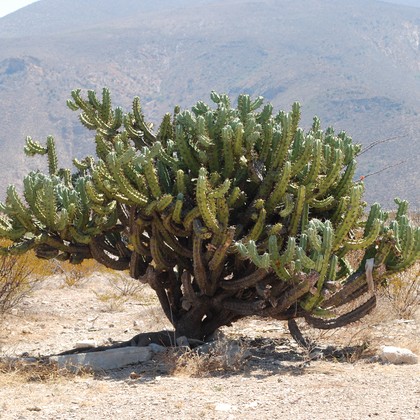
Pacific dry forest, thorn scrub, gallery forest, pastures with trees and gardens, mainly in the lowlands and in dry interior valleys. Pairs or small groups search for insects and spiders. Builds a domed nest in a tree or bush, often in a thorny acacia.
Where the bird is most at home, classified by the vegetation units of Mexico and Central America.




Range and movements
Pacific lowlands and dry interior valleys of Guatemala, El Salvador, Honduras and Nicaragua to north-western Costa Rica. Does not occur outside the guide area.
- Resident
- dark = core range, pale = thinly spread
How and when to look
Common and easy to see in the dry forest of Guanacaste in Costa Rica, for example at Palo Verde and Santa Rosa; the loud duets are often the first clue.
Conservation status
Not threatened. Common in dry forest and semi-open country, also in man-modified landscapes.
Scientific name
Campylorhynchus capistratus | (Lesson, 1842)
Lesson described the species in 1842 as Picolaptes capistrata; because it was later moved to another genus, the author and year stand in brackets. The genus Campylorhynchus was introduced in 1824 by Spix. Campylorhynchus is Greek, from kampulos 'curved' and rhunkhos 'bill', after the slightly decurved bill. capistratus is Latin for 'haltered, masked' (from capistrum 'halter'), after the dark eyestripe on the white face. The specimen the first description was based on came from El Realejo, Nicaragua.