All species › Passerines › Tyrant flycatchers and allies › Rufous-browed Tyrannulet
Position in the tree Birds Aves › Birds with a flexible palate Neognathae › All other modern birds Neoaves › Landbirds Telluraves › Falcons, parrots and passerines Australaves › Falcons and passerines Eufalconimorphae › Parrots and passerines Psittacopasserae
Rufous-browed Tyrannulet | Phylloscartes superciliaris
Roodbrauwlooftiran | Orejerito cejirrufo
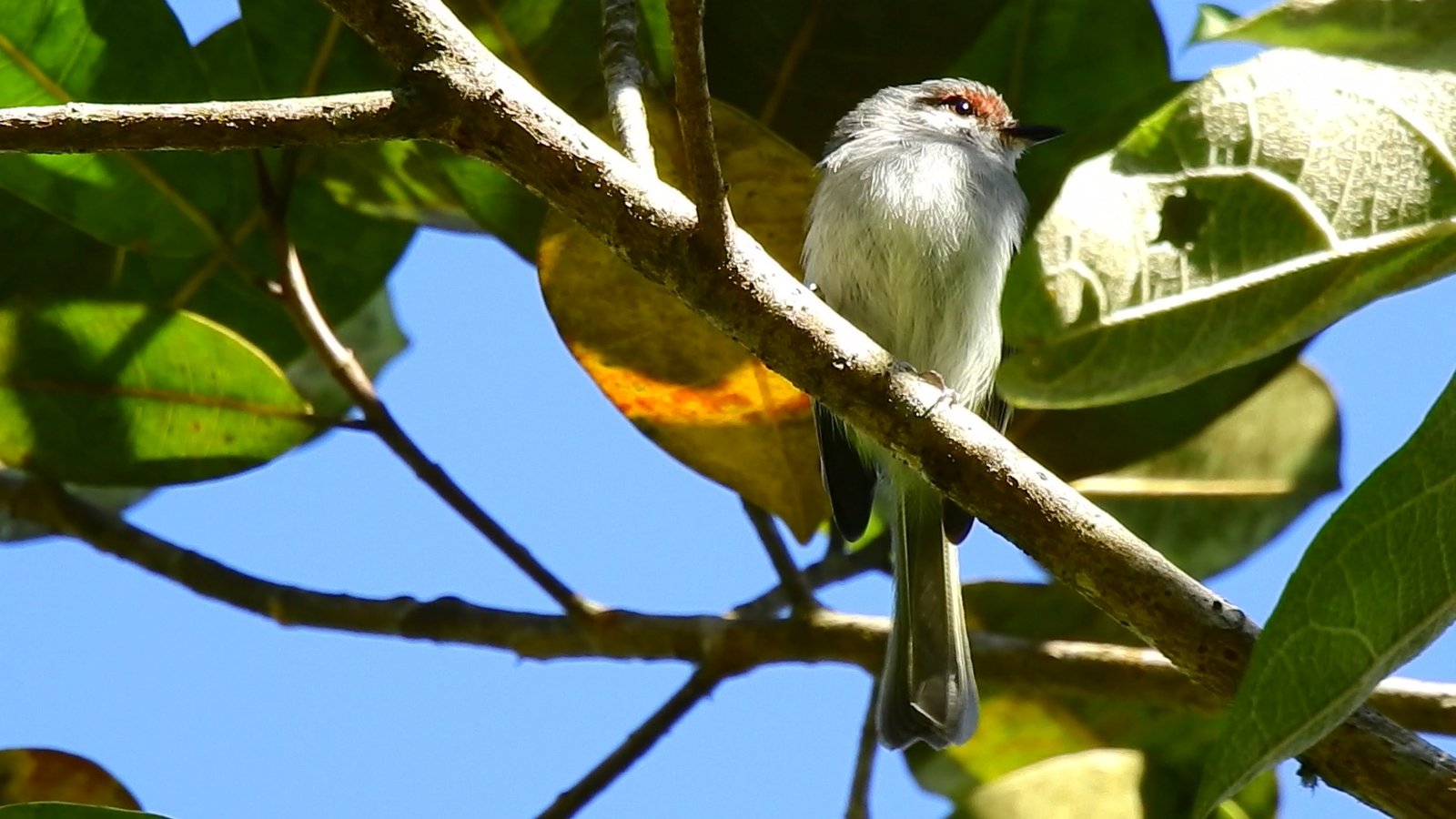
The Rufous-browed Tyrannulet is a small tyrant flycatcher of montane forest in Costa Rica and Panama, recognised by its grey head with a rufous eyebrow and a dark crescent around the ear-coverts. It moves actively through the canopy, often with mixed flocks.
Voice
Sharp, high, squeaky calls, singly or in short series.
Recording: Johan Chaves — CC BY-NC-SA 4.0 · converted to mono · xeno-canto
Identification
11 cm, with a fairly long tail and a small dark bill. Crown and hindneck grey, with a rufous forehead and a rufous stripe above the eye. The face is white, with a dark crescent bordering the ear-coverts. Back and wings olive-green, wing-bars faint. Underparts greyish-white, sometimes tinged yellowish on the belly. Male and female are alike. It often perches horizontally with the tail slightly cocked.
Confusion species
Slaty-capped Flycatcher Leptopogon superciliaris also has a grey crown and a dark ear patch, but is larger, lacks the rufous eyebrow and has a yellowish belly and distinct wing-bars. White-fronted Tyrannulet Acrochordopus zeledoni has a white eyebrow and a yellow belly. Small vireos and warblers lack the face pattern.
Habitat
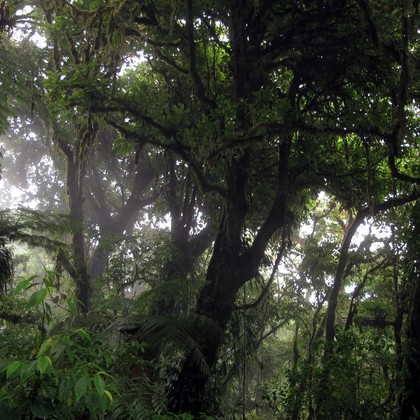
Canopy and edges of humid foothill and lower montane forest, mainly on the Caribbean side of the mountains. It searches the foliage for insects and often travels with mixed flocks of other songbirds.
Where the bird is most at home, classified by the vegetation units of Mexico and Central America.

Range and movements
In the guide area in the mountains of Costa Rica and western Panama, east to Veraguas, and separately in the mountains of Darién in eastern Panama. Outside the guide area locally in the Andes, from north-western Colombia and Venezuela to Ecuador and extreme northern Peru.
- Resident
- dark = core range, pale = thinly spread
How and when to look
In foothill forest on the Caribbean side of Costa Rica, check mixed flocks in the canopy; the rufous eyebrow and black-and-white face pattern are visible even from below.
Conservation status
Not threatened. Locally fairly common in suitable forest; dependent on forest and therefore sensitive to deforestation.
Scientific name
Phylloscartes superciliaris | (Sclater & Salvin, 1868)
Sclater & Salvin described the species in 1868 as Leptotriccus superciliaris; because it was later moved to another genus, the author and year stand in brackets. The genus Phylloscartes was introduced in 1860 by Cabanis & Heine. Phylloscartes is Greek, from phullon 'leaf' and skairō 'to skip, to dance', after its restless foraging among foliage. superciliaris is Latin for 'eyebrowed', from supercilium 'eyebrow', after the rufous eyebrow stripe. The specimen the first description was based on came from Chitra, Veraguas, Panama.