All species › Passerines › Wrens › Russet-naped Wren
Position in the tree Birds Aves › Birds with a flexible palate Neognathae › All other modern birds Neoaves › Landbirds Telluraves › Falcons, parrots and passerines Australaves › Falcons and passerines Eufalconimorphae › Parrots and passerines Psittacopasserae
Russet-naped Wren | Campylorhynchus humilis
Sclaters winterkoning | Matraca de Sclater
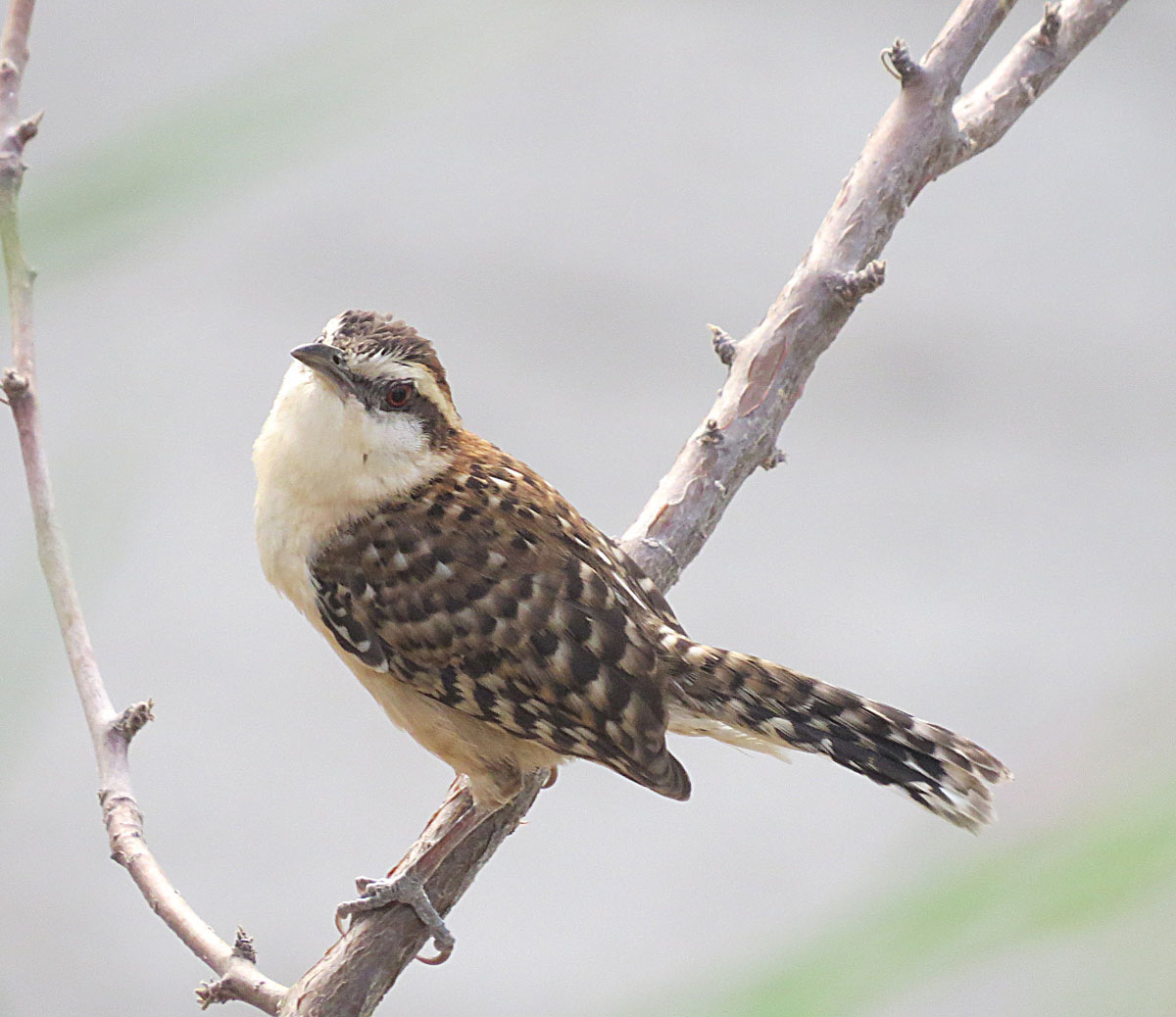
The Russet-naped Wren is a medium-sized Campylorhynchus of dry forest and scrub along the Pacific slope of southern Mexico. It was long treated as a form of a single widespread species that has now been split into three species. It is the smallest and least contrastingly marked of the three.
Voice
Loud, rhythmic, musical phrases, often as a duet between the partners, mixed with harsh, rasping calls.
Recording: Richard E. Webster — CC BY-NC-SA 4.0 · shortened to the first 60 s, mono · xeno-canto
Identification
15–17 cm. Crown brown, broad white supercilium and a dark eyestripe. Nape russet, back fairly plain brown with little marking. Wings and tail with dark bars. Underparts whitish to dull buffy white, with at most a few small dark spots. Bill fairly long and slightly decurved.
Confusion species
Until recently Veracruz Wren Campylorhynchus rufinucha, Russet-naped Wren Campylorhynchus humilis and Rufous-backed Wren Campylorhynchus capistratus were treated as a single species; their ranges do not overlap, so location is the best guide. Giant Wren Campylorhynchus chiapensis on the coastal plain of Chiapas is much larger, with a black crown and a rufous back.
Habitat
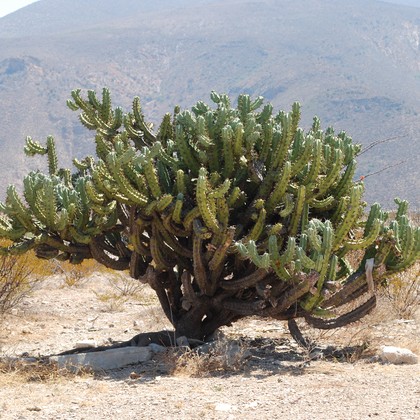
Pacific dry forest, thorn scrub, forest edges, semi-open country with trees and bushes, and gardens, mainly in the lowlands and foothills. Pairs or small groups search for insects and spiders. Builds a domed nest in a tree or bush.
Where the bird is most at home, classified by the vegetation units of Mexico and Central America.




Range and movements
Pacific slope of southern Mexico, from Colima and Michoacán through Guerrero and Oaxaca to Chiapas, and adjacent south-western Guatemala. Does not occur outside the guide area.
- Resident
- dark = core range, pale = thinly spread
How and when to look
The loud duet is often the first clue; search dry forest and scrub in the Pacific lowlands of Oaxaca and Chiapas.
Conservation status
Not threatened. Fairly common in dry forest and semi-open country.
Scientific name
Campylorhynchus humilis | Sclater, 1857
Sclater described the species in 1857 and placed it straight away in the genus where it still stands. The genus Campylorhynchus was introduced in 1824 by Spix. Campylorhynchus is Greek, from kampulos 'curved' and rhunkhos 'bill', after the slightly decurved bill. humilis is Latin for 'low, humble, small', probably after its modest size compared with related species. The specimen the first description was based on came from Sinaloa, Mexico (originally given in error as 'Mazatlán').