All species › Passerines › Tanagers and allies › Streaked Saltator
Position in the tree Birds Aves › Birds with a flexible palate Neognathae › All other modern birds Neoaves › Landbirds Telluraves › Falcons, parrots and passerines Australaves › Falcons and passerines Eufalconimorphae › Parrots and passerines Psittacopasserae
Streaked Saltator | Saltator striatipectus
Gestreepte saltator | Saltador listado
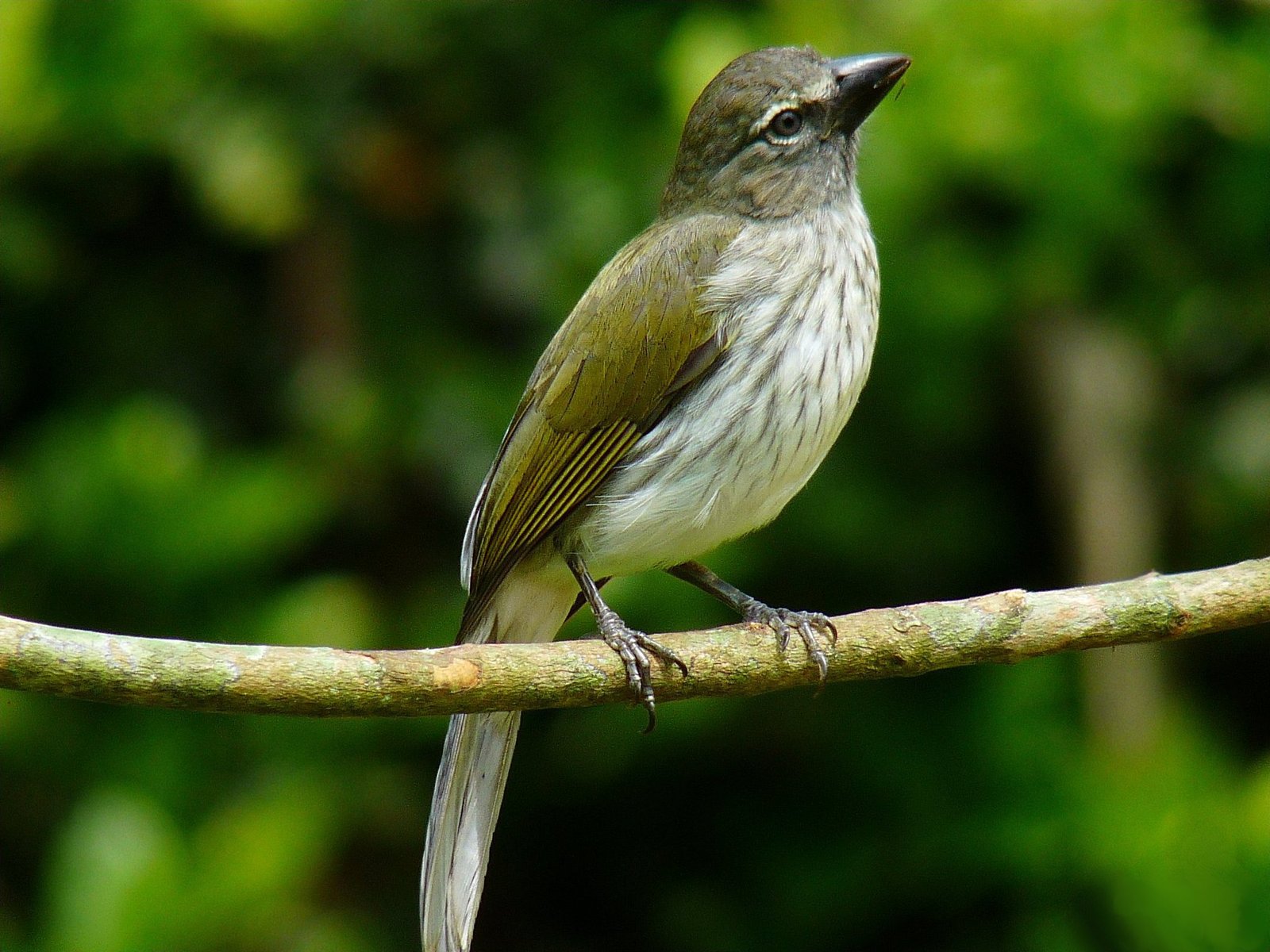
The Streaked Saltator is a medium-sized saltator with olive upperparts, a short white supercilium and pale underparts with dark streaks. It lives in dry and semi-open country on the Pacific slope. In the guide area it occurs in Costa Rica and Panama.
Voice
Song a short series of two to four clear, whistled notes, often with a rising or falling final note; it also sings in the middle of the day. Call a short chik.
Recording: Scott Olmstead — CC BY-NC-SA 4.0 · converted to mono · xeno-canto
Identification
18–20 cm. Upperparts olive-green to greyish olive, head greyer with a short white supercilium and a dark malar stripe. Underparts whitish to yellowish white with dark streaks on the breast and flanks; the strength of the streaking varies between populations. Bill heavy and dark grey to black. Male and female alike; young birds are less distinctly marked and more yellowish.
Confusion species
Cinnamon-bellied Saltator Saltator grandis is larger and grey, with a white throat, a black malar stripe and an unstreaked cinnamon belly. Buff-throated Saltator Saltator maximus has a white and buff throat and an unstreaked grey breast, and lives in more humid forest. Young birds of other saltators may be somewhat mottled but lack the clear streaks on the flanks.
Habitat
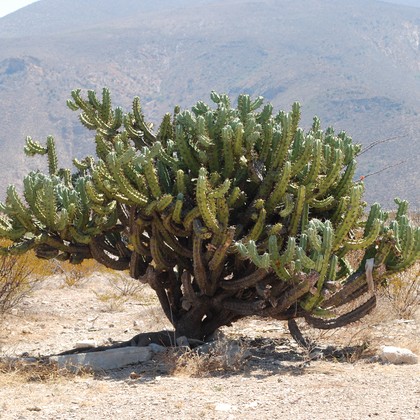
Dry and semi-open country: scrub, hedgerows, forest edges, pasture with trees, plantations, farmyards, gardens and open dry forest, from sea level to about 1500 m. It eats fruit, flowers, buds and insects. It lives in pairs.
Where the bird is most at home, classified by the vegetation units of Mexico and Central America.




Range and movements
Pacific slope of Costa Rica, mainly in the Central Valley and the Valle de El General, and in Panama on the Pacific slope from Chiriquí to Panamá Province and the area around the Panama Canal. Outside the guide area in Colombia, Venezuela, Ecuador and north-western Peru.
- Resident
- dark = core range, pale = thinly spread
How and when to look
Regularly seen in gardens and scrub in Costa Rica's Central Valley, including in and around San José, and in the dry Pacific lowlands of Panama, for example around the Panama Canal.
Conservation status
Not threatened (LC). Common in semi-open farmland; locally spreading with deforestation.
Scientific name
Saltator striatipectus | de Lafresnaye, 1847
De Lafresnaye described the species in 1847 and placed it straight away in the genus where it still stands. The genus Saltator was introduced in 1816 by Vieillot. Saltator is Latin for 'dancer, leaper', after the birds' hopping movements. striatipectus is Latin, from striatus 'striped' and pectus 'breast', after the streaked breast. The specimen the first description was based on came from Cali, Colombia.