All species › Passerines › New World sparrows › Stripe-headed Sparrow
Position in the tree Birds Aves › Birds with a flexible palate Neognathae › All other modern birds Neoaves › Landbirds Telluraves › Falcons, parrots and passerines Australaves › Falcons and passerines Eufalconimorphae › Parrots and passerines Psittacopasserae
Stripe-headed Sparrow | Peucaea ruficauda
Roeststaartgors | Zacatonero corona rayada
The Stripe-headed Sparrow is a large sparrow with a black-and-white striped head that lives in noisy small groups in dry scrub on the Pacific slope of Mexico and Central America. Its range lies entirely within the guide area.

Voice
Noisy. Pairs and groups give a rapid, shrill, scratchy chatter, often as a duet, with hard chik notes and rattling trills. The call is a hard, nasal cheek.
Recording: Alán Palacios — CC BY-NC-SA 4.0 · converted to mono · xeno-canto
Identification
17–19 cm. Head black with a broad white to greyish-white central crown stripe and a white supercilium; cheek and ear coverts black. Throat white, breast and nape grey, belly whitish with buffy flanks. Back rufous-brown with black streaks, lesser wing coverts rufous. Tail long, brown with a rufous tinge. Upper mandible dark, lower mandible pale pink to grey. The sexes are alike; juveniles have a browner head and a streaked breast.
Confusion species
Black-chested Sparrow Peucaea humeralis (western and southern Mexico) has a black breast band, a white throat with a black malar stripe and a grey head without a white crown stripe. Five-striped Sparrow Amphispizopsis quinquestriata is smaller, with a dark grey breast with a black spot and five white and black stripes on the throat and head. Prevost's Ground Sparrow Melozone biarcuata has a rufous crown and a white face with black spots and lives in more humid highland scrub.
Habitat
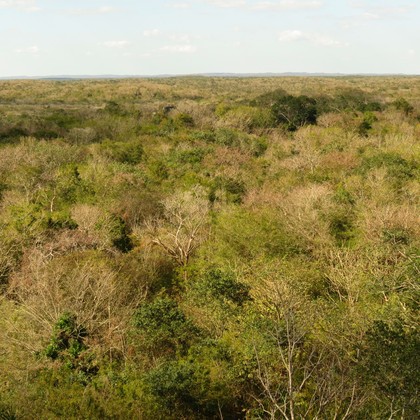
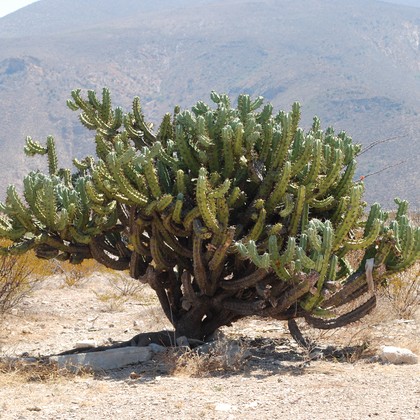
Dry and semi-arid scrub, thornscrub, open dry forest, savanna with bushes, hedgerows and overgrown pastures, from sea level to about 1500 m. It lives in groups of three to eight birds that move together over the ground and through low bushes. It eats seeds and insects.
Where the bird is most at home, classified by the vegetation units of Mexico and Central America.



Range and movements
Endemic to the guide area. On the Pacific slope of Mexico from about Nayarit and Jalisco southwards, also inland in the Balsas basin, to Oaxaca and Chiapas, and on through the Pacific lowlands of Guatemala, El Salvador, Honduras and Nicaragua to north-western Costa Rica; also in dry interior valleys of Guatemala and Honduras.
- Resident
- dark = core range, pale = thinly spread
How and when to look
Groups often give themselves away by their loud chatter from dense bushes; in Guanacaste in Costa Rica regularly seen along roadsides and hedged pastures.
Conservation status
Not threatened (LC). Common in dry scrub and able to persist in farmland with hedgerows and overgrown margins.
Scientific name
Peucaea ruficauda | (Bonaparte, 1853)
Bonaparte described the species in 1853 as Chondestes ruficauda; because it was later moved to another genus, the author and year stand in brackets. The genus Peucaea was introduced in 1839 by Audubon. Peucaea is Greek, from peukē 'pine tree'; Audubon called the type species the 'Pinewood-Finch', after the pine woods it inhabits. ruficauda is Latin, from rufus 'rufous' and cauda 'tail', after the rufous tail. The specimen the first description was based on came from Nicaragua.