All species › Passerines › Crows, jays and magpies › Tamaulipas Crow
Position in the tree Birds Aves › Birds with a flexible palate Neognathae › All other modern birds Neoaves › Landbirds Telluraves › Falcons, parrots and passerines Australaves › Falcons and passerines Eufalconimorphae › Parrots and passerines Psittacopasserae
Tamaulipas Crow | Corvus imparatus
Mexicaanse kraai | Cuervo tamaulipeco
The Tamaulipas Crow is a small, glossy black crow found only in the lowlands of north-eastern Mexico. It is social and forages in groups in open country, on farmland and around villages and towns. It was formerly treated together with Sinaloa Crow as a single species.
Voice
A low, hoarse, somewhat frog-like call, often rendered as gaar or gar-lik, clearly different from the calls of other crows.
Recording: Leonardo Guzman Hernandez — CC BY-NC-SA 4.0 · converted to mono · xeno-canto
Identification
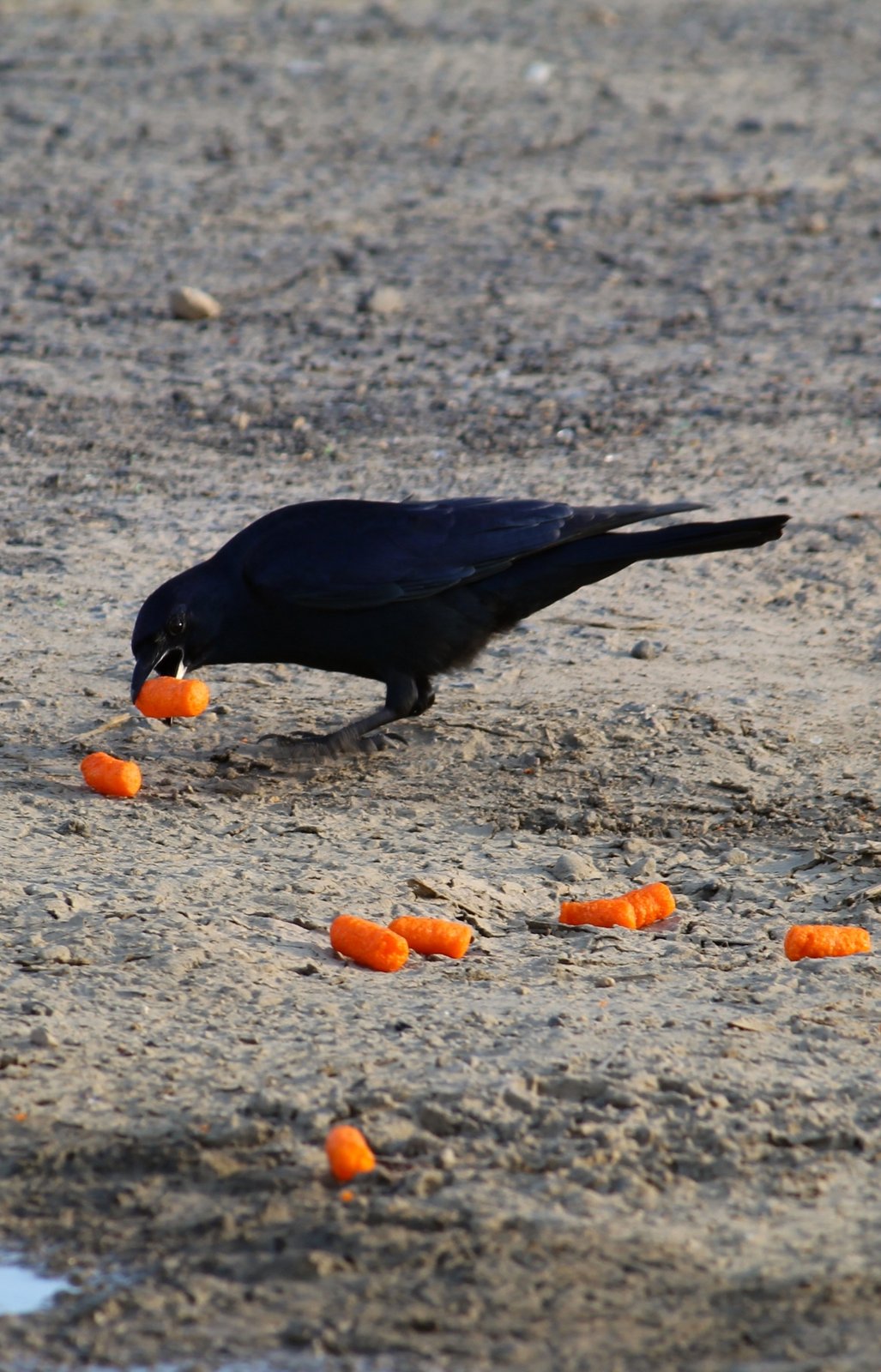
34–38 cm. Entirely black with a purplish-blue gloss, especially on the back and wings. Bill fairly slender and black, legs black, eye dark. Tail fairly short and square-ended. Smaller and slimmer than a raven, with lighter flight.
Confusion species
Sinaloa Crow Corvus sinaloae looks almost identical but lives on the Pacific slope of Mexico; the ranges do not meet. Chihuahuan Raven Corvus cryptoleucus is much larger, with a heavier bill and a wedge-shaped tail. Male Great-tailed Grackles Quiscalus mexicanus have a yellow iris and a long, keeled tail.
Habitat
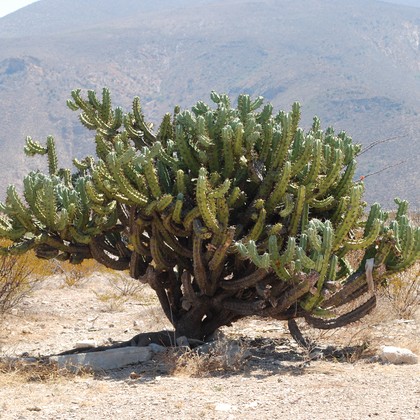
Open lowlands with scattered trees and shrubs, thorn scrub, fields and pastures, and the edges of villages and towns; it often visits rubbish dumps and livestock farms. It eats insects, carrion, refuse, seeds and fruit. It nests in trees.
Where the bird is most at home, classified by the vegetation units of Mexico and Central America.



Range and movements
Endemic to north-eastern Mexico: the lowlands of Tamaulipas and adjacent parts of Nuevo León, eastern San Luis Potosí and northern Veracruz. It was formerly seen regularly in winter at Brownsville in southern Texas but is now very rare there.
- Resident
- dark = core range, pale = thinly spread
How and when to look
Often in groups at rubbish dumps and along roads around the towns of the Tamaulipas lowlands. The low, croaking call separates it from other black birds nearby.
Conservation status
Not threatened. Locally common within a small range.
Scientific name
Corvus imparatus | Peters, 1929
Peters described the species in 1929 and placed it straight away in the genus where it still stands. The genus Corvus was introduced in 1758 by Linnaeus. Corvus is the Latin word for 'raven'. imparatus is Latin for 'unprepared, unprovided', from in- 'not' and paratus 'prepared'; why Peters chose the name is not known. The specimen the first description was based on came from Río La Cruz, Tamaulipas, Mexico.