All species › Swifts › Hummingbirds › Turquoise-crowned Hummingbird
Position in the tree Birds Aves › Birds with a flexible palate Neognathae › All other modern birds Neoaves › Birds of the elements Elementaves › Nightjars and swifts Strisores
Turquoise-crowned Hummingbird | Cynanthus doubledayi
Doubledays kolibrie | Colibrí pico ancho de Doubleday
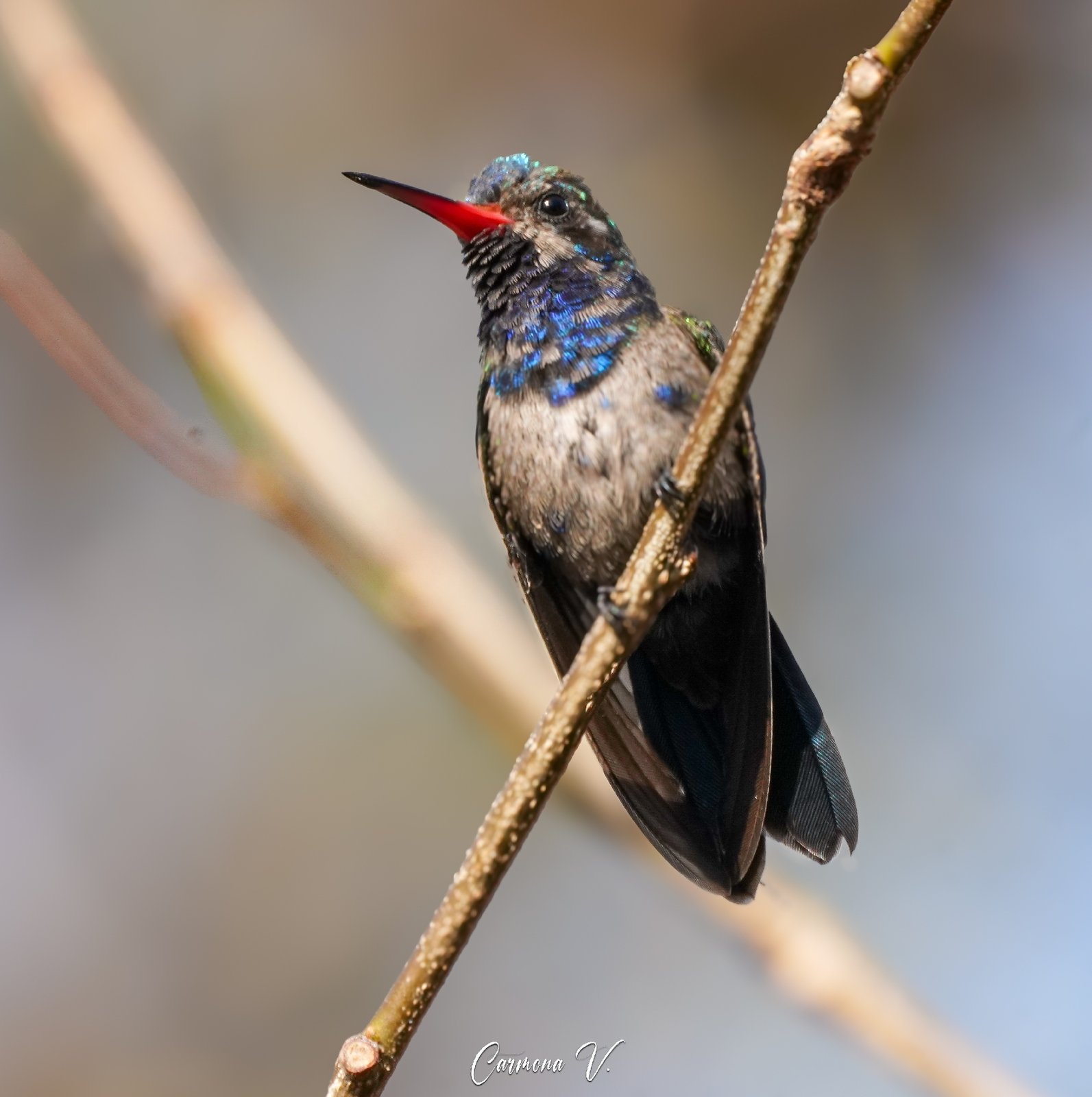
The Turquoise-crowned Hummingbird is a hummingbird of the Pacific lowlands of southern Mexico, from Guerrero to western Chiapas. It was long regarded as a subspecies of Broad-billed Hummingbird and is now treated as a separate species. The male is darker and bluer than that of Broad-billed Hummingbird.
Voice
A dry, short chit or che-dit, and in chases a rattling twitter.
Recording: Isain Contreras Rodríguez — CC BY-NC-SA 4.0 · converted to mono · xeno-canto
Identification
8–9 cm, with a straight bill that is broad at the base; red with a black tip in the male, duller with a dark upper mandible in the female. The male is largely glittering blue-green, with a turquoise-blue crown, a blue throat and breast and a blue-black, slightly forked tail. The female is green above and grey below, with a white stripe behind the eye above a dark ear patch and white tips to the outer tail feathers.
Confusion species
Broad-billed Hummingbird Cynanthus latirostris lives further north and inland; the male is greener, with blue only on the throat, and white undertail coverts. Golden-crowned Emerald Cynanthus auriceps is smaller; the male has a green throat, a golden-green crown and a long, deeply forked tail. The females of these species are hard to separate in the field.
Habitat
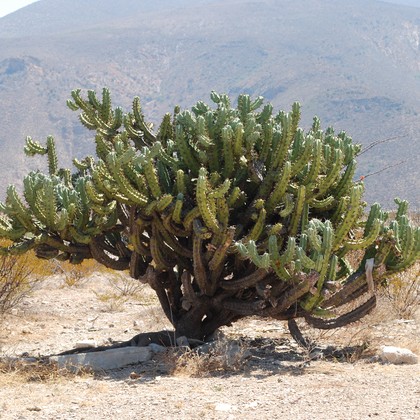
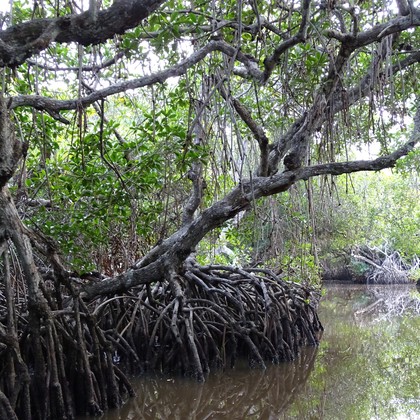
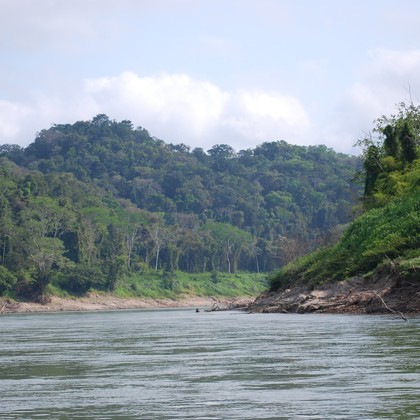
Dry deciduous forest, thorn scrub, edges of mangrove and gallery forest, scrub and gardens in the coastal lowlands and foothills, from sea level to about 1000 m. It feeds at flowers of shrubs and trees, and catches small insects.
Where the bird is most at home, classified by the vegetation units of Mexico and Central America.


Range and movements
Endemic to the guide area. Along the Pacific side of southern Mexico, from Guerrero along the coast of Oaxaca to western Chiapas.
- Resident
- dark = core range, pale = thinly spread
How and when to look
Common around Puerto Escondido and Huatulco on the coast of Oaxaca, at flowering shrubs in gardens, along forest edges and in dry coastal forest.
Conservation status
Not threatened. Fairly common in the coastal lowlands, also in man-made landscapes; the coast is, however, under pressure from tourism and building.
Scientific name
Cynanthus doubledayi | (Bourcier, 1847)
Bourcier described the species in 1847 as Trochilus Doubledayi; because it was later moved to another genus, the author and year stand in brackets. The genus Cynanthus was introduced in 1827 by Swainson. Cynanthus is Greek, from kuanos 'dark blue' and anthos 'blossom, flower', after the glittering blue plumage. doubledayi honours the English businessman, naturalist and entomologist Henry Doubleday (1808–1875). The specimen the first description was based on came from Guerrero, Mexico.