All species › Bats › Bent-winged bats
Bent-winged bats | Miniopteridae
Langvleugelvleermuizen | Murciélagos de cueva
The family is named for the wing: the outer joint of the third finger is extraordinarily long and folds back double at rest, so that the wingtip is stowed along the arm. Spread out, this gives a very long narrow wing and a fast, high flight with sharp turns, more like a swift than an ordinary bat. The fur is short, dense and velvety and the forehead strikingly high and domed. They are cave animals all year round and hang in dense clusters, touching one another, sometimes thousands strong; between the summer colony and the winter quarters they cover hundreds of kilometres, which makes them Europe's most migratory bats. Reproduction has a solution of its own: mating in autumn is followed at once by fertilisation, but the embryo's growth is halted through the winter and only resumes in spring, so that all the young are born within days of one another.
Native species 3 species
Species that occur here by nature, including those released to bring back a population that had gone. They are arranged by genus, in the sequence of the list.
Miniopterus 3 species
-
Maghrebian Long-fingered Bat
Miniopterus maghrebensis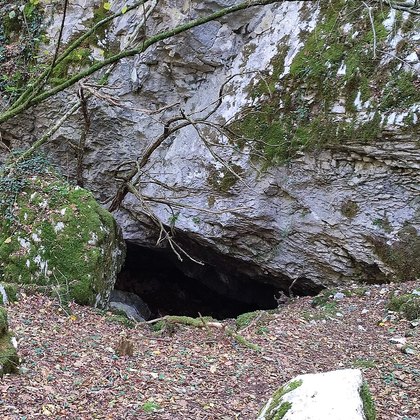 Terrestrial underground caves and cave systems
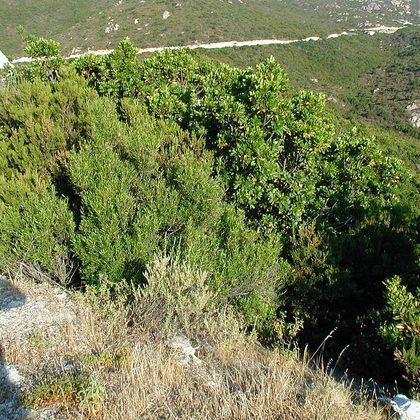 Maquis, arborescent matorral and thermo-Mediterranean brush
 Broadleaved evergreen woodland
 Dry grasslands
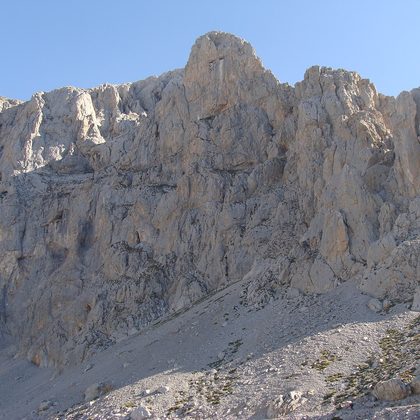 Inland cliffs, rock pavements and outcrops
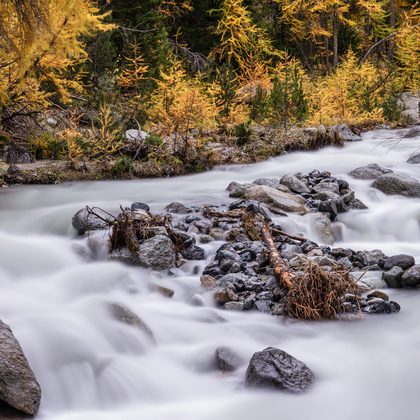 Surface running waters
-
Pallid Long-fingered Bat
Miniopterus pallidus- Terrestrial underground caves and cave systems
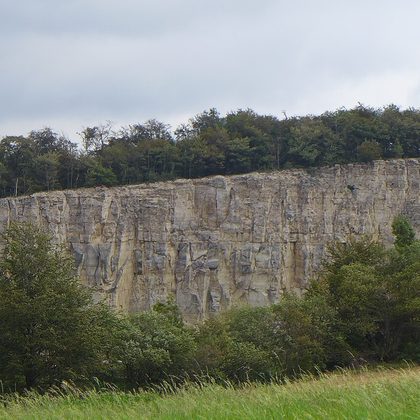 Extractive industrial sites
- Maquis, arborescent matorral and thermo-Mediterranean brush
- Dry grasslands
 Littoral zone of inland surface waterbodies
- Inland cliffs, rock pavements and outcrops
-

Schreibers's Long-fingered Bat
Miniopterus schreibersii- Terrestrial underground caves and cave systems
- Extractive industrial sites
 Broadleaved deciduous woodland
- Maquis, arborescent matorral and thermo-Mediterranean brush
- Dry grasslands
- Surface running waters
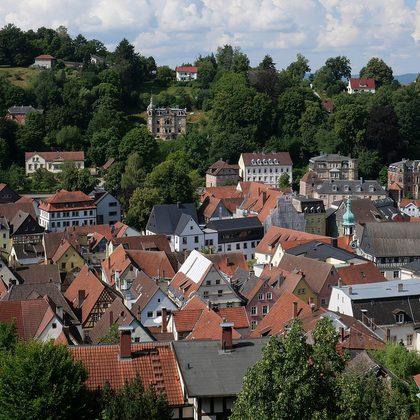 Buildings of cities, towns and villages