All species › Bats › Vesper bats › Anatolian Serotine
Anatolian Serotine | Cnephaeus anatolicus
Cnephaeus anatolicus | Cnephaeus anatolicus
Cnephaeus anatolicus, the Anatolian Serotine, is a serotine-type bat of the eastern Mediterranean and the Middle East. Felten described it in 1971 as Eptesicus anatolicus, with Alanya in the Turkish province of Antalya as the type locality. For a long time it was treated as a subspecies of Eptesicus bottae; on genetic and morphological grounds it is now treated as a distinct species, although mitochondrial and nuclear data partly contradict each other. Since 2023 it has been placed with the other Old World species of Eptesicus in the genus Cnephaeus. In the guide area it occurs on Rhodes and Cyprus, in southern Turkey and in the Levant.
No photograph of a living wild animal of this species with a suitable Creative Commons licence exists. Do you have one that meets the rules? Send it in.
Tracks
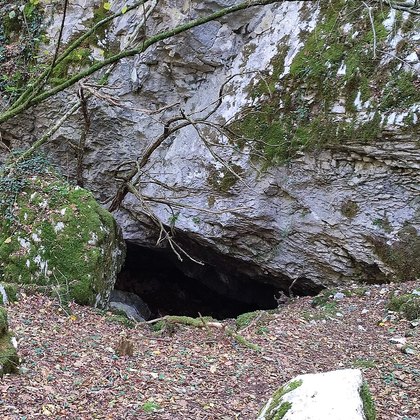
Day roosts have been found in crevices between bricks and stones in buildings; bats netted at cave entrances suggest that the species also uses caves. In Syria it shared roosts with Savi's Pipistrelle, Greater Horseshoe Bat, Lesser Mouse-eared Bat, Greater Mouse-eared Bat and Natterer's Bat. No signs specific to this species have been described; droppings below a crevice in a wall cannot be distinguished from those of other crevice-dwelling bats.
Identification
A serotine-type bat, slightly smaller than the Eurasian Serotine: forearm 46 to 50 mm, head-body 66 to 72 mm. The dorsal fur is short and light to dark creamy buff, with a rusty brown to brownish-grey tinge; the underparts are whitish beige. Face, ears, membranes and limbs are dark brown to blackish brown and contrast with the pale fur. The ears are fairly short and triangular with rounded tips; the tragus is about half the ear length, of equal width from base to tip, with a rounded tip. Wings and tail membrane are semi-translucent; the tail projects 3 to 5 mm beyond the membrane, and there is a well-developed post-calcarial lobe. Search calls are frequency-modulated with a near-constant end (FM/QCF); in Iran the peak frequency was 28.9 to 29.1 kHz, and on Rhodes calls ran from about 29–32 kHz down to 27–28 kHz.
Similar species
The Eurasian Serotine (Cnephaeus serotinus) occurs in southern Turkey and the Levant as the subspecies mirza. It is larger on average (forearm 48 to 58 mm) and has longer, darker, smoky brown fur; forearm measurements overlap between 48 and 50 mm. The contrast between the short pale fur and the blackish-brown face and dark membranes is the best external character of C. anatolicus. The calls of the two species lie in the same band and cannot be separated on a bat detector. Savi's Pipistrelle (Hypsugo savii), found in the same roosts in Syria, is much smaller (forearm 31 to 38 mm). Certain identification rests on a bat in the hand, with measurements and the shape of the baculum, or on DNA.
Habitat
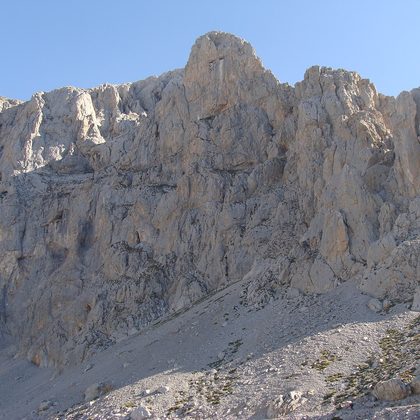
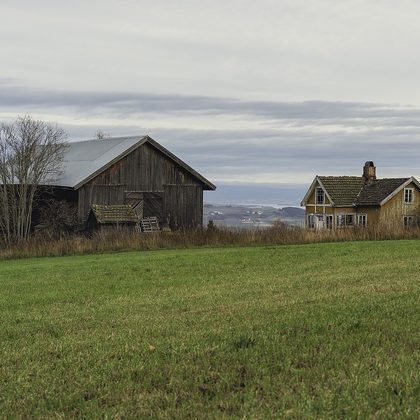
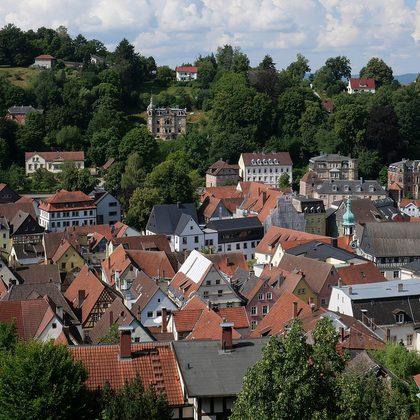
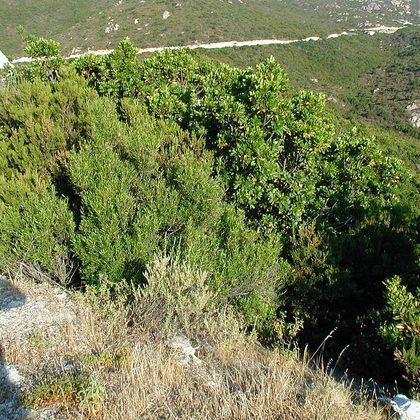
Arid and semi-arid areas, steppe and rocky terrain, generally not far from water, but also dry woodland and temperate habitats: Mediterranean woodland and steppe-maquis in the Levant and Turkey, deciduous steppe forest in Iraq and Iran. EUROBATS notes a preference for coastal zones with little vegetation. In Lebanon the species was found mainly in lowlands (up to 1025 m), in Syria between 10 and 370 m; in the Zagros Mountains of Iran it lives in highlands. The handbook gives elevations from sea level to over 1850 m. The bats forage in open and semi-open terrain along cliffs and vegetation and around streetlamps.
Where the animal is most at home, classified with EUNIS — the European standard for habitats.


Distribution
Rhodes (Greece), southern Turkey, north-eastern Cyprus, northern Syria, Lebanon, northern and eastern Iraq and western and southern Iran. Within the guide area lie Rhodes, Cyprus, the Turkish south coast and the west of Syria and Lebanon; the Iraqi and Iranian localities fall outside it. Within the European Union the species is known only from Rhodes and Cyprus. It may occur together with C. ognevi in the southern Caucasus. The species is monotypic.
Way of life
The bats forage in slow flight in open and semi-open terrain and eat a varied range of insects. In Syria two sets of faecal samples contained mainly ants (Formicoidea), two sets of stomach contents mainly flies (Brachycera) and true bugs; in Turkey beetles dominated, especially ground beetles; on Rhodes ants; in Lebanon beetles, hymenopterans and true bugs. Colonies are small: usually one to three bats, in Turkey also maternity colonies of 15 to 20. In Syria four pregnant females caught in late May each carried two embryos, and a nearly full-grown young was caught with its mother in July; births there probably fall in May and June. In Lebanon a pregnant female with two embryos was found in early June. The sources consulted record nothing about overwintering.
Where and when to look
Rhodes and the Turkish south coast around Antalya and Alanya are the places in the guide area with the most records. A serotine-type bat with pale fur and a blackish-brown face, seen emerging from a wall in a village, is an indication; because the Eurasian Serotine occurs in the same area, without capture or DNA you can only record Cnephaeus sp. Catching and handling bats requires a licence in the countries concerned.
Conservation status
Least Concern (LC, 2021). The handbook (2019) still listed the species as not assessed separately and included it under E. bottae; the separate assessment followed in 2021. Little is known about its ecology and threats; the species appears to be widespread and locally common in the eastern Mediterranean. Within the European Union it is covered by Annex IV of the Habitats Directive, and it falls under the EUROBATS Agreement.
Scientific name
Cnephaeus anatolicus | (Felten, 1971)
Felten described the species in 1971 as Eptesicus anatolicus; because it was later moved to another genus, the author and year stand in brackets. Cnephaeus is Greek, from knephaios, 'dark, of the twilight', from knephas, 'dusk'; Kaup coined it in 1829, and it has only recently come back into use. anatolicus means 'of Anatolia', after the type locality in southern Turkey; Anatolē is Greek for 'sunrise, east'. The specimen the first description was based on came from Türkiye, Antalya.