All species › Hedgehogs, shrews and moles › Hedgehogs › Northern White-breasted Hedgehog
Northern White-breasted Hedgehog | Erinaceus roumanicus
Oost-Europese egel | Erinaceus roumanicus
The Northern White-breasted Hedgehog, in many handbooks simply the white-breasted hedgehog, is the hedgehog of central and eastern Europe. In build, behaviour and appearance it largely matches the West European Hedgehog, which it replaces somewhere between the Oder and the Adriatic. The boundary between the two species follows no river or ridge; it is a zone in which they occur side by side and hybridise.
Tracks
Little has been recorded separately about this species' own signs; the handbooks refer to the West European Hedgehog for diet, behaviour, habitat and signs, and the picture is expected to be the same. The dropping is 3 to 5 cm long, about 1 cm thick, cylindrical and blunt at both ends, black and slightly glossy when fresh, and contains many shiny beetle wing cases and legs. It lies in the open on grass, paving, village streets or woodland tracks and is not buried; a cat's dropping is scraped over and a mustelid scat is twisted with a drawn-out tip of hair. Short grass shows snout pokes: conical holes 1 to 2 cm deep, dozens together, made while searching for leatherjackets and beetle larvae. The print shows only in soft mud or damp sand: about 2.5 to 3 cm, five toes, sharp, far-projecting claw marks, the hind foot narrower and longer than the fore and often registering only with the toes. Sound is the most useful sign: a foraging hedgehog snuffles, huffs and rustles through dry leaves and can be heard at ten metres, and in May and August — the species has two litters a year — the sustained puffing of a courting pair can be heard at night. The nest lies under a brash pile, woodstack, dense bramble or shed: a compact, hollow ball of dry leaves the size of a football, in winter worked in among dead wood.
In its habitat

Head close-up

The young
Identification
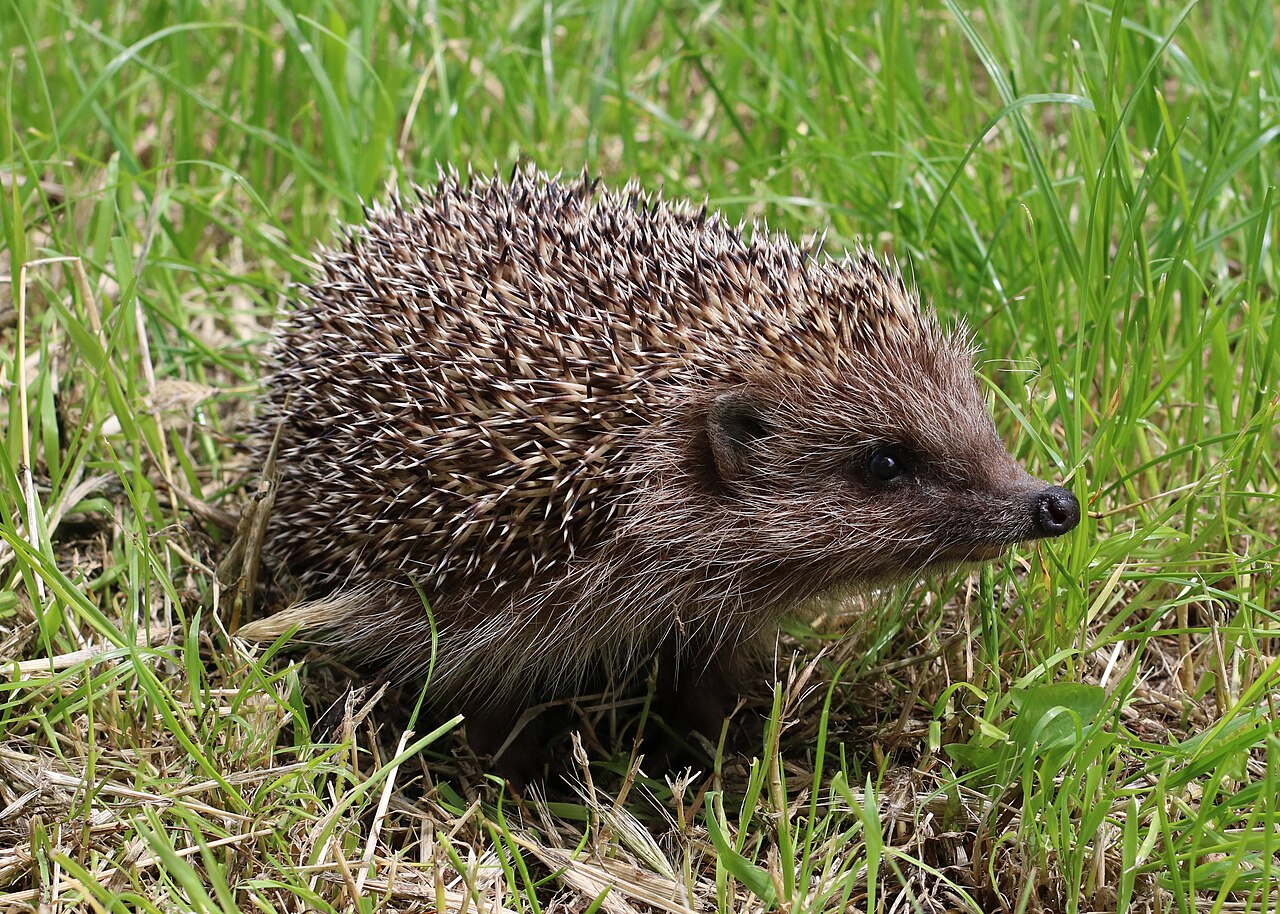
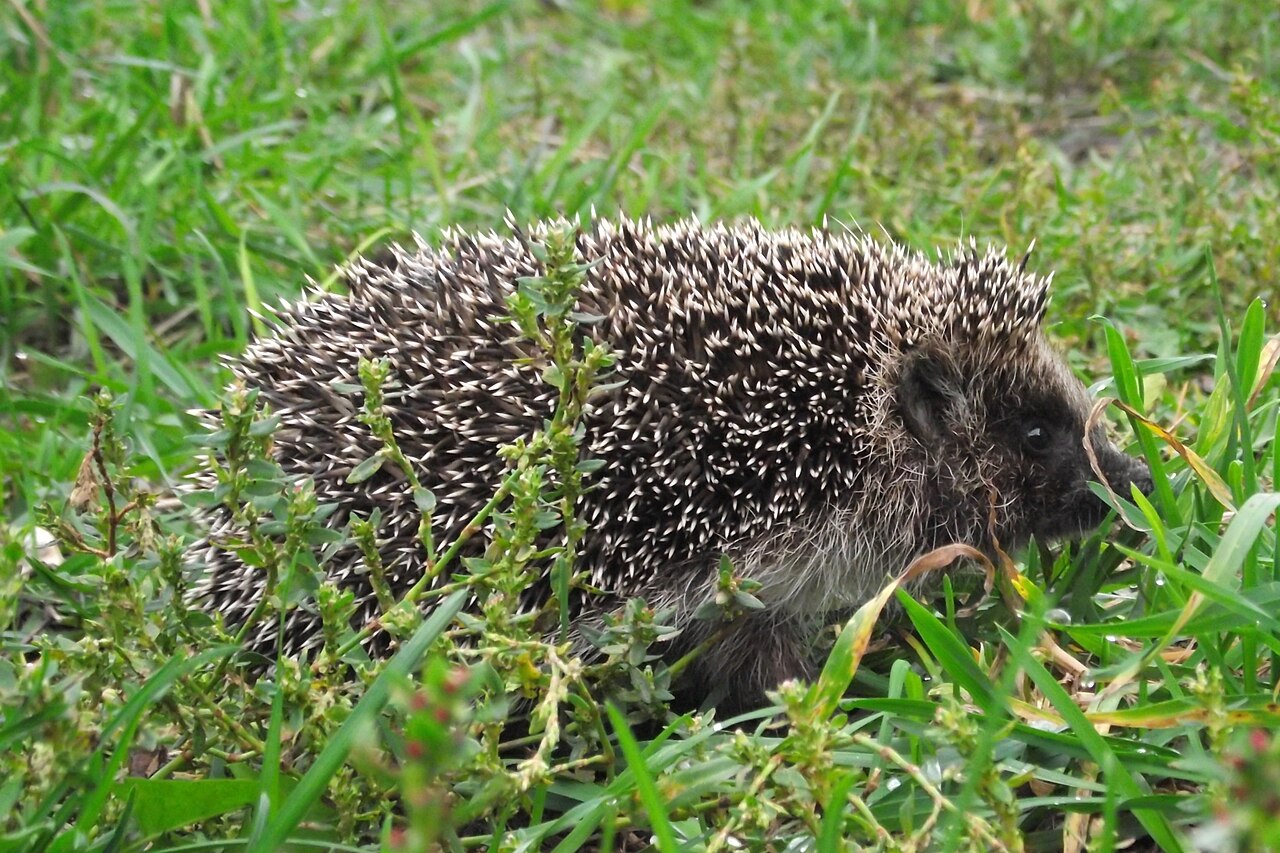
A hedgehog of 20 to 30 cm that may weigh over a kilogram by late summer; animals in the south of the range average larger than those in the north. Back and flanks carry smooth spines banded buff and black, without the fine papillae found in other genera. The main character is underneath: a white to cream patch on chest and throat, which on a well-marked animal contrasts sharply with the dark brown belly and brown flank hair. On the crown runs a faint, barely visible parting in the spiny coat, far less pronounced than the bare parting of the North African Hedgehog and sometimes visible in raking light from above. The face is greyish-brown, the muzzle long and pointed, the ears small; in profile they barely clear the spines. The legs are slightly longer than in the West European Hedgehog, so that according to many observers a walking animal looks slightly taller and slimmer; as a separate character this is insufficient. The tail is a stub of a little over 2 cm.
Similar species
The West European Hedgehog (Erinaceus europaeus) can at best be separated from below: it is uniformly greyish-brown there, whereas this species has a pale chest patch. That character is not reliable. In the narrow band through central Europe where both occur — roughly from eastern Poland and Czechia to Austria, Slovenia and the northern Adriatic coast — there are West European Hedgehogs with a pale chest, white-breasted hedgehogs with a faint or broken patch, and hybrids. In one studied contact zone up to 20 per cent of animals had a mixed genotype; what this means for the populations is unknown. The working rule is: outside the contact zone the locality determines the species, inside it only DNA does; a hedgehog photographed there is recorded as 'hedgehog'. The faint crown parting and slightly longer legs are supporting characters at most. In Anatolia, the Levant and on some Greek islands the Southern White-breasted Hedgehog (Erinaceus concolor) occurs; it cannot be distinguished in the field and is treated as a separate species by the Mammal Diversity Database; there too the locality determines the species. In south-eastern Europe confusion with a Crested Porcupine is possible only at long range, and on Cyprus and in southern Russia with the Long-eared Hedgehog, which has much longer ears and a white belly.
Habitat
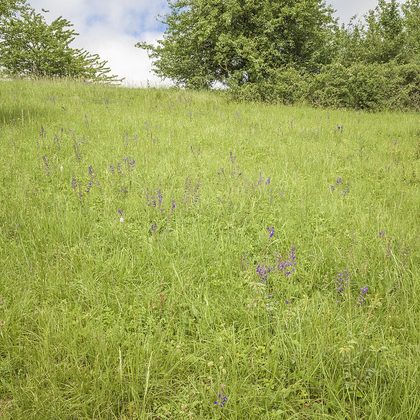
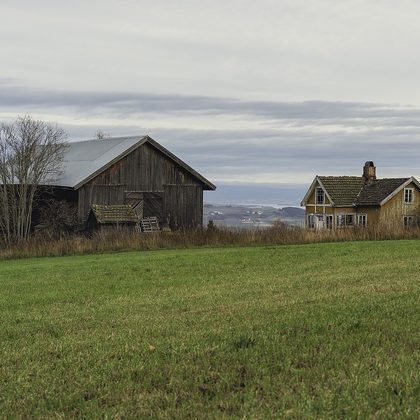
Half-open farmland, especially its edges: woodland margins and scrub, hedge banks and hedgerows, rough field margins, extensive grassland and orchards, and also gardens, village edges, parks, churchyards and farmyards in town and country. Unlike the West European Hedgehog it also occurs in the open, dry south-east of Europe, in shrubby transitions to steppe and in river valleys. It occurs from sea level to at least 1,400 m. It avoids dense conifer forest, extensive marsh and bare arable without margins.
Where the animal is most at home, classified with EUNIS — the European standard for habitats.





Distribution
Central and eastern Europe and further east. The nominate form occurs from the Oder to the northern Adriatic; further east and south four other subspecies follow, reaching Montenegro, North Macedonia, European Turkey, Crete and other Greek islands, south-western Russia, the northern Caucasus and western Siberia. Within the guide area most records come from Ukraine, Poland, Romania, Greece, Hungary, Austria and Bulgaria, followed by Russia, Croatia, Czechia, Lithuania, Slovenia, Montenegro, Belarus and Serbia; there are also records from north-eastern Italy. West of the contact zone, in western Europe, only the West European Hedgehog occurs. The western limit of the range is not a line but a zone, and that is where the identification problem lies.
- Native
- dark = core range, pale = thinly spread
Way of life
Nocturnal; it leaves the day nest shortly after sunset and covers 1 to 2 km a night, males more than females. The diet consists of large invertebrates — beetle larvae, ground beetles, earwigs, caterpillars, earthworms, centipedes and slugs — supplemented with carrion, windfall fruit and occasionally a nest of young mice or a clutch of eggs. Dietary studies of this species itself are largely lacking; the handbooks adopt the data for the West European Hedgehog. The clearest difference from that species is in breeding: this species has two litters a year, around the end of May and around the end of August. After a gestation of about five weeks the young are born blind and pink, with soft white spines that break through within hours; at about six weeks they accompany the female. Young from the August litter must lay down enough fat within a few months, as in the second litter of the West European Hedgehog. It is a true hibernator, roughly from November to March, with a body temperature just above ambient and a heart rate of a few beats a minute; during short arousals it sometimes changes nest.
Where and when to look
In cities such as Budapest, Vienna, Prague, Warsaw, Kyiv or Bucharest a city park after dark is the easiest place: sit down half an hour after sunset and listen; the animal is usually heard before it is seen. The best months are May and June and again late August and September, when the young of the second litter disperse. A trail camera at a gap in a fence or beside a dish of water often produces footage within a week in a garden. The chest patch is visible only when the animal lies on its side or climbs over an edge; photograph the underside whenever possible. Well-documented records from the contact zone with the West European Hedgehog are of value. Always note the locality: in this species the place counts for more than the appearance.
Conservation status
Least Concern (LC, 2021), both globally and on the European Red List. There is no evidence, not even anecdotal, of any notable decline, and in Greece, Hungary and Bulgaria it is regarded as common. Road mortality occurs but is not considered a nationwide threat, and the species occurs in many protected areas. As with all European hedgehogs, there is hardly any systematic counting: the favourable assessment rests on the absence of reports of decline rather than on monitoring series. In the West European Hedgehog, targeted counts in 2024 led to a less favourable assessment. A second open question concerns the contact zone: it is unknown what hybridisation with the West European Hedgehog means for either species in the long term, or whether hybrids survive hibernation as well as the parent species.
Scientific name
Erinaceus roumanicus | Barrett-Hamilton, 1900
Barrett-Hamilton described the species in 1900 and placed it straight away in the genus where it still stands. Erinaceus is the Latin word for 'hedgehog'. roumanicus means 'Romanian', after the type locality in Romania. The specimen the first description was based on came from Romania, Gageni.