All species › Woodpeckers and allies › Toucans
Toucans | Ramphastidae
Toekans | Tucanes | Tucanos
Twenty-six species in five genera live in this guide: the large toucans of the genus Ramphastos, the slimmer, group-living aracaris (Pteroglossus) of the lowlands, the green toucanets of the genus Aulacorhynchus in the montane forest of the tepuis and northern Venezuela, the grey-blue mountain-toucans of the genus Andigena in the Andean forest of western Venezuela and the small Selenidera toucanets, whose males have a yellow ear patch. Most species live in Amazonian forest, such as the White-throated and Channel-billed Toucans and the Chestnut-eared Aracari; the Red-breasted Toucan, the Saffron Toucanet (Pteroglossus bailloni) and the Spot-billed Toucanet live in the Atlantic Forest, and the Toco Toucan (Ramphastos toco) is a bird of semi-open country, gallery forest and savanna in the Cerrado and the Pantanal. The huge, often brightly coloured bill is lighter than it looks: beneath a thin horny sheath lies a spongy network of bony struts filled with air. With it they reach fruit on slender twigs that would not bear their weight, and the richly supplied bill also helps to shed heat. The cutting edges are serrated and the tongue is long, narrow and frayed at the edges like a feather. The foot is zygodactyl. Toucans eat mainly fruit, which they swallow with a toss of the head, but also insects, lizards and the eggs and young of other birds. The voice is hardly musical: croaking, rasping or yelping calls that carry far. They sleep in tree holes with the tail folded over the back, and aracaris share a roost hole as a whole group. The nest is a cavity in a tree, often an old woodpecker hole, with two to four white eggs.
Native species 26 species
Species that occur here by nature: breeding birds, winter visitors and passage migrants. They are arranged by genus, in the sequence of the list.
Ramphastos 6 species
-

Toco Toucan
Ramphastos toco Cerradão and dry woodland
 Veredas and gallery forest
 Gallery forest and woodland islands of the Pantanal
 Cerrado savanna
 Savannas of the Guianas
 Várzea (whitewater flooded forest)
 Towns, cities and gardens
-

Yellow-throated Toucan
Ramphastos ambiguus Montane forest of the Venezuelan Andes and Perijá
 Montane forest of the Venezuelan coastal range
 Plantations and agroforestry
-

White-throated Toucan
Ramphastos tucanus Tall terra firme forest
- Várzea (whitewater flooded forest)
 Igapó (blackwater flooded forest)
 Secondary forest and forest edge
 Palm swamps
-

Keel-billed Toucan
Ramphastos sulfuratus- Montane forest of the Venezuelan Andes and Perijá
- Plantations and agroforestry
 Dry forest and thorn scrub of northern Venezuela
-

Channel-billed Toucan
Ramphastos vitellinus- Tall terra firme forest
- Várzea (whitewater flooded forest)
- Secondary forest and forest edge
 Coastal lowland forest
 Interior semi-deciduous forest
- Montane forest of the Venezuelan Andes and Perijá
-

Red-breasted Toucan
Ramphastos dicolorus Montane forest of the Serra do Mar
- Coastal lowland forest
 Araucaria forest
- Interior semi-deciduous forest
- Towns, cities and gardens
Pteroglossus 10 species
-

Saffron Toucanet
Pteroglossus bailloni- Montane forest of the Serra do Mar
- Araucaria forest
- Coastal lowland forest
- Interior semi-deciduous forest
-

Green Aracari
Pteroglossus viridis- Tall terra firme forest
- Secondary forest and forest edge
 White-sand forest and campina
- Igapó (blackwater flooded forest)
-

Lettered Aracari
Pteroglossus inscriptus- Secondary forest and forest edge
- Várzea (whitewater flooded forest)
- Tall terra firme forest
 Northeastern coastal forest
-

Collared Aracari
Pteroglossus torquatus- Montane forest of the Venezuelan Andes and Perijá
- Plantations and agroforestry
- Dry forest and thorn scrub of northern Venezuela
-

Black-necked Aracari
Pteroglossus aracari- Secondary forest and forest edge
- Tall terra firme forest
- Várzea (whitewater flooded forest)
- Coastal lowland forest
- Northeastern coastal forest
- Plantations and agroforestry
-

Chestnut-eared Aracari
Pteroglossus castanotis- Secondary forest and forest edge
- Várzea (whitewater flooded forest)
- Gallery forest and woodland islands of the Pantanal
- Tall terra firme forest
- Veredas and gallery forest
- Interior semi-deciduous forest
-

Many-banded Aracari
Pteroglossus pluricinctus- Tall terra firme forest
- Igapó (blackwater flooded forest)
- Várzea (whitewater flooded forest)
- Secondary forest and forest edge
-

Ivory-billed Aracari
Pteroglossus azara- Tall terra firme forest
- Várzea (whitewater flooded forest)
- Secondary forest and forest edge
-

Curl-crested Aracari
Pteroglossus beauharnaisii- Tall terra firme forest
 Bamboo and liana forest
- Várzea (whitewater flooded forest)
- Secondary forest and forest edge
-

Red-necked Aracari
Pteroglossus bitorquatus- Tall terra firme forest
- Secondary forest and forest edge
- Várzea (whitewater flooded forest)
Aulacorhynchus 4 species
-

Southern Emerald Toucanet
Aulacorhynchus albivitta- Montane forest of the Venezuelan Andes and Perijá
- Plantations and agroforestry
- Tall terra firme forest
- Secondary forest and forest edge
-

Groove-billed Toucanet
Aulacorhynchus sulcatus- Montane forest of the Venezuelan coastal range
- Montane forest of the Venezuelan Andes and Perijá
- Plantations and agroforestry
-

Tepui Toucanet
Aulacorhynchus whitelianus Highland forest of the Guiana Shield
- Tall terra firme forest
-

Crimson-rumped Toucanet
Aulacorhynchus haematopygus- Montane forest of the Venezuelan Andes and Perijá
Andigena 1 species

Selenidera 5 species
-

Guianan Toucanet
Selenidera piperivora- Tall terra firme forest
- White-sand forest and campina
- Secondary forest and forest edge
-

Golden-collared Toucanet
Selenidera reinwardtii- Tall terra firme forest
- Várzea (whitewater flooded forest)
-

Tawny-tufted Toucanet
Selenidera nattereri- White-sand forest and campina
- Tall terra firme forest
- Igapó (blackwater flooded forest)
-
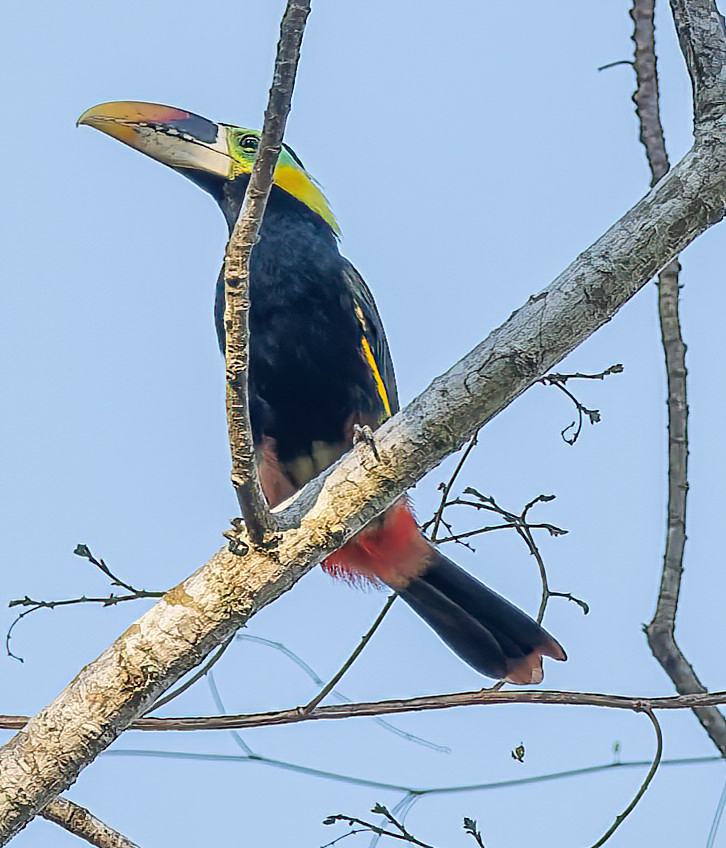
Gould's Toucanet
Selenidera gouldii- Tall terra firme forest
- Secondary forest and forest edge
- Veredas and gallery forest
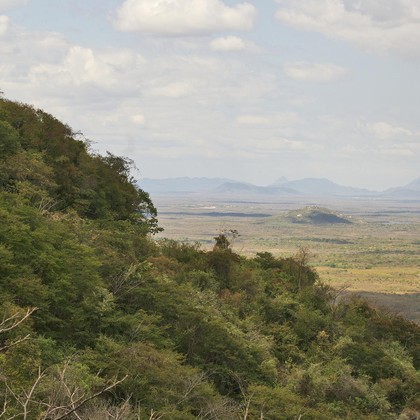 Brejos and highland forest
-

Spot-billed Toucanet
Selenidera maculirostris- Coastal lowland forest
- Montane forest of the Serra do Mar
- Interior semi-deciduous forest