All species › Passerines › Tityras, becards and allies › Cinereous Becard
Cinereous Becard | Pachyramphus rufus
Grijze bekarde | Cabezón cinéreo | Caneleiro-cinzento
The Cinereous Becard is a small becard of semi-open country, forest edges and river islands in northern South America. The male is pale grey and white with a black crown, the female bright rufous. In the guide area it occurs in Venezuela, the Guianas and Amazonian Brazil, mainly in young forest along rivers and coasts.
Voice
The song is a soft, rising series of clear whistles, sometimes accelerating. Also short, thin calls.
Recording: JAYRSON ARAUJO DE OLIVEIRA — CC BY-NC-SA 4.0 · xeno-canto
Identification
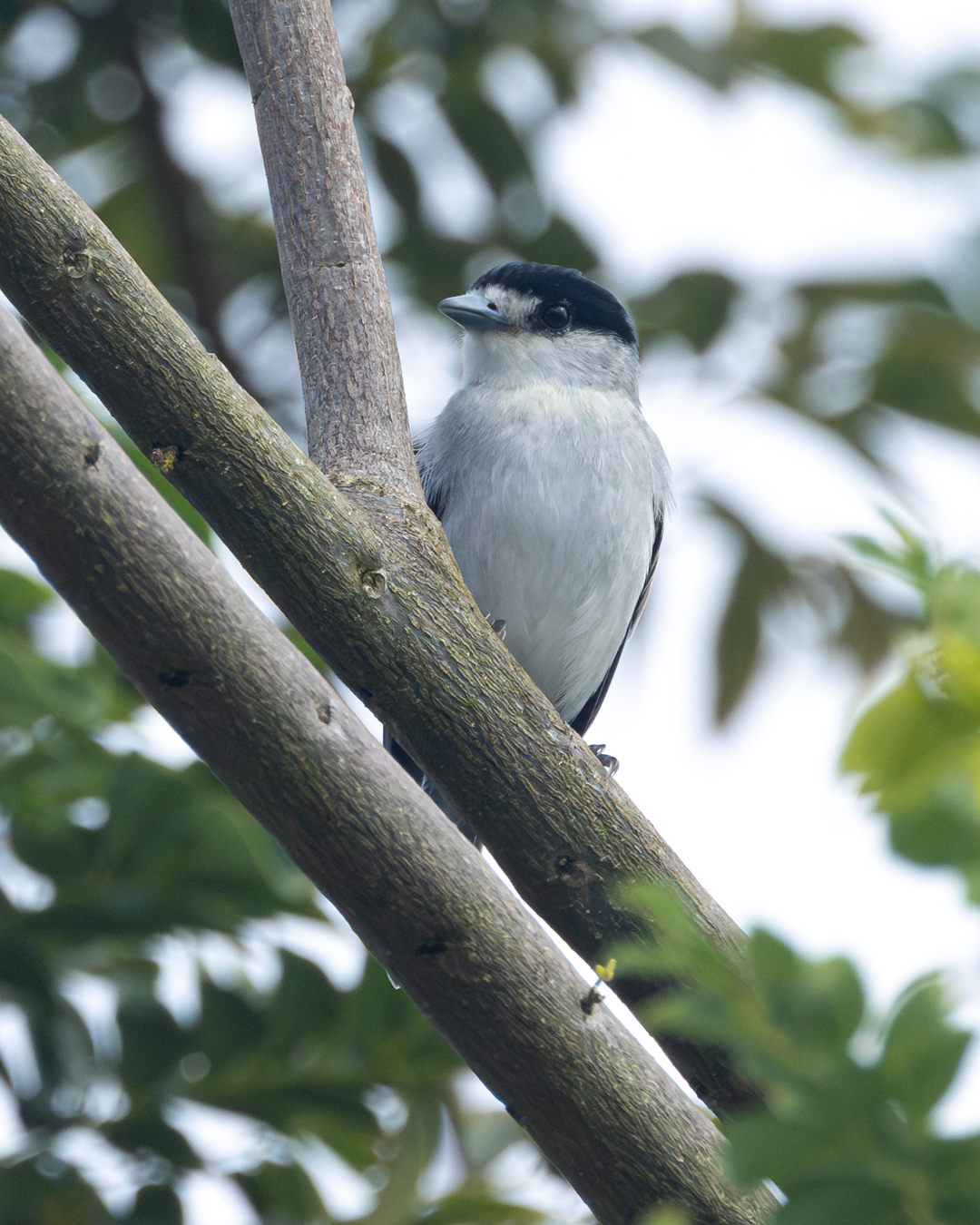
13.5–14 cm, with a large head and a short, thick bill. The male is pale grey above, with a glossy black crown, a white forehead edge and white lores, and greyish white below. The wings are blackish with broad grey and white edges to the coverts and flight feathers. The female is bright rufous above, with a chestnut crown and pale lores, and pale buff to whitish below, with a paler throat. Young birds resemble the female.
Confusion species
The male Black-capped Becard Pachyramphus marginatus lives in the canopy of tall forest and has a black-spotted back and more white in the wing. The male White-winged Becard Pachyramphus polychopterus is darker, with a black back. The female resembles Chestnut-crowned Becard Pachyramphus castaneus, which has a grey band round the back of the crown, and Rufous Casiornis Casiornis rufus, which is slimmer, with a narrower bill and a longer tail.
Habitat
Semi-open country with trees, forest edges, gallery forest, open secondary forest, mangrove and swamp edges, river islands with young forest and wooded pastures, mostly below 1000 m. It takes insects and fruit in the middle storey and canopy. The nest is large and globular, with a side entrance, high in a tree.
Where the bird is most at home, classified by the vegetation units of Amazonia and the Guianas.





Range and movements
In Venezuela widespread in the lowlands north of the Orinoco, from the Maracaibo basin through the Llanos to the Orinoco delta, and locally south of the Orinoco in Bolívar and Amazonas. In Guyana, Suriname and French Guiana mainly on the coastal plain and along the large rivers. In Brazil in Amazonia, mainly along the Amazon and the lower reaches of the large tributaries, on river islands and in várzea, and in Roraima and Amapá. Outside the guide area from Panama to Colombia, eastern Ecuador and north-eastern Peru.
- Resident
- dark = core range, pale = thinly spread
How and when to look
In the Guianas in wooded gardens, plantations and secondary forest on the coastal plain. In Brazil search river islands with young trees along the Amazon, for example near Manaus. Listen for the soft, rising series of whistles from the canopy.
Conservation status
Least Concern. The species tolerates semi-open and disturbed landscapes and is widespread in the guide area.
Scientific name
Pachyramphus rufus | (Boddaert, 1783)
Boddaert described the species in 1783 as Muscicapa rufa; because it was later moved to another genus, the author and year stand in brackets. The genus Pachyramphus was introduced in 1840 by Gray. Pachyramphus is Greek, from pakhus 'thick' and rhamphos 'bill', after the stout, broad bill. rufus is Latin for 'rufous, reddish', after the rufous plumage of the female. The specimen the first description was based on came from Cayenne, French Guiana.