All species › Tinamous › Tinamous › Lesser Nothura
Lesser Nothura | Nothura minor
Klein steisshoen | Inambú menor | Codorna-mineira
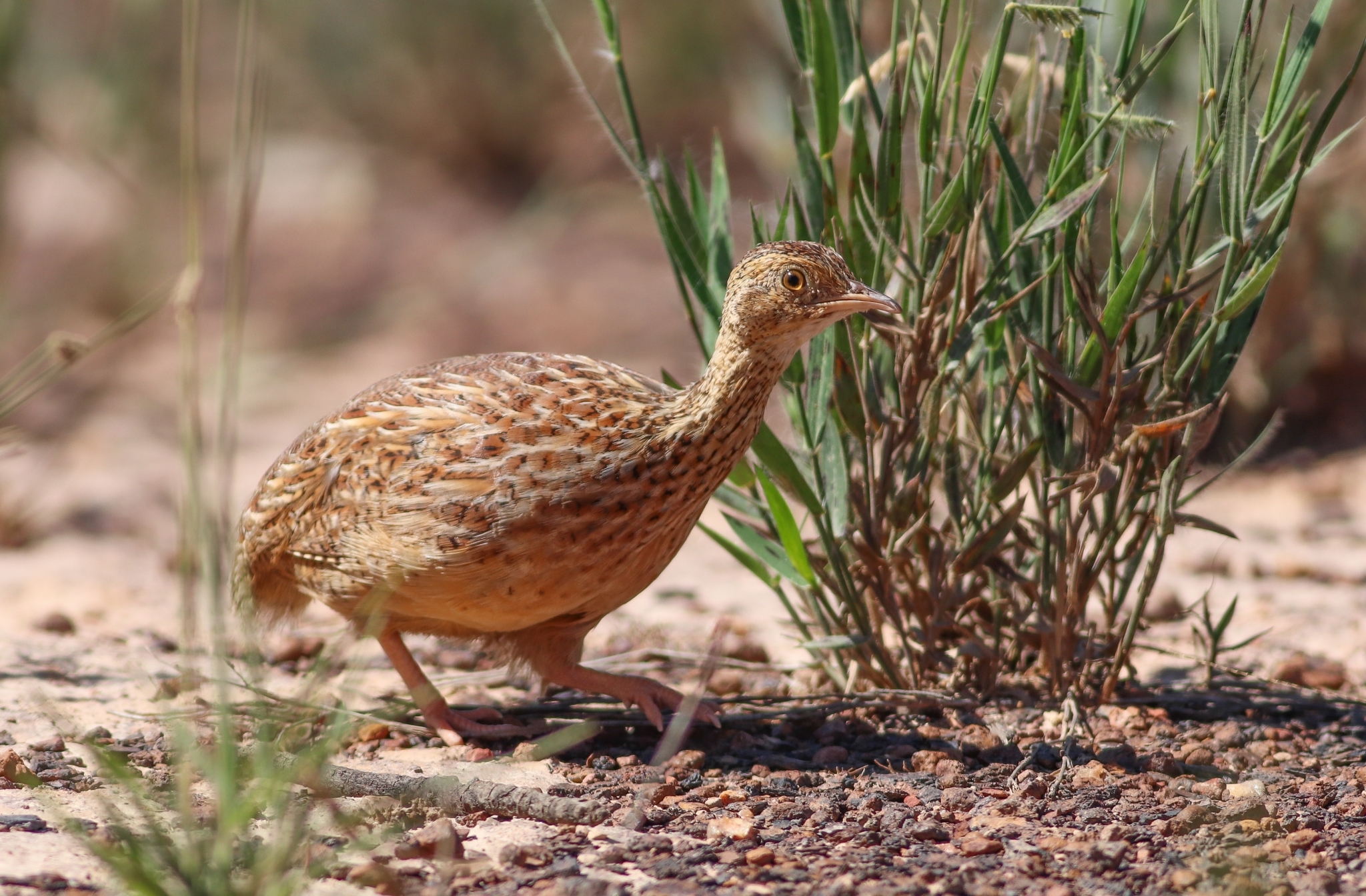
Lesser Nothura is a small, streaked nothura of the cerrado grasslands of central and south-eastern Brazil. It lives hidden in tall grass and is mostly noticed when it flushes right at your feet. Because natural cerrado grassland is being lost, the species is vulnerable.
Voice
A short series of high, thin whistles, sometimes accelerating, mainly heard in the early morning. When flushed a shrill squeak and a whirr of wings.
Recording: GABRIEL LEITE — CC BY-NC-SA 4.0 · xeno-canto
Identification
19–20 cm, with a short, slightly decurved bill and almost no tail. The crown is black with buff streaks. The throat is white; the neck and breast are warm buff with fine black streaks; the belly is buff to rusty buff. The upperparts are brown with black spots and broad pale longitudinal streaks. The primaries are barred. The legs are yellowish. The sexes are alike.
Confusion species
Spotted Nothura Nothura maculosa is larger, with a greyer-tinged breast and more barred flanks; it also lives in farmland. Dwarf Tinamou Taoniscus nanus is much smaller and has an insect-like call. White-bellied Nothura Nothura boraquira has a white belly and lives in drier, more northerly areas.
Habitat
Natural grassland and grassy cerrado (campo limpo and campo sujo), usually with tall, dense grass; also damper grassland along veredas; up to about 1200 m. It rarely moves into cropland or grazed land. It feeds on seeds and small invertebrates taken from the ground. The nest is on the ground in the grass.
Where the bird is most at home, classified by the vegetation units of Amazonia and the Guianas.



Range and movements
Endemic to Brazil: scattered and local in the cerrado of the Distrito Federal, Goiás, Minas Gerais, São Paulo, Mato Grosso do Sul and Mato Grosso, with old reports further east. Absent from Amazonia, Venezuela and the Guianas. Outside the guide area a few reports from eastern Paraguay.
- Resident
- dark = core range, pale = thinly spread
How and when to look
Walk slowly through large, ungrazed cerrado grassland, for example in Serra da Canastra National Park, the Itirapina Ecological Station or Emas National Park; birds sit tight for a long time and then flush low and briefly.
Conservation status
Vulnerable (IUCN). The population is small and fragmented; natural cerrado grassland is being converted on a large scale to cropland, pasture and tree plantations, and frequent fires add to this loss.
Scientific name
Nothura minor | (Spix, 1825)
Spix described the species in 1825 as Tinamus minor; because it was later moved to another genus, the author and year stand in brackets. The genus Nothura was introduced in 1827 by Wagler. Nothura is Greek, from nothos 'spurious' and oura 'tail': 'false tail', after the almost absent tail. minor is Latin for 'smaller', as this species is smaller than its relatives. The specimen the first description was based on came from Diamantina, Minas Gerais, Brazil.