All species › Passerines › Antpittas › Perija Antpitta
Perija Antpitta | Grallaria saltuensis
Perijámierpitta | Tororoí del Perijá | Tovacuçu-de-perijá
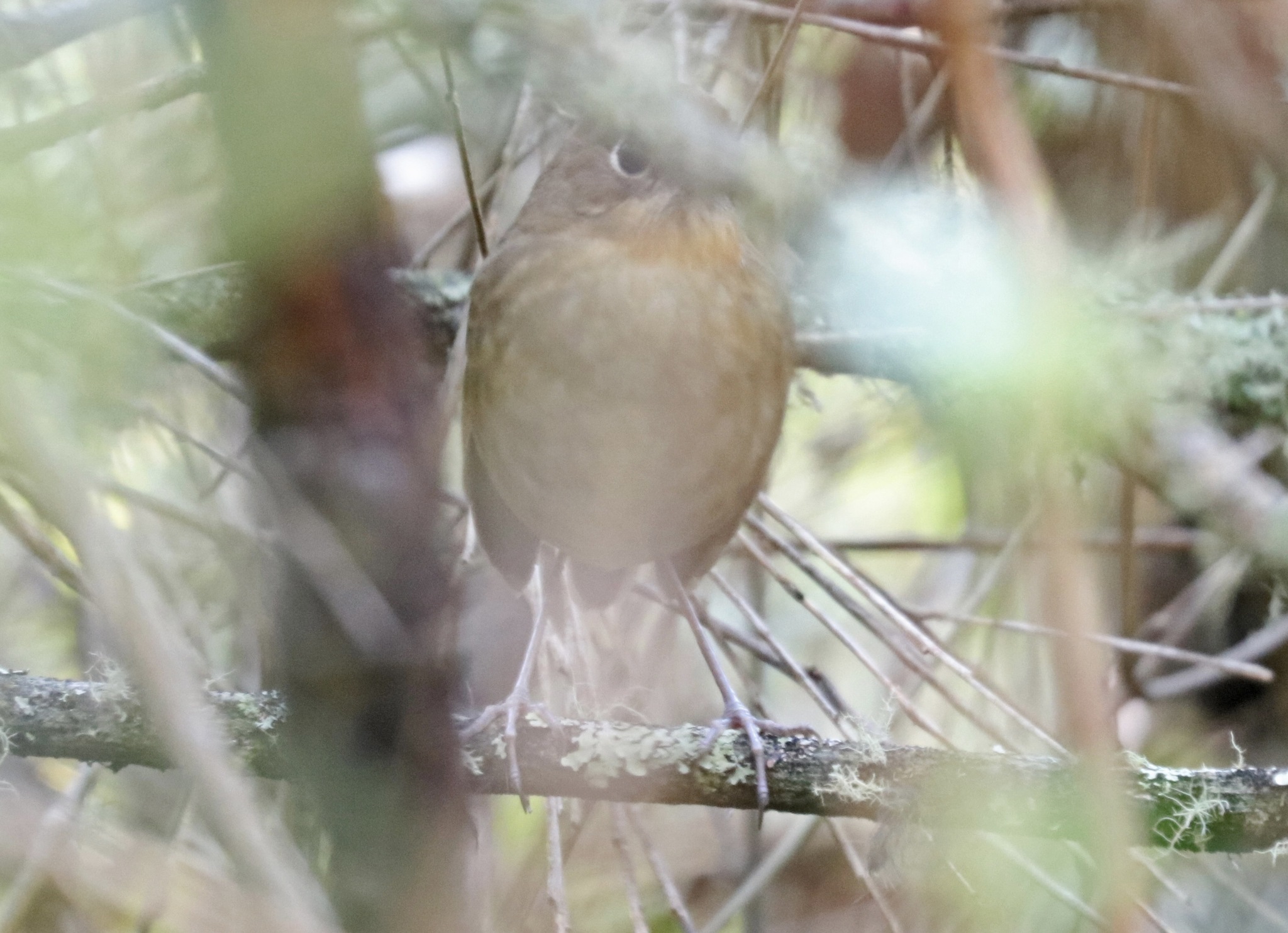
Perija Antpitta is a small, pale antpitta found only in the Serranía de Perijá on the border of Colombia and Venezuela. It was described in 1946 as a subspecies of Rufous Antpitta, but differs in its largely white underparts and its own song, and has been treated as a separate species since 2018, widely so since 2021. It lives on the floor of high montane forest.
Voice
The long song is a descending series of 10 to 20 pure whistled notes, about five per second. The short song is a flat trill of about half a second. It sings mainly at dawn and dusk, from the ground or a low perch.
Recording: Iván Lau — CC BY-NC-SA 4.0 · xeno-canto
Identification
14–15 cm, small, round and short-tailed, on pinkish-grey legs, with a two-toned bill. The upperparts are buff-brown to olive-brown. The throat is whitish and the underparts are largely dull white, with buff-brown breast sides, flanks and thighs. The sexes are alike.
Confusion species
Muisca Antpitta Grallaria rufula is uniformly rufous-brown, including the underparts; it lives in the Eastern Andes and Táchira and is separated from the Perijá by the Serranía de los Motilones. Rusty-breasted Antpitta Grallaricula ferrugineipectus is smaller, with a rusty breast. Chestnut-crowned Antpitta Grallaria ruficapilla is larger, with a rufous head and black-streaked underparts.
Habitat
The floor and understorey of humid montane forest, also forest edges and nearby disturbed areas, at about 2500 to 3250 m. Little is known about its food and breeding.
Where the bird is most at home, classified by the vegetation units of Amazonia and the Guianas.

Range and movements
Venezuela: only in the Serranía de Perijá in western Zulia, along the Colombian border. Not in Brazil, Guyana, Suriname or French Guiana. Outside the guide area on the Colombian side of the Perijá, in La Guajira and Cesar.
- Resident
- dark = core range, pale = thinly spread
How and when to look
The high Perijá on the Venezuelan side has limited access and there are few recent records. On the Colombian side, outside the guide area, the Chamicero de Perijá reserve protects part of its habitat; listen there at dawn above about 2500 m for the descending whistled series.
Conservation status
Near Threatened. The population is estimated at 1000 to 2500 mature individuals and is declining through loss and fragmentation of forest; lower on the slopes, forest is cleared for settlement, cattle ranching and drug crops.
Scientific name
Grallaria saltuensis | Wetmore, 1946
Wetmore described the species in 1946 and placed it straight away in the genus where it still stands. The genus Grallaria was introduced in 1816 by Vieillot. Grallaria is from Latin grallae 'stilts', after the long legs. saltuensis is Latin for 'of forests and mountain pastures', from saltus 'woodland, upland pasture', probably after its habitat in the Sierra de Perijá. The specimen the first description was based on came from Sierra de Perijá (c. 2,900–3,050 m), Colombia.