All species › Passerines › Wrens › Rufous Wren
Rufous Wren | Cinnycerthia unirufa
Rossige winterkoning | Cucarachero rufo | Garrinchão-ruivo
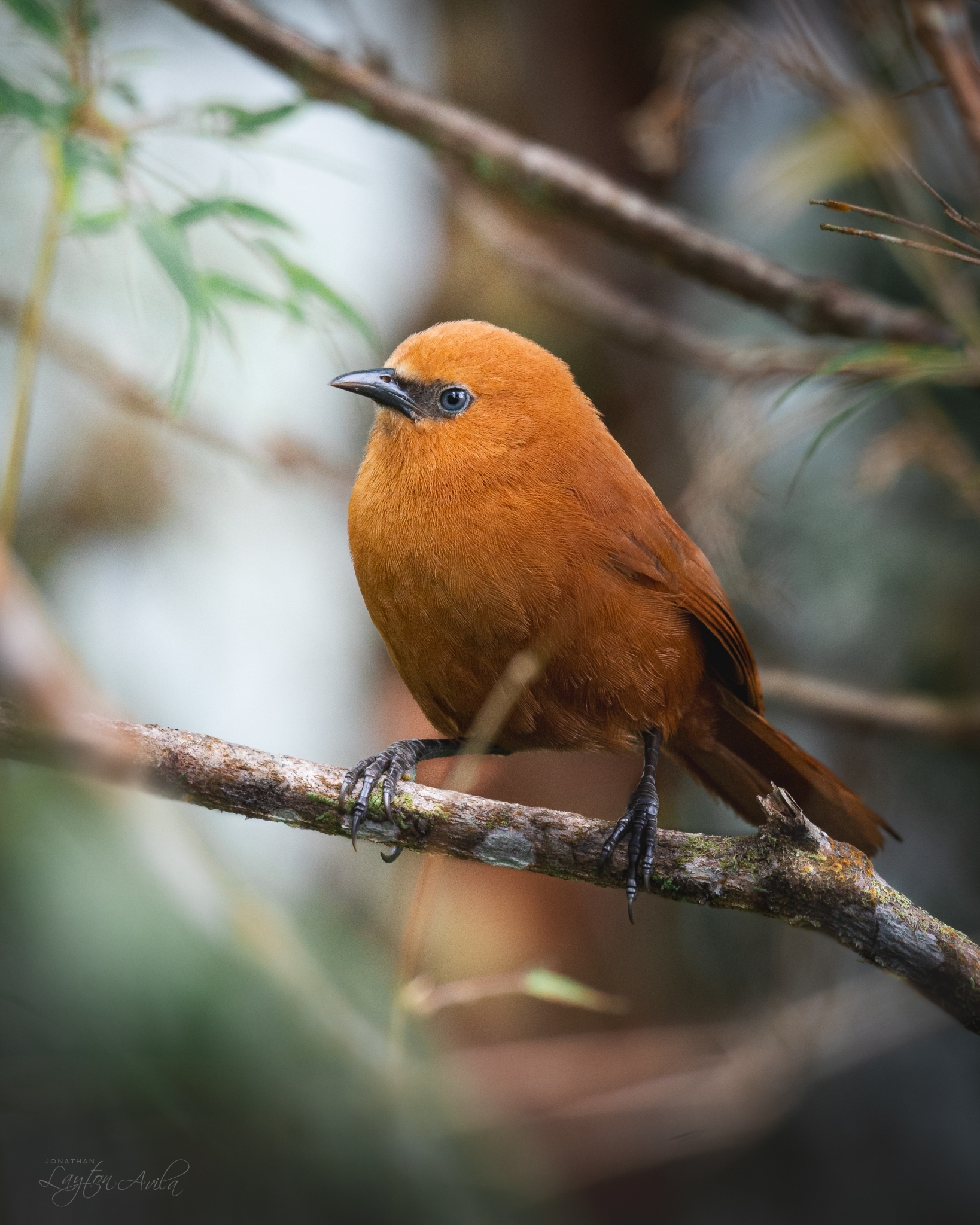
The Rufous Wren is an almost uniformly rufous-brown wren of high cloud forest and bamboo in the Andes. In the guide area it lives only in the far west of Venezuela, in the Serranía de Perijá and the Andes of Táchira. It moves through the undergrowth in noisy groups.
Voice
Groups sing a fast, loud chorus together of squeaky, gurgling and whistled notes, often with repeated phrases such as chee-choo-chee that overlap. The call is a hard, dry chit and rattling notes.
Recording: Daan van der Hoeven — CC BY-NC-SA 4.0 · xeno-canto
Identification
16–17 cm. Almost entirely warm rufous-brown to chestnut, underparts slightly paler and more orange-brown. Lores and forehead darker, sometimes blackish. Wings and tail with fine, faint dark bars. No supercilium and no face pattern. Bill fairly short and dark. Male and female alike; young birds duller.
Confusion species
Rufous Spinetail Synallaxis unirufa lives in the same bamboo and is also uniformly rufous-brown, but has a long, graduated tail without bars and a finer bill. Mountain Wren Troglodytes solstitialis is much smaller and has a distinct buff supercilium. Whiskered Wren Pheugopedius mystacalis has a streaked cheek and a black malar stripe and lives lower.
Habitat
Bamboo (Chusquea) and dense undergrowth in high cloud forest and elfin forest up to the edge of the páramo, roughly from 2300 to 3500 m. Groups of three to ten birds forage low in the vegetation for insects and spiders, sometimes in mixed flocks. The nest is a ball of moss and fibres with a side entrance, low in dense growth.
Where the bird is most at home, classified by the vegetation units of Amazonia and the Guianas.

Range and movements
Venezuela: only in the west, in the Serranía de Perijá on the border with Colombia and in the Andes of Táchira, such as around the Páramo de Tamá. Not known from Brazil or the Guianas; the single Brazilian report is probably an error. Outside the guide area in the Andes of Colombia and Ecuador.
- Resident
- dark = core range, pale = thinly spread
How and when to look
Look in bamboo at the edge of high cloud forest in southern Táchira. Groups are heard rather than seen; they move quickly through the bamboo and stay low.
Conservation status
Least Concern (IUCN). In the guide area restricted to a small mountain area; the species depends on undisturbed high montane forest.
Scientific name
Cinnycerthia unirufa | (de Lafresnaye, 1840)
De Lafresnaye described the species in 1840 as Limnornis unirufus; because it was later moved to another genus, the author and year stand in brackets. The genus Cinnycerthia was introduced in 1844 by Lesson. Cinnycerthia is a blend of the genus names Cinnyris (sunbirds) and Certhia (treecreepers). unirufa is Latin for 'uniformly rufous', from uni- 'single' and rufus 'rufous', after the plain rufous plumage. The specimen the first description was based on came from Bogotá, Colombia.