All species › Tinamous › Tinamous › Highland Tinamou
Highland Tinamou | Nothocercus bonapartei
Bergtinamoe | Tinamú serrano | Inhambu-serrano
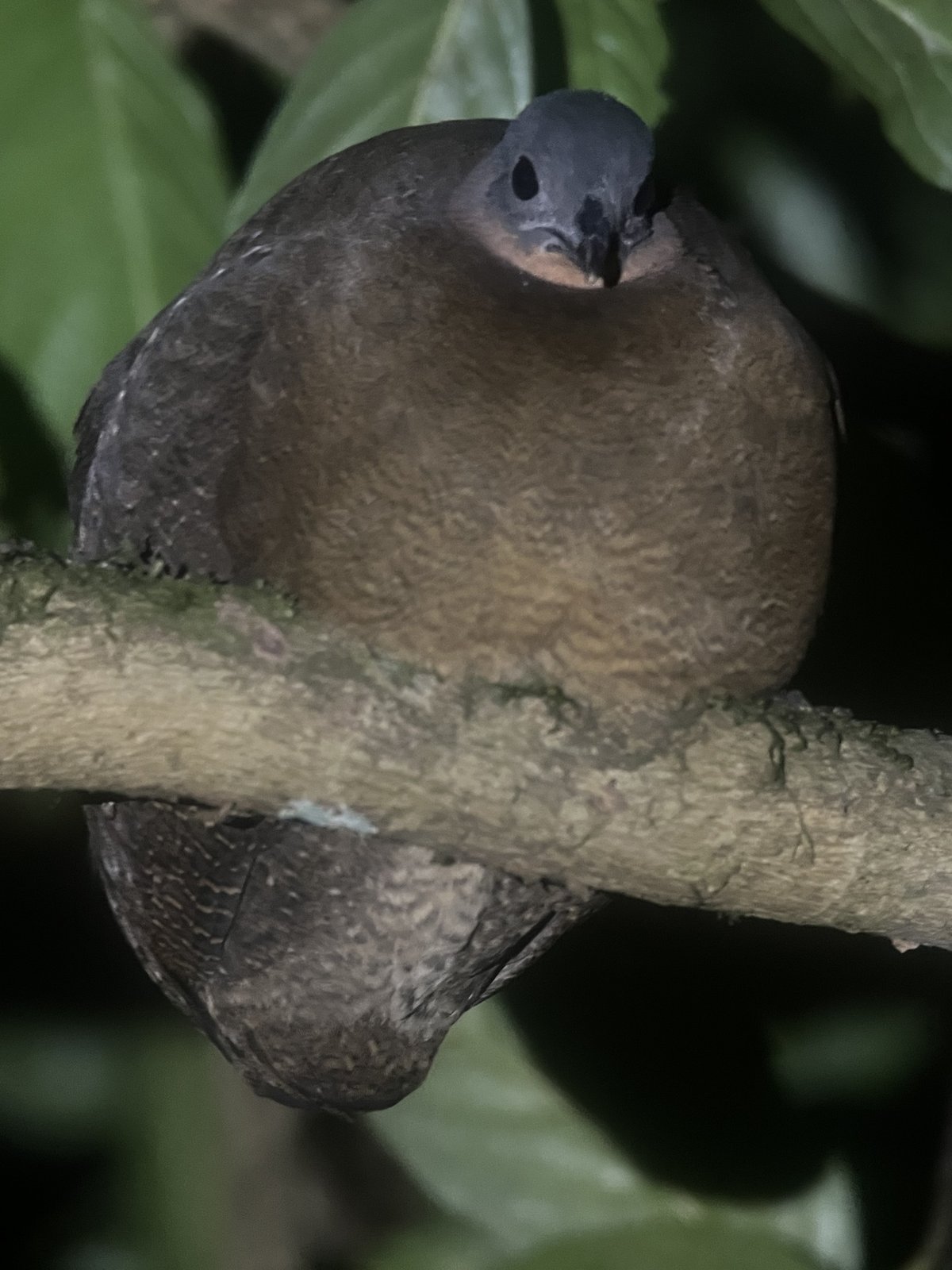
The Highland Tinamou is a large, dark tinamou of humid montane forest, from Central America to northern Peru. It lives on the forest floor, often in damp ravines, and gives itself away mainly by its deep, nasal call at dawn and dusk.
Voice
A deep, nasal, two-syllabled call, often repeated in series, mainly at dawn and dusk. A loud clatter of wings when flushed.
Recording: Mauricio Cuellar Ramirez (@Birding.travel) — CC BY-NC-SA 4.0 · xeno-canto
Identification
35–40 cm, with a fairly large head, a short, stout bill and almost no tail. The crown is blackish, and the throat rufous to cinnamon. The upperparts are dark brown and finely barred black, with pale spots on the wing coverts. The underparts are rufous to cinnamon, finely barred black on the breast and flanks. The sexes are alike.
Confusion species
Tawny-breasted Tinamou Nothocercus julius has a rufous head, a white throat and plainer, warm tawny underparts. Hooded Tinamou Nothocercus nigrocapillus has a grey head and throat and lives further south. Grey Tinamou Tinamus tao is larger and grey, with white speckling on the sides of the neck. Brown Tinamou Crypturellus obsoletus is smaller, with a greyer head and plain brown underparts.
Habitat
The floor of humid montane and cloud forest, especially in dense undergrowth and damp ravines, roughly between 1000 and 3000 m. It feeds on the ground on fruit, seeds and insects. The nest is on the ground between roots or under dense scrub.
Where the bird is most at home, classified by the vegetation units of the Andes and the west coast.


Range and movements
In Colombia in the Andes and the Serranía de Perijá. In Ecuador locally on the eastern slope. In Peru only in the north. Absent from Bolivia and the Galápagos. Outside the guide area in the mountains of Costa Rica, Panama and Venezuela, and locally further north in Central America.
- Resident
- dark = core range, pale = thinly spread
How and when to look
Listen at dawn in damp ravines in montane forest and search quiet trails, where birds sometimes walk on the ground. When disturbed they often stand still at first and then walk slowly away.
Conservation status
Least Concern. It suffers from deforestation of mountain slopes and disappears where heavily hunted.
Scientific name
Nothocercus bonapartei | (Gray, 1867)
Gray described the species in 1867 as Tinamus Bonapartei; because it was later moved to another genus, the author and year stand in brackets. The genus Nothocercus was introduced in 1856 by Bonaparte. The genus name comes from Greek nothos, 'spurious', and kerkos, 'tail'; the tail is very short. Named after Charles Lucien Bonaparte (1803–1857), French ornithologist and systematist. The specimen the first description was based on came from Aragua valley, Venezuela.