All species › Parrots › African and New World parrots › Orange-winged Amazon
Orange-winged Amazon | Amazona amazonica
Oranjevleugelamazone | Amazona alinaranja | Curica
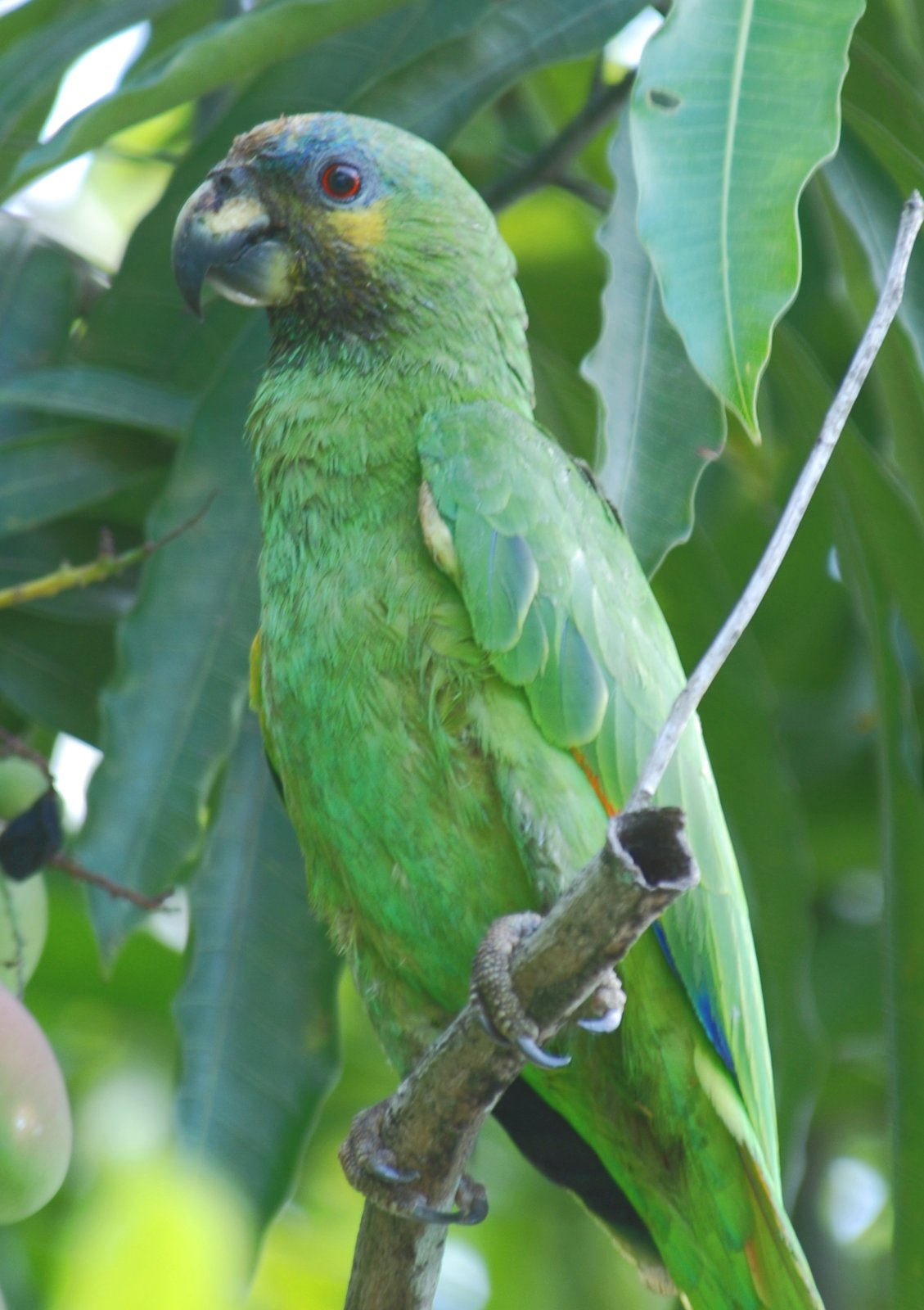
The Orange-winged Amazon is a medium-sized amazon parrot with blue and yellow on the head and an orange wing speculum. It is widespread in South America east of the Andes, especially in riverine forest and palm swamps. Large flocks gather at communal roosts.
Voice
A high, shrill, repeated call, sharper than in the other amazons, and much chattering at the roost.
Recording: JAYRSON ARAUJO DE OLIVEIRA — CC BY-NC-SA 4.0 · xeno-canto
Identification
31–33 cm, with a short, rounded tail. The plumage is green. The lores and eyebrow are blue to violet, the crown and cheeks yellow, to a varying extent. The speculum on the secondaries is orange, and the tail feathers are orange at the base, visible when the tail is spread. The bill is pale horn with a dark tip. The sexes are alike.
Confusion species
Yellow-crowned Amazon Amazona ochrocephala is larger, with a red bend of the wing and speculum and no blue on the head. Festive Amazon Amazona festiva has a red rump, a blue throat and no yellow on the head. Mealy Amazon Amazona farinosa is much larger, with a broad white eye-ring and a red speculum.
Habitat
Várzea and gallery forest, palm swamps with Mauritia, forest edges, savanna with groves, mangroves and parks, from the lowlands to about 600 m. It eats fruit, seeds and flowers, including those of palms. It nests in tree cavities or dead palms.
Where the bird is most at home, classified by the vegetation units of the Andes and the west coast.


Range and movements
In Colombia mainly in the Llanos and Amazonia, locally also in the north. In Ecuador locally in the north-east. In Peru in the north-east, along the Amazon and the lower reaches of its tributaries. In Bolivia in the north and north-east. Absent from the Galápagos. Outside the guide area in Venezuela, Trinidad and Tobago, the Guianas and much of Brazil.
- Resident
- dark = core range, pale = thinly spread
How and when to look
At dusk, search palm swamps and river islands in the Llanos or the Amazonian lowlands for flocks flying to their roost.
Conservation status
Least Concern. Locally the species is trapped for the bird trade or hunted, but it tolerates semi-open country well.
Scientific name
Amazona amazonica | (Linnaeus, 1766)
Linnaeus described the species in 1766 as Psittacus amazonicus; because it was later moved to another genus, the author and year stand in brackets. The genus Amazona was introduced in 1830 by Lesson. The genus name is a Latinised form of Amazone, the name the French naturalist Buffon gave these parrots in the 18th century, believing they came from the Amazon jungles. The species name refers to the Amazon region, not necessarily the type locality. The specimen the first description was based on came from Amazon region.