All species › Passerines › Thrushes and allies › Pale-eyed Thrush
Pale-eyed Thrush | Turdus leucops
Taczanowski's lijster | Zorzal ojiblanco | Sabiá-de-olho-branco
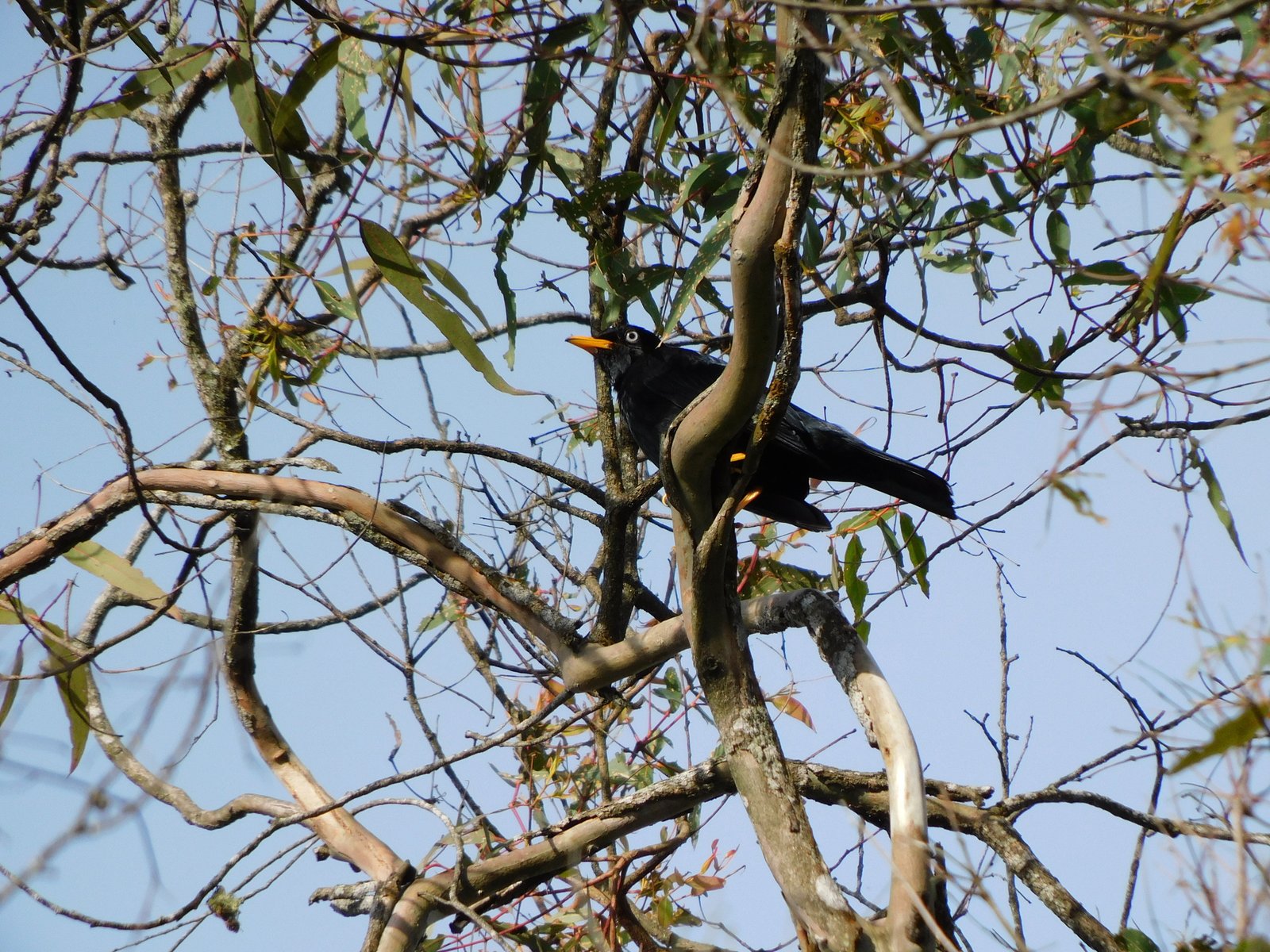
The Pale-eyed Thrush is a medium-sized thrush of montane forest on the slopes of the Andes and on the tepuis of Venezuela and the Guianas. The male is glossy black with a white iris, a combination that among the thrushes of the guide area only this species shows. Birds wander and appear locally at fruiting trees.
Voice
The song is a varied, fairly fast series of short, fluty and twittering phrases with short pauses, often given from a high perch in the canopy. Also a soft chup and a short rattle.
Recording: Charlie Vogt — CC BY-NC-SA 4.0 · xeno-canto
Identification
20–21 cm. The male is entirely glossy black, with a pale, bluish-white iris, a yellow bill and yellow legs. The female is plain olive-brown, slightly paler below, with a paler, faintly streaked throat, a darker eye than the male, a dark bill and yellowish-brown legs. Young birds are brown, with pale spots on the upperparts.
Confusion species
The male Glossy-black Thrush Turdus serranus is larger, with a dark eye, an orange eye-ring, an orange bill and orange legs. The male Yellow-legged Thrush Turdus flavipes has a grey back and belly and a yellow eye-ring around a dark eye. The female resembles females of other brown thrushes; note the small size, the plain plumage and the paler throat.
Habitat
The canopy and middle levels of humid montane forest, cloud forest and forest edge, mainly at about 900 to 2200 m. It eats mainly fruit and berries and also insects; several birds sometimes gather at fruiting trees. The nest is a cup of moss and plant material in a tree.
Where the bird is most at home, classified by the vegetation units of the Andes and the west coast.


Range and movements
In Colombia locally on the slopes of the Andes. In Ecuador mainly on the eastern slope, locally also in the north-west. In Peru along the eastern slope of the Andes from north to south. In Bolivia along the eastern slope in the north and centre of the country. Absent from the Galápagos. Outside the guide area in the mountains of Venezuela, Guyana and the far north of Brazil.
- Resident
- dark = core range, pale = thinly spread
How and when to look
In montane forest on the eastern slope watch for black thrushes in fruiting trees along forest edges and roads; the male can be recognised by its white iris. Birds appear irregularly, may visit a site for weeks and then disappear again.
Conservation status
Least Concern. The population is scattered and fluctuating, but the species occurs over a large area; deforestation of the slopes plays a role locally.
Scientific name
Turdus leucops | Taczanowski, 1877
Taczanowski described the species in 1877 and placed it straight away in the genus where it still stands. The genus Turdus was introduced in 1758 by Linnaeus. The genus name comes from Latin turdus, 'thrush'. The species name comes from Greek leukos, 'white', and ōps, 'eye', referring to the male's pale eye. The specimen the first description was based on came from Ropaybamba, Peru.