All species › Passerines › Cotingas › Plum-throated Cotinga
Plum-throated Cotinga | Cotinga maynana
Pruimkeelcotinga | Cotinga golimorada | Cotinga-de-garganta-roxa
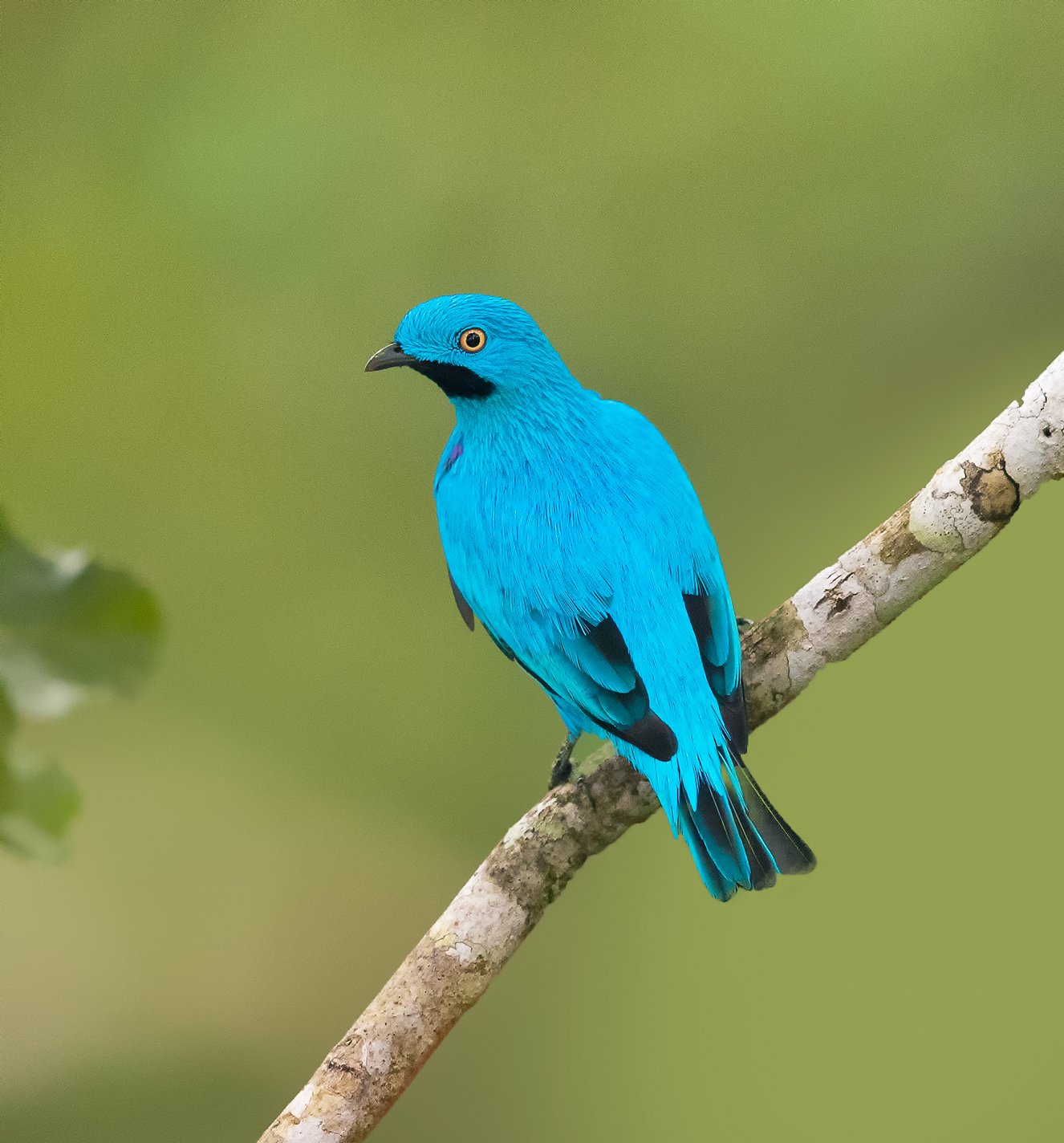
The Plum-throated Cotinga is a turquoise-blue cotinga of western Amazonia. The male is glossy blue with a small, plum-purple throat patch. In the early morning it often perches on a bare branch above the canopy, where it sits motionless in the sun for long periods.
Voice
Largely silent. The male's wings make a whistling or rattling sound in flight.
Recording: Paul Coopmans — CC BY-NC-SA 4.0 · xeno-canto
Identification
19 cm, with a round head, a small, dark bill and a short tail. The male is glossy turquoise blue, with a plum-purple throat patch; the wings and tail are black with blue edges to the feathers. The female is greyish brown, scaled above with pale fringes and paler below, with a cinnamon belly and dark scaling on the breast. Young males at first resemble the female.
Confusion species
The male Spangled Cotinga Cotinga cayana is paler turquoise with black spotting on the upperparts and a larger, rose-purple throat; its female is greyer and more evenly spotted, without cinnamon on the belly. The male Purple-breasted Cotinga Cotinga cotinga is darker blue with purple across the throat and breast. Blue Cotinga Cotinga nattererii lives west of the Andes.
Habitat
The canopy and edges of humid lowland forest, both terra firme and várzea, also forest along rivers and in the foothills; mostly below 1000 m. It eats mainly fruit, often together with other frugivores in fruiting trees. The nest is a small, shallow cup high in a tree.
Where the bird is most at home, classified by the vegetation units of the Andes and the west coast.


Range and movements
In Colombia in the south-eastern Amazonian lowlands. In Ecuador in the eastern lowlands and on the lower east slope. In Peru throughout the Amazonian lowlands. In Bolivia in the north. Absent from the Galápagos. Outside the guide area in western Brazil.
- Resident
- dark = core range, pale = thinly spread
How and when to look
In the early morning, from canopy towers in eastern Ecuador and Peru, scan the bare tops of tall trees for a blue bird in the sun.
Conservation status
Least Concern. Fairly widespread in western Amazonia, where much forest remains.
Scientific name
Cotinga maynana | (Linnaeus, 1766)
Linnaeus described the species in 1766 as [Ampelis] Maynana; because it was later moved to another genus, the author and year stand in brackets. The genus Cotinga was introduced in 1760 by Brisson. The genus name goes back, via Brisson (1760), to the Tupí name catingá, 'bright forest (bird)', for the colourful cotingas. The species name refers to Maynas, a region in the Peruvian Amazon. The specimen the first description was based on came from Maynas, Peru.