All species › Passerines › Thrushes and allies › Plumbeous-backed Thrush
Plumbeous-backed Thrush | Turdus reevei
Loodruglijster | Zorzal dorsiplomizo | Sabiá-de-dorso-plúmbeo
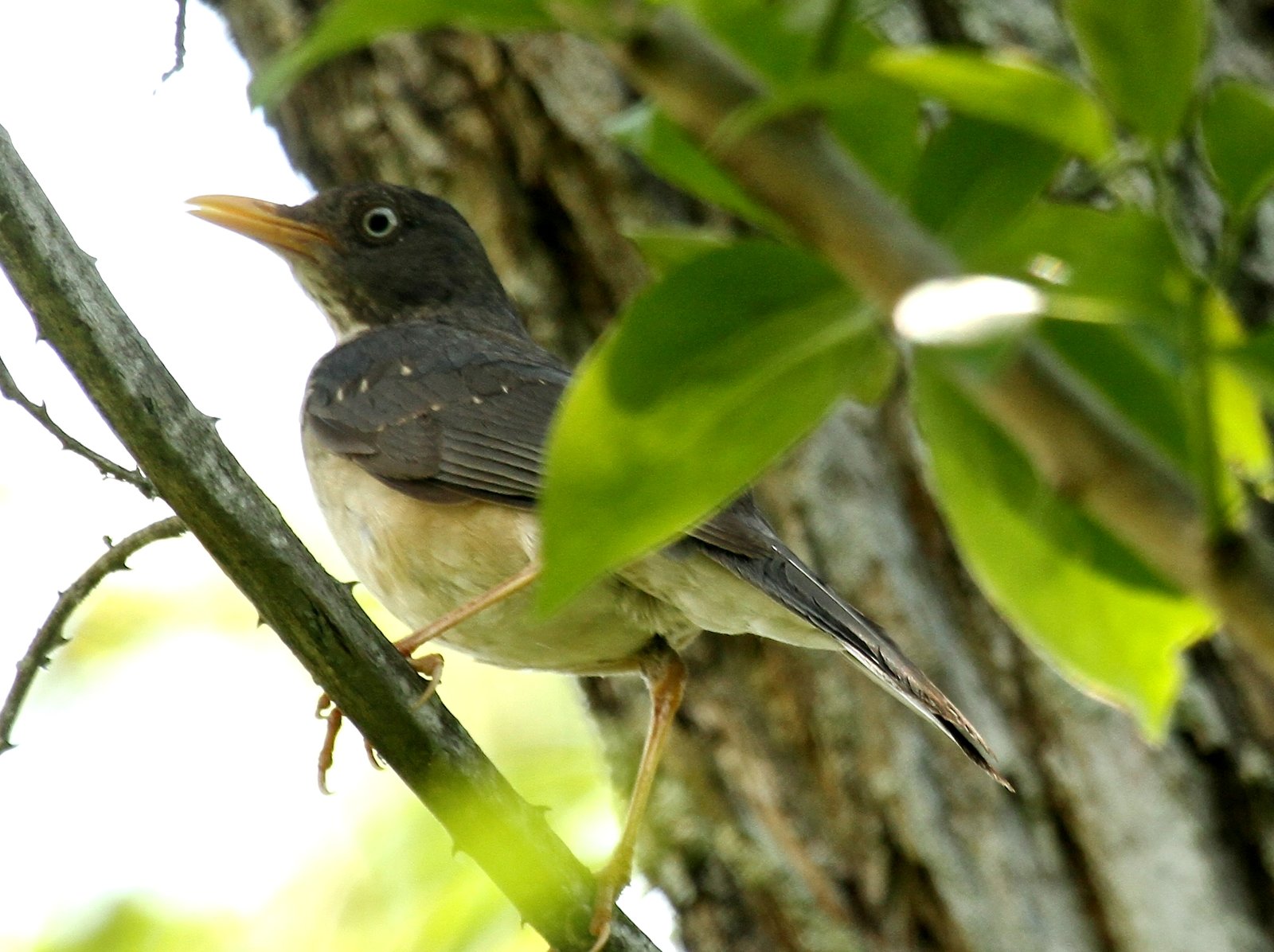
The Plumbeous-backed Thrush is a thrush of the Tumbesian region in western Ecuador and north-western Peru, and occurs only in the guide area. It has a bluish-grey back, a whitish iris and a yellow bill. In the rainy season it sings loudly in dry forest; at other times birds move around locally.
Voice
The song is a series of clear, fluty phrases, varied and often sustained for a long time, mainly in the rainy season from January to April. The call is a dry, sharp chik.
Recording: Peter de Rouw — CC BY-NC-SA 4.0 · xeno-canto
Identification
22–23 cm. The upperparts are bluish slate-grey. The throat is white with dark streaks, the breast pale grey, the belly white and the flanks pale buff. The iris is bluish white, the bill yellow and the legs yellowish. The female is slightly browner above. Young birds have pale spots on the upperparts and dark spots on the underparts.
Confusion species
Ecuadorian Thrush Turdus maculirostris occurs in the same area, but is olive-brown above, with a dark eye and a yellow eye-ring. Chiguanco Thrush Turdus chiguanco is plain greyish brown, without a streaked throat, and lives higher in drier, open country.
Habitat
Dry and semi-humid deciduous forest, forest edges and scrub with trees in the Tumbesian region, from sea level to about 1800 m. It searches the ground and trees for insects and fruit. It breeds in the rainy season; the nest is a cup in a tree or shrub.
Where the bird is most at home, classified by the vegetation units of the Andes and the west coast.


Range and movements
In Ecuador in the west, from Manabí and Guayas south to El Oro and Loja. In Peru in the north-west, in Tumbes, Piura, Lambayeque and Cajamarca. Absent from Colombia, Bolivia and the Galápagos. Does not occur outside the guide area.
- Resident
- dark = core range, pale = thinly spread
How and when to look
Visit the dry forest of south-western Ecuador and north-western Peru in the rainy season, from January to April; birds then sing from high perches and feed on forest trails.
Conservation status
Least Concern, but with a small range in Tumbesian dry forest, which has been greatly reduced by logging, grazing and conversion to farmland.
Scientific name
Turdus reevei | Lawrence, 1869
Lawrence described the species in 1869 and placed it straight away in the genus where it still stands. The genus Turdus was introduced in 1758 by Linnaeus. The genus name comes from Latin turdus, 'thrush'. The species name honours J. F. Reeve, who collected the type specimen. The specimen the first description was based on came from Isla Puná, Ecuador.