All species › Cranes, rails and allies › Rails, gallinules and coots › American Coot
Position in the tree Birds Aves › Birds with a flexible palate Neognathae › All other modern birds Neoaves › Birds of the elements Elementaves › Cranes and waders Gruimorphae
American Coot | Fulica americana
Amerikaanse meerkoet | Gallareta americana
American Coot is a stocky, slate-grey waterbird with a white bill, often swimming in large flocks on open water. It is the commonest rail of North America and the most visible in the guide area, where it is both a resident and a winter visitor on lakes, lagoons and reservoirs. Unlike the gallinules it has broad lobes on its toes, which make it a good swimmer and diver.

Voice
A varied repertoire of short, harsh, grunting and cackling calls, such as puhk, kuk-kuk-kuk and a nasal krrek; in the breeding season also longer cackling series. Flocks are noisy, especially during disputes, when birds run at each other across the water with spread wings.
Recording: Max Noack — CC BY-NC-SA 4.0 · converted to mono · xeno-canto
Identification
34–43 cm. Uniformly slate-grey, blackish on the head and neck. The bill is white to ivory with a dark ring near the tip; the white frontal shield has a small reddish-brown swelling at the top. The iris is red. The undertail coverts are white at the sides. In flight a narrow white trailing edge to the secondaries shows. The legs are greenish yellow, with broad, lobed toes. Young birds are greyer and paler, with a pale throat and breast and a greyish bill. Patters across the water on take-off.
Confusion species
Common Gallinule Gallinula galeata is slimmer, with a red frontal shield and a red, yellow-tipped bill, a white flank line and toes without lobes. Pied-billed Grebe Podilymbus podiceps is brown, with a short, thick bill and no frontal shield, and dives more often and for longer. Females and young of Ruddy Duck Oxyura jamaicensis are brown, with a pale cheek and a stiff, often cocked tail.
Habitat
Open fresh water with waterside vegetation: lakes, reservoirs, ponds, lagoons, slow rivers and marshes; also saline and alkaline lakes on the plateau, brackish coastal lagoons and rice fields. From sea level to above 2500 m. Feeds mainly on aquatic plants and algae, diving, dabbling or grazing on banks and lawns, and also on insects, snails and other small aquatic life. The nest is a floating platform of plant material anchored in the waterside vegetation.
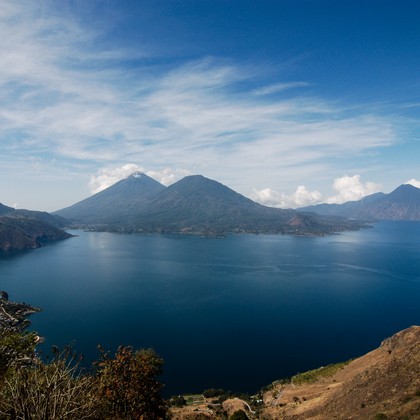
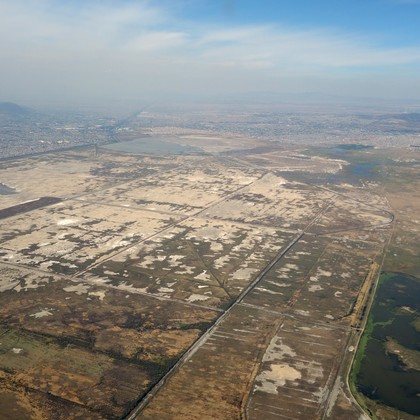
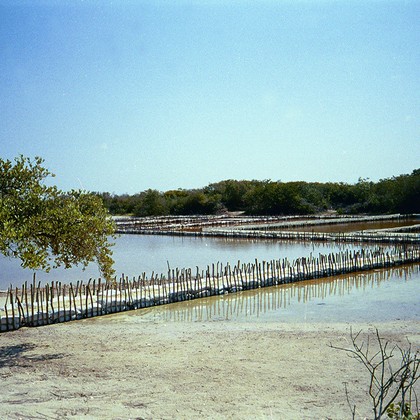
Where the bird is most at home, classified by the vegetation units of Mexico and Central America.


Range and movements
Resident in northern Mexico and on the central plateau, with large breeding populations on the lakes and reservoirs of the interior, and locally in the highlands further south, including Guatemala. In winter far more numerous and widespread, with birds from North America on lakes and lagoons throughout Mexico and Central America; south to Panama, where the species is scarce. Outside the guide area from southern Canada through the United States to the Caribbean; a separate subspecies lives in the Andes of Colombia.
- Resident
- dark = core range, pale = thinly spread
How and when to look
In winter on almost any larger lake or reservoir in Mexico, often in flocks of hundreds, for example on Lake Chapala, Lake Pátzcuaro and the lakes around Mexico City. In Guatemala, among other places, on Lake Atitlán. Flocks often graze on lawns and banks, when the lobed toes are easy to see.
Conservation status
Not threatened. The species is very numerous and locally benefits from the construction of reservoirs and ponds. In Mexico it is hunted on the large lakes.
Scientific name
Fulica americana | Gmelin, 1789
Gmelin described the species in 1789 and placed it straight away in the genus where it still stands. The genus Fulica was introduced in 1758 by Linnaeus. Fulica is the Latin word for a coot. americana is Latin for 'American'. The specimen the first description was based on came from North America.