All species › Passerines › New World blackbirds, troupials and allies › Audubon's Oriole
Position in the tree Birds Aves › Birds with a flexible palate Neognathae › All other modern birds Neoaves › Landbirds Telluraves › Falcons, parrots and passerines Australaves › Falcons and passerines Eufalconimorphae › Parrots and passerines Psittacopasserae
Audubon's Oriole | Icterus graduacauda
Zwartkoptroepiaal | Bolsero cabeza negra
Audubon's Oriole is a yellow-and-black oriole of dense forest and scrub in eastern and western Mexico, with an outlier in the far south of Texas. It lives hidden in the foliage and is heard more often than seen.
Voice
The song consists of slow, separate whistled notes with pauses between them, sounding somewhat hesitant and human, as if someone is learning to whistle. The call is a nasal nyeh, often in short series.
Recording: Matthew L. Brady — CC BY-NC-SA 4.0 · converted to mono · xeno-canto
Identification
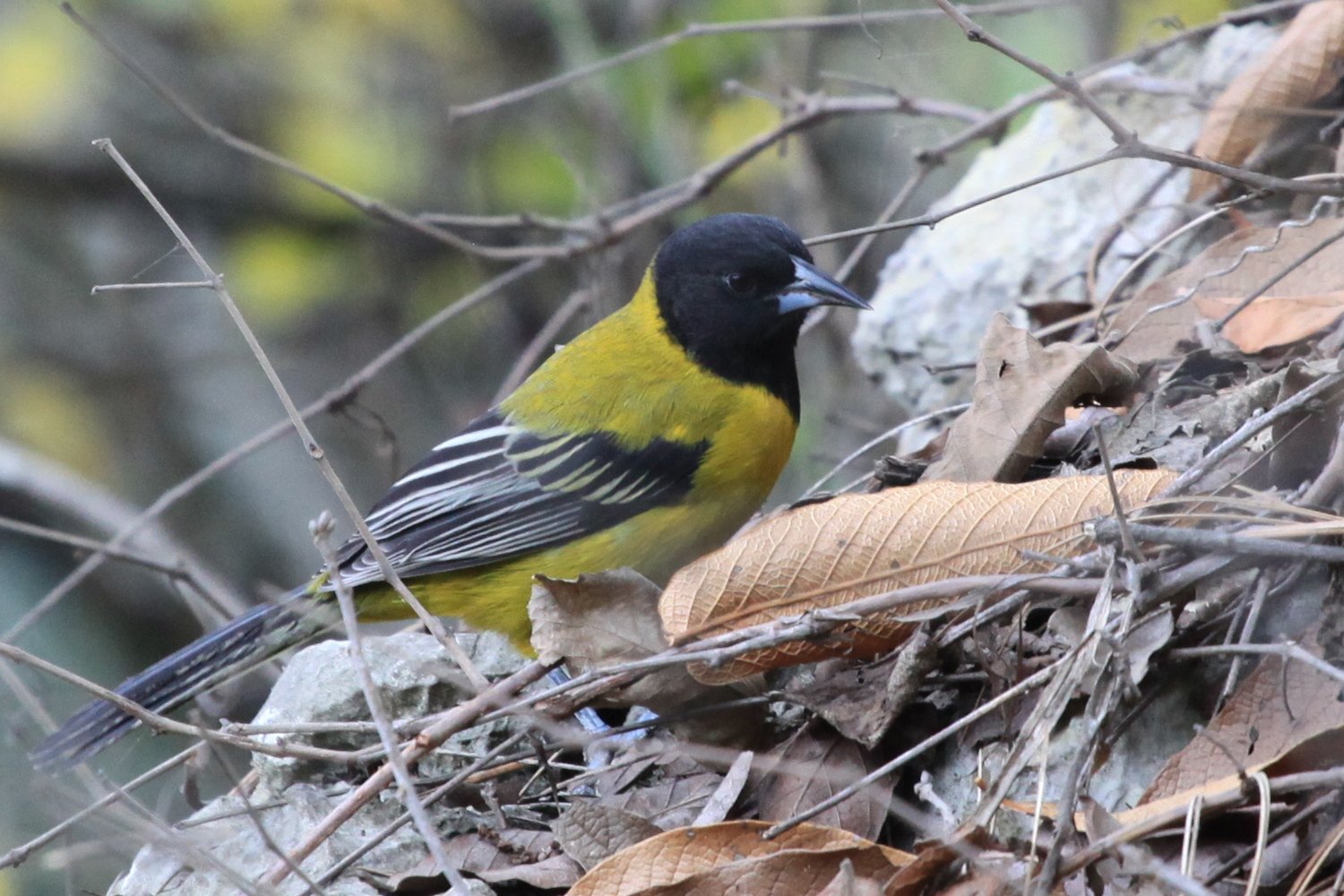
20–24 cm. Large oriole with a straight, pointed bill and a fairly long tail. In both sexes head, throat and upper breast are black. The back is olive-yellow to greenish yellow, the underparts bright yellow. The wing is black with narrow white edges to the flight feathers and a yellow shoulder patch; the tail is black. The female resembles the male but has a more olive back. Young birds lack the black hood.
Confusion species
Scott's Oriole Icterus parisorum also has a black head, but a black back and a white wing bar, and lives in drier, more open country. Black-vented Oriole Icterus wagleri has a black back and black undertail coverts. Hooded Oriole Icterus cucullatus and other black-throated orioles have a yellow or orange crown and nape.
Habitat
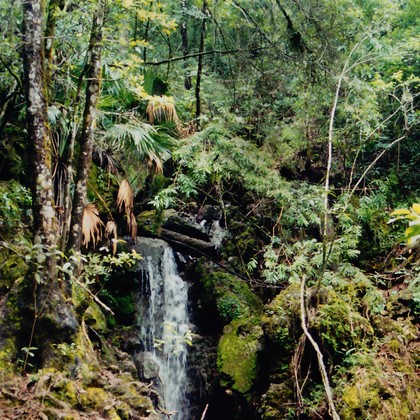
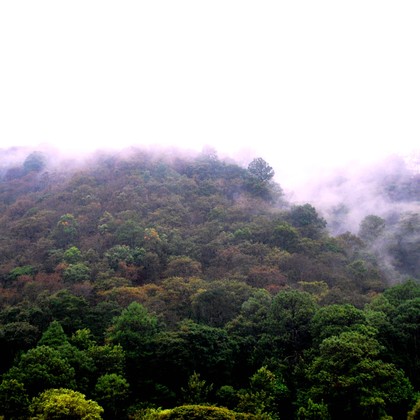
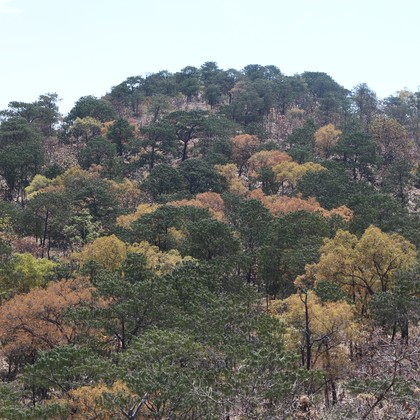
Humid and semi-humid forest, pine-oak woodland, cloud forest, dense riparian woodland and scrub, from the lowlands to about 2500 m. It searches for insects and fruit in dense vegetation, often low and hidden; it comes into open terrain less than other orioles.
Where the bird is most at home, classified by the vegetation units of Mexico and Central America.



Range and movements
In the east from the far south of Texas and Nuevo León and Tamaulipas south through San Luis Potosí, Querétaro, Hidalgo, Veracruz and Puebla to northern Oaxaca. In the west from Nayarit and Jalisco south through Colima, Michoacán and Guerrero to Oaxaca. Occurs only in Mexico and the far south of Texas.
- Resident
- dark = core range, pale = thinly spread
How and when to look
Best found by listening for the slow whistles from dense scrub and then waiting patiently for the bird to show itself; it moves slowly through the foliage.
Conservation status
Not threatened (LC). Fairly common in suitable habitat in Mexico; scarce in Texas owing to the loss of riparian woodland. Deforestation is the main threat.
Scientific name
Icterus graduacauda | Lesson, 1839
Lesson described the species in 1839 and placed it straight away in the genus where it still stands. The genus Icterus was introduced in 1760 by Brisson. Icterus is from Ancient Greek ikteros, a yellow bird usually taken to be the golden oriole, the sight of which was thought to cure jaundice. graduacauda is Latin, from gradus 'step' and cauda 'tail', after the graduated tail with shorter outer feathers. The specimen the first description was based on came from Mexico.