All species › Birds of prey › Kites, Old World vultures, eagles and hawks › Black Hawk-Eagle
Position in the tree Birds Aves › Birds with a flexible palate Neognathae › All other modern birds Neoaves › Landbirds Telluraves › Raptors, owls, kingfishers and woodpeckers Afroaves › Hawks and owls Hieraves
Black Hawk-Eagle | Spizaetus tyrannus
Zwarte kuifarend | Águila tirana
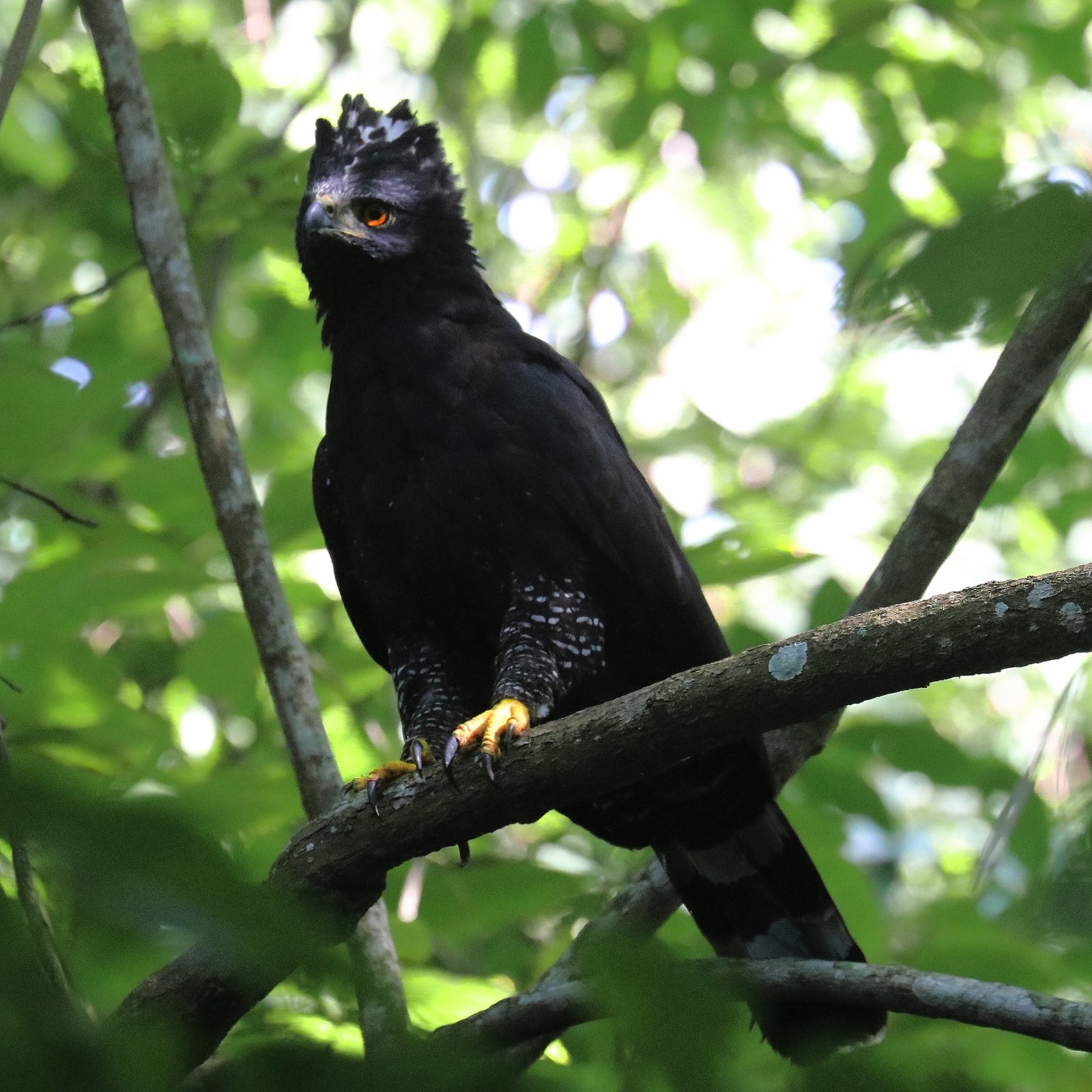
The Black Hawk-Eagle is a slender, mostly black forest eagle with a short, bushy crest, broad rounded wings and a long, banded tail. It is noticed mainly by its loud, whistled call, given during the morning while it circles high above the forest. It hunts mammals such as squirrels, opossums and bats, as well as birds and reptiles. In the guide area it is resident from central and southern Mexico to Panama.
Voice
A loud, whistled whit-whit-wheeeeer or whee-whee-whee-wheeyer, with a long, descending final note, often repeated in flight over the forest, especially in mid-morning.
Recording: JAYRSON ARAUJO DE OLIVEIRA — CC BY-NC-SA 4.0 · converted to mono · xeno-canto
Identification
58–70 cm, with a long tail and short, broad wings narrowed at the base. Adults are black with a short, often flattened crest hiding some white; the thighs and feathered legs are finely barred white. The tail has three or four broad grey bands. In flight the flight feathers are boldly barred black and white from below. The eye is yellow to orange. Young birds are brownish-black with a pale, dark-streaked head, a white eyebrow and paler, spotted underparts. Male and female are alike; the female is slightly larger.
Confusion species
The Common Black Hawk Buteogallus anthracinus and Great Black Hawk Buteogallus urubitinga have broader wings, a shorter tail with one or two broad white bands, unbarred flight feathers and bare yellow legs. The dark morph of the Short-tailed Hawk Buteo brachyurus is smaller and short-tailed. The dark morph of the Hook-billed Kite Chondrohierax uncinatus has a pale eye, a heavy hooked bill and a single white tail band.
Habitat
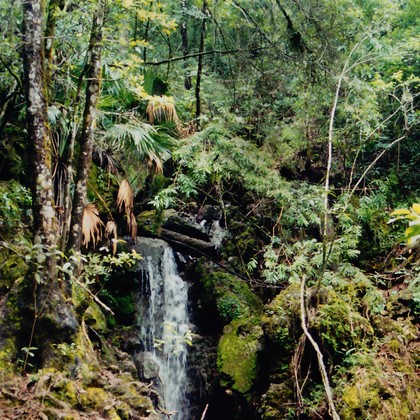
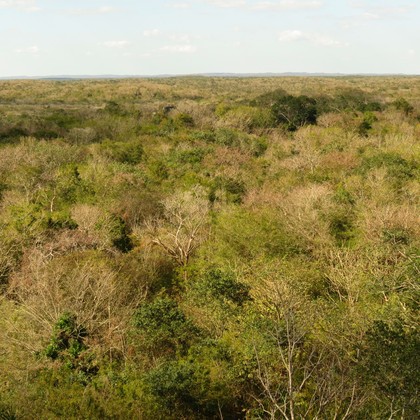
Humid lowland and foothill forest, gallery forest, forest edges, old secondary forest and semi-open country with woodlots; in Mexico and Guatemala locally also in cloud forest and seasonal forest. It tolerates more disturbance and fragmentation than the other hawk-eagles. It hunts from a concealed perch in the forest or from the air. The nest is a large stick platform high in a tree.
Where the bird is most at home, classified by the vegetation units of Mexico and Central America.




Range and movements
Resident in Mexico on the Gulf side from San Luis Potosí and Veracruz and on the Pacific side from Nayarit and Jalisco, south through Oaxaca, Chiapas and the Yucatán Peninsula; further throughout Central America to Panama. Scarce in El Salvador. Outside the guide area in tropical South America south to northeastern Argentina.
- Resident
- dark = core range, pale = thinly spread
How and when to look
In mid-morning, as thermals develop, it can be seen and especially heard from a viewpoint over the forest, for example at Tikal in Guatemala, in Belize and in the lowlands and foothills of Costa Rica and Panama. The long tail and narrow wing base distinguish it from the black hawks.
Conservation status
Not threatened. Locally declining through deforestation and hunting, but less sensitive to forest fragmentation than the other hawk-eagles.
Scientific name
Spizaetus tyrannus | (Wied-Neuwied, 1820)
Wied-Neuwied described the species in 1820 as Falco tyrannus; because it was later moved to another genus, the author and year stand in brackets. The genus Spizaetus was introduced in 1816 by Vieillot. Spizaetus is Greek, from spizias 'hawk' and aetos 'eagle': 'hawk-eagle'. tyrannus is Latin for 'tyrant, ruler', after this powerful raptor. The specimen the first description was based on came from Rio Belmonte, Bahia, Brazil.