All species › Tubenoses › Northern storm petrels › Black Storm Petrel
Position in the tree Birds Aves › Birds with a flexible palate Neognathae › All other modern birds Neoaves › Birds of the elements Elementaves › Tropicbirds and waterbirds Phaethoquornithes › Core waterbirds Aequornithes
Black Storm Petrel | Hydrobates melania
Zwart stormvogeltje | Paíño negro
The Black Storm Petrel is the largest all-dark storm petrel in the guide area, with a long, deeply forked tail and slow, deep wingbeats. Most of the world population breeds on islands off Baja California and in the Gulf of California. Outside the breeding season it can be seen along the whole Pacific coast of the guide area, often not far offshore and in large flocks together with the Least Storm Petrel.

Voice
Almost silent at sea. At the colony, which is visited only at night, a loud, rhythmically repeated puck-a-ree, puck-puck-a-ree comes from rock crevices and burrows.
No recording with a suitable Creative Commons licence is available for this species yet.
Identification
21–23 cm. A fairly large, slender storm petrel with long wings, long legs and a long, deeply forked tail. The plumage is entirely blackish brown, without a pale rump; a pale brown diagonal band runs across the upperwing coverts. Male, female and young birds are alike. The flight is calm and heavy for a storm petrel: deep beats in which the wings are raised high above the body, alternating with short glides. Often rests in flocks on the water.
Confusion species
Markham's Storm Petrel Hydrobates markhami, which occurs off southern Central America, is about the same size but browner, with a more distinct pale wing band reaching almost to the leading edge of the wing and a lighter flight. The Ashy Storm Petrel Hydrobates homochroa is smaller and greyer brown, with pale underwing coverts and shallow, fluttering wingbeats. The Least Storm Petrel Hydrobates microsoma is much smaller, with a short, wedge-shaped tail and a fast flight skimming low over the water. Dark-rumped Leach's Storm-Petrels Hydrobates leucorhous and Townsend's Storm Petrels Hydrobates socorroensis are smaller, shorter-legged and fly in a more bounding, erratic way.
Habitat
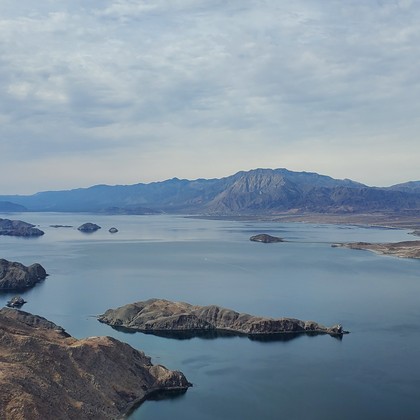
Coastal waters and the continental shelf, but also deeper water further offshore; in the Gulf of California often close to the shore. Takes small fish, fish larvae and crustaceans from the surface in flight. Rests at sea in flocks, sometimes of thousands of birds. Breeds in rock crevices, among rubble and in burrows on small rocky islands.
Where the bird is most at home, classified by the vegetation units of Mexico and Central America.


Range and movements
Breeds on islands off the Pacific coast of Baja California, including the San Benito Islands, and on islands in the Gulf of California, with large colonies on Isla Partida; a small number breed on Santa Barbara Island off California. After the breeding season some move north to off central California, but most birds go south. In winter mainly off the Pacific coast of southern Mexico and Central America, from Oaxaca and Guatemala to the Gulf of Panama, and further south to off Peru. The species does not occur on the Atlantic side of the guide area.
- Resident
- Summer visitor (c. Apr–Sep)
- Winter visitor (c. Oct–Mar)
- Passage (Mar–Apr, Oct–Nov)
- dark = core range, pale = thinly spread
How and when to look
Easiest in summer on boat trips in the Gulf of California, for example around Bahía de los Ángeles and the islands in the middle of the gulf, and from ferries between Baja California and the mainland. In winter flocks can be seen on boat trips off the Pacific coast of Oaxaca and in the Gulf of Panama. Look at the size, the long forked tail and the slow, deep beats.
Conservation status
Not threatened. The world population is large but concentrated on a small number of islands. Introduced cats and rats have done great damage on several breeding islands; colonies have recovered after these predators were removed. Artificial light from ships and coastal towns and oil pollution remain risks.
Scientific name
Hydrobates melania | (Bonaparte, 1854)
Bonaparte described the species in 1854 as Procellaria melania; because it was later moved to another genus, the author and year stand in brackets. The genus Hydrobates was introduced in 1822 by Boie. Hydrobates is Greek, from hudro- 'water' and batēs 'walker': 'water walker'. melania is Greek for 'blackness', from melas 'black', after the all-dark plumage. The specimen the first description was based on came from the coast of California.