All species › Passerines › New World warblers › Blackburnian Warbler
Position in the tree Birds Aves › Birds with a flexible palate Neognathae › All other modern birds Neoaves › Landbirds Telluraves › Falcons, parrots and passerines Australaves › Falcons and passerines Eufalconimorphae › Parrots and passerines Psittacopasserae
Blackburnian Warbler | Setophaga fusca
Sparrenzanger | Chipe garganta naranja
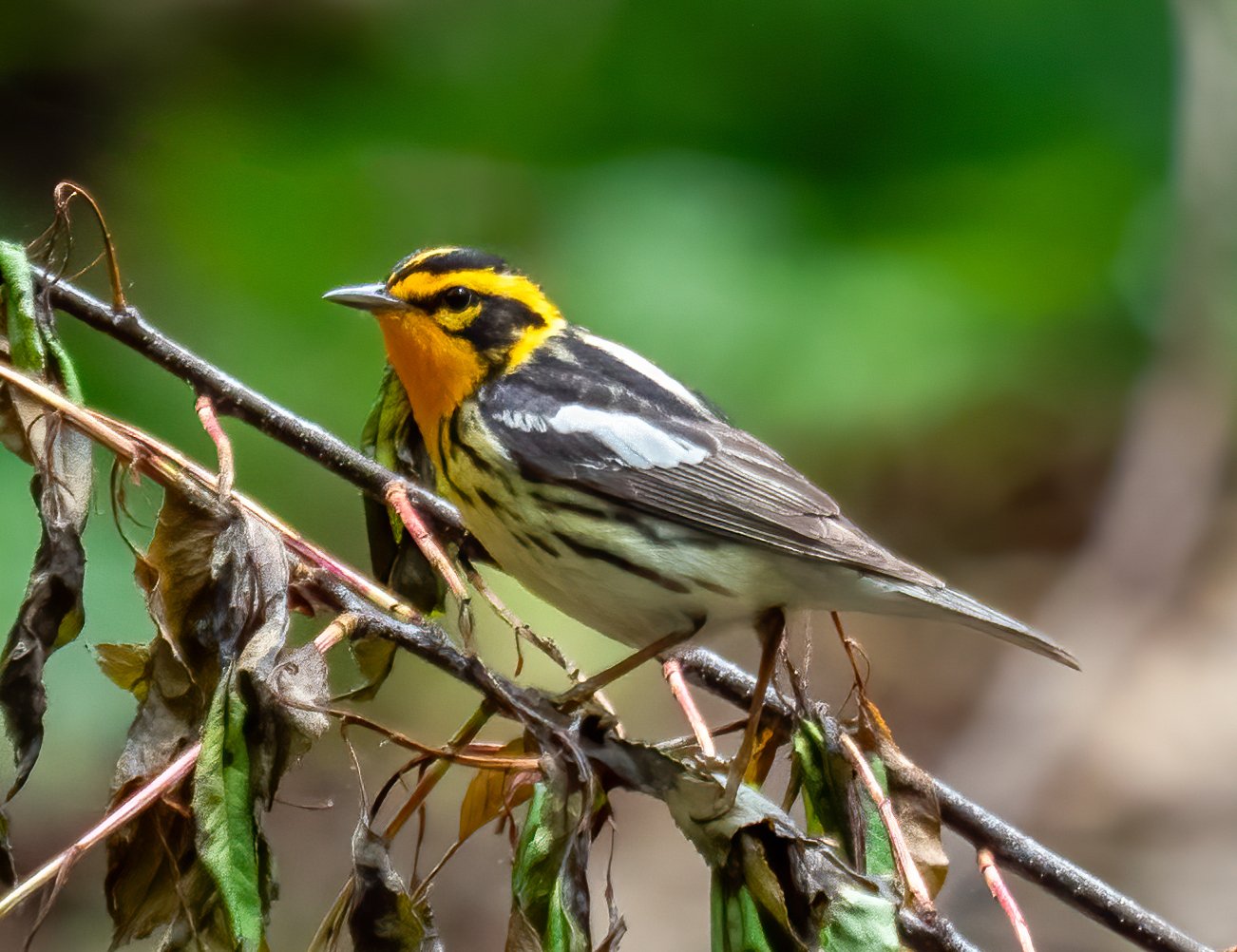
The Blackburnian Warbler is a small canopy warbler; in spring the male has a fiery orange throat and head with black markings. It breeds in coniferous and mixed forest in Canada and the north-eastern United States and winters mainly in the Andes. It crosses the guide area as a passage migrant, mainly on the Caribbean slope and in the mountains.
Voice
The song is very high and thin, a series of tsi notes ending in a rising, barely audible trill; sometimes heard during spring migration. The call is a short, sharp chip, the flight call a thin tsee.
Recording: Bates Estabrooks — CC BY-NC-SA 4.0 · shortened to the first 60 s, mono · xeno-canto
Identification
11–13 cm. The breeding male has an orange throat, supercilium and crown patch, a black triangle on the cheek, a black back with two pale stripes, a large white wing patch and white in the outer tail feathers; flanks streaked black. Females and birds in autumn plumage are duller: yellow-orange to yellow throat and supercilium, a dark cheek patch framed by yellow, a grey-brown back with two pale stripes and two white wing bars; flanks finely streaked.
Confusion species
Black-throated Green Warbler Setophaga virens has a yellow head with an olive-green cheek and no dark triangle, an olive-green back without pale stripes and, in the male, a black throat. Townsend's Warbler Setophaga townsendi, a winter visitor in the mountains of Mexico and northern Central America, has a yellow head with a dark cheek patch but an olive-green back and no orange. Young Blackburnian Warblers in autumn can be recognised by the pale stripes on the back.
Habitat
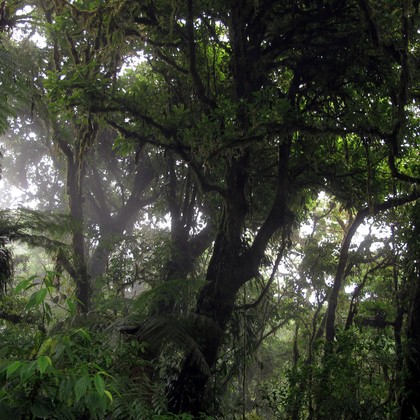
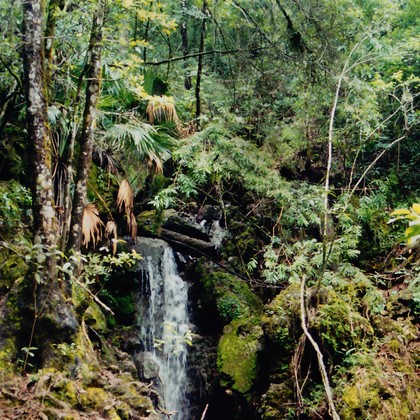
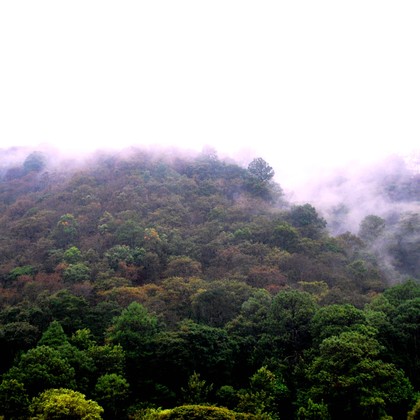
On migration mainly high in the canopy of humid foothill and montane forest and cloud forest, also at forest edges, in tall trees in secondary forest and in shade coffee; also in the lowlands, especially along the Caribbean coast. The scarce winterers in Costa Rica and Panama usually live above 1000 m in montane forest. It eats insects gleaned from leaves and twigs.
Where the bird is most at home, classified by the vegetation units of Mexico and Central America.



Range and movements
Breeds in southern Canada and the north-eastern United States, south along the Appalachians. In the guide area it migrates through eastern Mexico, the Yucatán Peninsula and all of Central America; rare in western Mexico. Winters mainly in the Andes from Venezuela to Bolivia and in small numbers in the mountains of Costa Rica and Panama.
- Passage (Mar–Apr, Oct–Nov)
- dark = core range, pale = thinly spread
How and when to look
Most often seen on migration in October and from late April into May, frequently in mixed flocks in tall flowering or fruiting trees at forest edges and in clearings in montane forest.
Conservation status
Not threatened (LC). The breeding population is large; locally declining through logging of coniferous forest in the breeding range and deforestation in the Andes.
Scientific name
Setophaga fusca | (Müller, 1776)
Müller described the species in 1776 as Motacilla fusca; because it was later moved to another genus, the author and year stand in brackets. The genus Setophaga was introduced in 1827 by Swainson. Setophaga is Greek, from sēs, sētos 'moth' and -phagos '-eating': 'moth-eater'. fusca is Latin for 'dusky, dark', after the dark plumage of the female and young bird. The specimen the first description was based on came from French Guiana.