All species › Swifts › Hummingbirds › Broad-billed Hummingbird
Position in the tree Birds Aves › Birds with a flexible palate Neognathae › All other modern birds Neoaves › Birds of the elements Elementaves › Nightjars and swifts Strisores
Broad-billed Hummingbird | Cynanthus latirostris
Breedsnavelkolibrie | Colibrí pico ancho
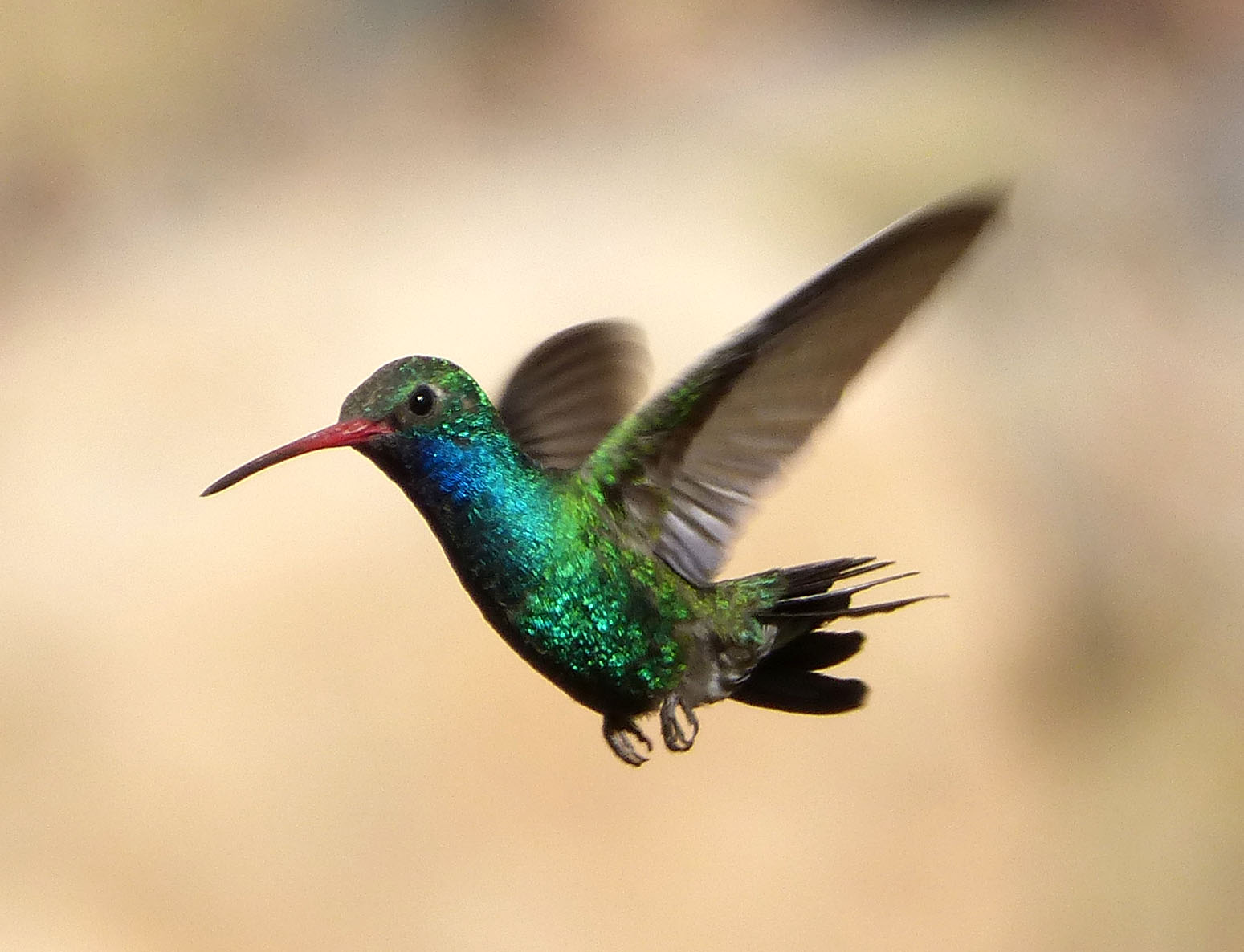
The Broad-billed Hummingbird is a hummingbird of the dry and semi-arid regions of northern and central Mexico, into gardens in Mexico City. The male is dark green with a blue throat and a red bill with a black tip. Since Turquoise-crowned and Tres Marias Hummingbirds have been treated as separate species, its range is smaller than was formerly thought.
Voice
A dry, short che-dit, and in chases a rattling twitter. In display the male swings back and forth in a shallow arc in front of the female, the wings producing a high buzzing sound.
Recording: David Tattersley — CC BY-NC-SA 4.0 · converted to mono · xeno-canto
Identification
9–10 cm, with a straight bill that is broad at the base; red with a black tip in the male, duller with a dark upper mandible in the female. The male is glittering dark green with a blue throat that merges without a sharp border into the green of the breast, white undertail coverts and a blue-black, slightly forked tail. The female is green above and plain grey below, with a white stripe behind the eye above a dark ear patch and white tips to the outer tail feathers.
Confusion species
Turquoise-crowned Hummingbird Cynanthus doubledayi on the Pacific coast from Guerrero to Chiapas is darker: the male is largely blue-green, with a turquoise-blue crown and throat. Tres Marias Hummingbird Cynanthus lawrencei lives only on the Islas Marías. Golden-crowned Emerald Cynanthus auriceps is smaller; the male has a green throat and a long, deeply forked tail. Female White-eared Hummingbird Basilinna leucotis has a broader white eyestripe on a black mask and spotted underparts. Violet-crowned Hummingbird Ramosomyia violiceps has pure white underparts.
Habitat
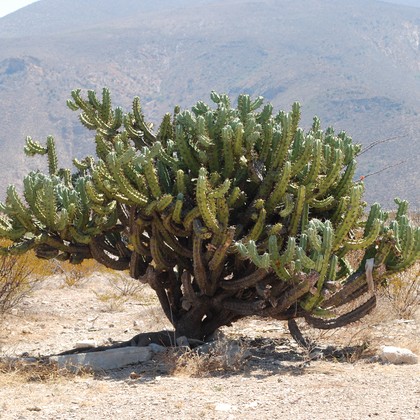
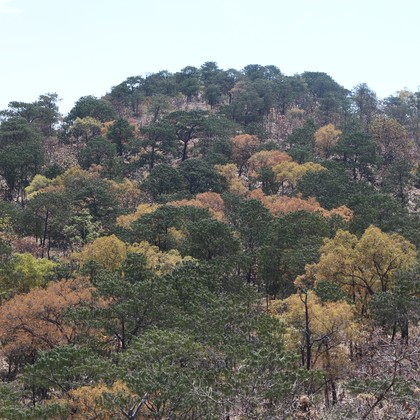
Dry deciduous forest, thorn scrub, semi-desert with shrubs, riparian woodland with sycamores and willows, open oak woodland, parks and gardens, from sea level to about 2400 m. It feeds at flowers of shrubs, agaves and trees, and catches small insects.
Where the bird is most at home, classified by the vegetation units of Mexico and Central America.




Range and movements
In Mexico from Sonora, Chihuahua, Coahuila and Nuevo León through the western slopes and the central highlands to Colima, Michoacán, Mexico City, Morelos, Puebla and Hidalgo, and in the east to San Luis Potosí and Tamaulipas. It also breeds in south-eastern Arizona and south-western New Mexico; those birds winter in western Mexico.
- Resident
- Summer visitor (c. Apr–Sep)
- Winter visitor (c. Oct–Mar)
- dark = core range, pale = thinly spread
How and when to look
Common in gardens and parks of Mexico City and in the canyons and villages of Sonora and Sinaloa, also at sugar-water feeders. On a perched male the red bill is the quickest feature, even when the throat looks black in poor light.
Conservation status
Not threatened. Common over a large area, and it also does well in gardens and villages.
Scientific name
Cynanthus latirostris | Swainson, 1827
Swainson described the species in 1827 and placed it straight away in the genus where it still stands. He introduced the genus Cynanthus in that same work. Cynanthus is Greek, from kuanos 'dark blue' and anthos 'blossom, flower', after the glittering blue plumage. latirostris is Latin, from latus 'broad' and -rostris '-billed', after the broad base of the bill. The specimen the first description was based on came from Valley of Mexico, near Mexico City.