All species › Waders, gulls and terns › Sandpipers and allies › Buff-breasted Sandpiper
Position in the tree Birds Aves › Birds with a flexible palate Neognathae › All other modern birds Neoaves › Birds of the elements Elementaves › Cranes and waders Gruimorphae
Buff-breasted Sandpiper | Calidris subruficollis
Blonde ruiter | Correlimos canelo
The Buff-breasted Sandpiper is a small, buff sandpiper of dry, short grassland that breeds on the Arctic tundra of Alaska and Canada and winters on the pampas of Argentina, Uruguay and southern Brazil. Its migration runs largely through the interior of North and South America; in the guide area the species is a scarce passage migrant, mostly in eastern and northern Mexico.

Voice
Usually silent; sometimes a soft, low prrrt or a short tik.
Recording: Paul Kelly — CC BY-NC-SA 4.0 · converted to mono · xeno-canto
Identification
18–20 cm, with a small, round head, a short, straight black bill, large dark eyes in a plain buff face and bright yellow legs. Upperparts scaly from dark feather centres with pale buff fringes; head, neck and underparts plain warm buff, paler towards the belly, with fine dark spots on the sides of the breast. In flight no wing bar, a dark rump and a white underwing with a dark edge; in displaying or stretching birds the white underwing stands out.
Confusion species
American Golden-Plover Pluvialis dominica, which uses the same grassland, is larger, with a short plover bill and a spangled, not scaly, back. Upland Sandpiper Bartramia longicauda is larger, with a long neck, a small head and a long tail. Baird's Sandpiper Calidris bairdii has black legs and long wings projecting beyond the tail.
Habitat
Short grassland and pasture, airfields, golf courses and sports fields, harvested or freshly flooded rice fields and arable land, and the dry, vegetated edges of pools and lagoons; rarely on mudflats. It feeds by walking and pecking like a small plover, often together with golden-plovers.
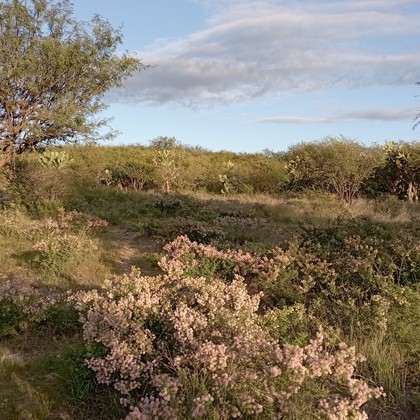
Where the bird is most at home, classified by the vegetation units of Mexico and Central America.


Range and movements
Scarce passage migrant, mostly in eastern Mexico, along the Gulf coast of Tamaulipas and Veracruz and in the north of the country, where the migration route between the prairies of North America and South America touches the guide area. Further south, in Central America, scarce and irregular, with records in Belize, Guatemala, Costa Rica and Panama among others. Outside the guide area the species breeds in northern Alaska and Arctic Canada and winters in southeastern South America.
- Summer visitor (c. Apr–Sep)
- Winter visitor (c. Oct–Mar)
- Passage (Mar–Apr, Oct–Nov)
- dark = core range, pale = thinly spread
How and when to look
Short-mown grass, pasture and rice fields along the Gulf coast on migration, especially after rain or northerly winds. Flocks of American Golden-Plovers and Upland Sandpipers are worth checking; the birds are often quite tame.
Conservation status
Vulnerable. The population was greatly reduced by hunting in the 19th and early 20th centuries and now suffers from the loss of natural grassland along the migration route and in the wintering areas. In the guide area the species depends on open, short grassland during migration.
Scientific name
Calidris subruficollis | (Vieillot, 1819)
Vieillot described the species in 1819 as Tringa subruficollis; because it was later moved to another genus, the author and year stand in brackets. The genus Calidris was introduced in 1804 by Merrem. Calidris goes back to Ancient Greek kalidris or skalidris, a name Aristotle used for an unidentified grey waterside bird. subruficollis joins Latin subrufus 'reddish' — from sub 'somewhat' and rufus 'rufous' — to collum 'neck'. The specimen the first description was based on came from Paraguay.