All species › Waterfowl › Ducks, swans and geese › Bufflehead
Position in the tree Birds Aves › Birds with a flexible palate Neognathae › Fowl Galloanserae
Bufflehead | Bucephala albeola
Buffelkopeend | Porrón albeola
The Bufflehead is the smallest diving duck of North America and a fairly common winter visitor in northern and central Mexico, on lakes, reservoirs and coastal lagoons. It nests in tree cavities, mainly old woodpecker holes, in the boreal forests of Alaska and Canada.
Voice
Usually silent in winter. In display the male gives a squeaky twittering, the female a low, hoarse kruk.
Recording: Richard E. Webster — CC BY-NC-SA 4.0 · shortened to the first 60 s, mono · xeno-canto
Identification
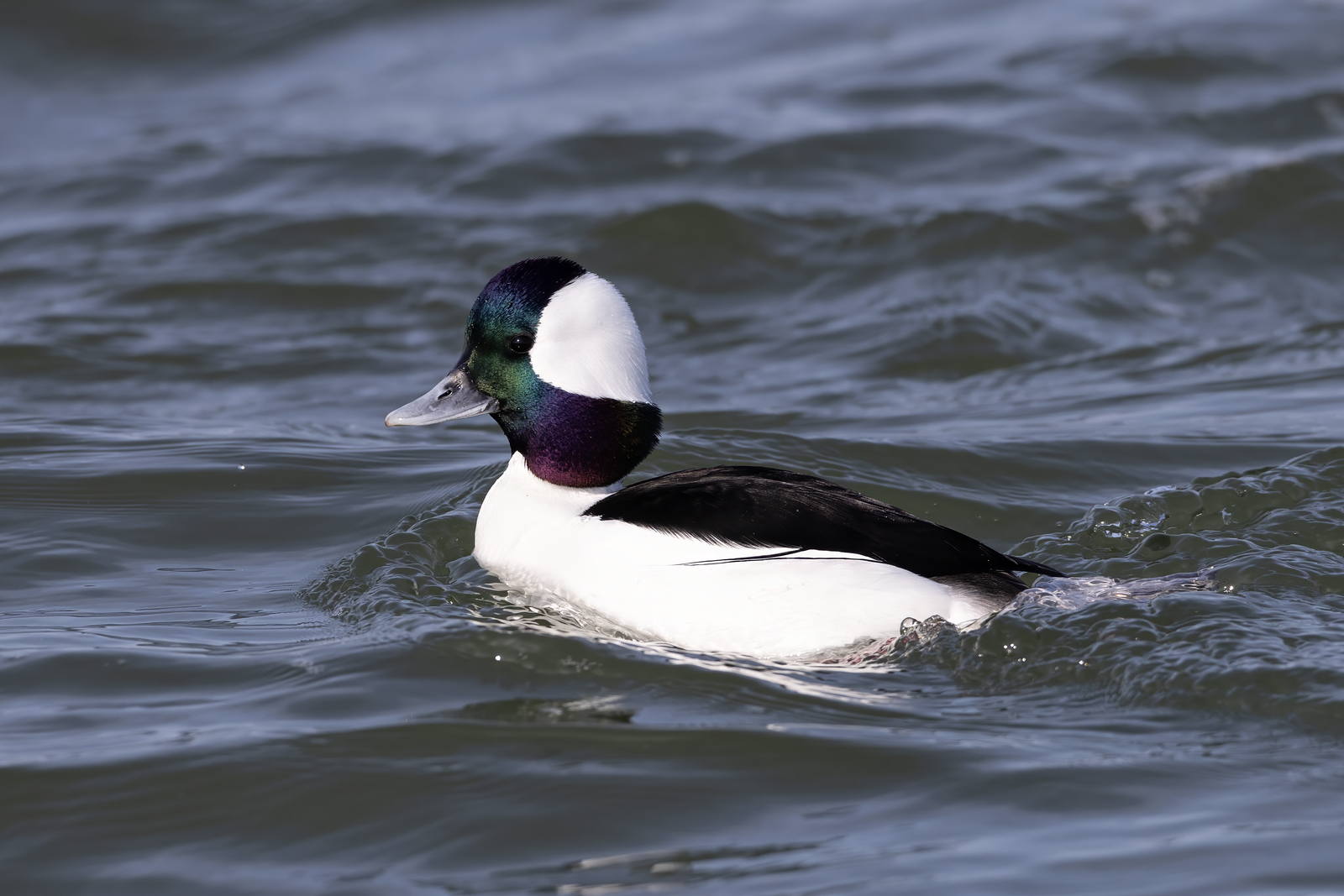
32–40 cm. Small and compact, with a strikingly large, round head and a short grey bill. The male is white on the breast, flanks and underparts and black on the back; the head is dark, glossed green and purple in good light, with a large white patch from behind the eye across the rear of the head. The female and juveniles are greyish-brown with a dark head and a single oval white patch on the cheek behind the eye. In flight the male shows a large white patch on the inner wing, the female a small white patch on the secondaries. It dives frequently and quickly, often with a short leap.
Confusion species
The male Hooded Merganser Lophodytes cucullatus also has a large white patch on the head, but it is bordered black and sits in an erectile crest; the flanks are rufous and the bill is long and narrow. The female Common Goldeneye Bucephala clangula is larger, with a chocolate-brown head without a cheek patch and a white collar. Females of Ruddy Duck Oxyura jamaicensis have a dark stripe across a pale cheek and a stiff tail.
Habitat
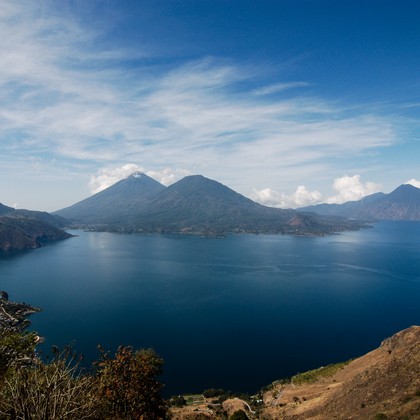
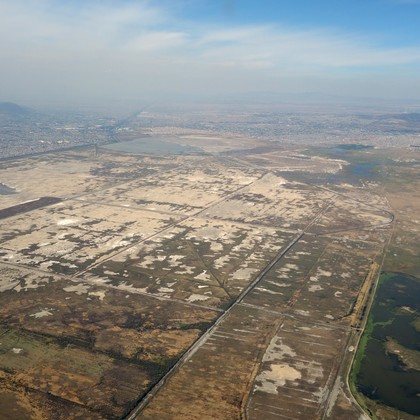
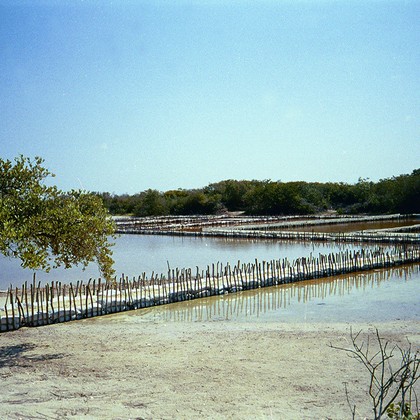
Lakes, reservoirs, sewage ponds and inland saline lakes, and in the coastal zone sheltered bays and lagoons. It dives for insect larvae, crustaceans, snails and seeds of aquatic plants.
Where the bird is most at home, classified by the vegetation units of Mexico and Central America.

Range and movements
Winters in northern and central Mexico: in Baja California and Baja California Sur, Sonora, Sinaloa, Chihuahua, Coahuila, Nuevo León, Tamaulipas, Durango, Zacatecas, San Luis Potosí, Aguascalientes, Guanajuato and Querétaro, and more scarcely south to Jalisco, Michoacán, Hidalgo and the State of México. Rare on the Yucatán Peninsula. Breeds in Alaska and Canada and locally in the northern United States.
- Winter visitor (c. Oct–Mar)
- dark = core range, pale = thinly spread
How and when to look
Reservoirs and sewage ponds on the plateau of northern Mexico, where small groups sit among other diving ducks; the white head and flank areas of the male are visible from afar.
Conservation status
Not threatened globally. The North American population has increased in recent decades. In the guide area a fairly common winter visitor in northern and central Mexico.
Scientific name
Bucephala albeola | (Linnaeus, 1758)
Linnaeus described the species in 1758 as Anas Albeola; because it was later moved to another genus, the author and year stand in brackets. The genus Bucephala was introduced in 1858 by Baird. Bucephala is Greek, from boukephalos 'bull-headed', from bous 'bull' and kephalē 'head', after the strikingly bulbous head. albeola is a diminutive of Latin albus 'white', after the extensive white in the plumage. The specimen the first description was based on came from Newfoundland.