All species › Swifts › Hummingbirds › Bumblebee Hummingbird
Position in the tree Birds Aves › Birds with a flexible palate Neognathae › All other modern birds Neoaves › Birds of the elements Elementaves › Nightjars and swifts Strisores
Bumblebee Hummingbird | Selasphorus heloisa
Hommelkolibrie | Zumbador mexicano
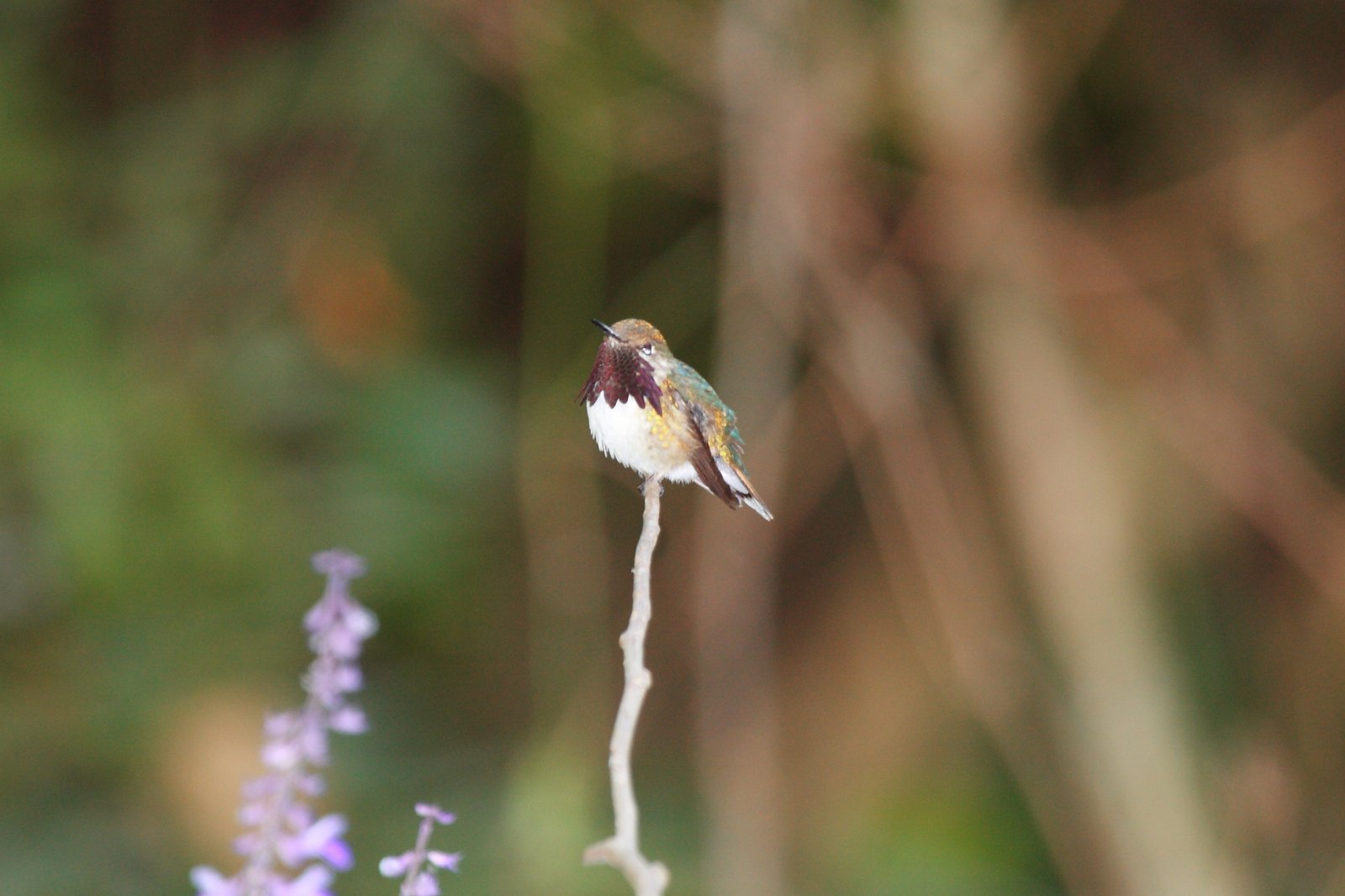
The Bumblebee Hummingbird is one of the smallest birds in Mexico and occurs only in that country. It lives in the mountain forest of both Sierra Madres and the highlands north of the Isthmus of Tehuantepec. With its buzzing flight and tiny size it looks more like a large bumblebee than a bird at flowers.
Voice
The male sings a high, thin, buzzing trill. The call is a soft tsik or tsip. In flight the wings produce a low, insect-like hum.
Recording: Joren van Schie — CC BY-NC-SA 4.0 · converted to mono · xeno-canto
Identification
7–8 cm, with a short, straight black bill and a short, rounded tail. The male is green above and whitish below, with cinnamon flanks and a metallic rose-purple throat with long, pointed projections at the sides. The female has a white throat finely spotted bronze-green and cinnamon flanks. In both sexes the tail is rufous at the base, with a black band and white tips to the outer feathers.
Confusion species
Wine-throated Hummingbird Selasphorus ellioti is very similar but lives south of the Isthmus of Tehuantepec; the male has a more wine-red throat with shorter projections. The female Calliope Hummingbird Selasphorus calliope has longer wings reaching beyond the tail and less rufous in the tail. The female Sparkling-tailed Woodstar Tilmatura dupontii has a white patch on the side of the rump and a longer tail. Females of Rufous Hummingbird Selasphorus rufus are larger and longer-tailed.
Habitat
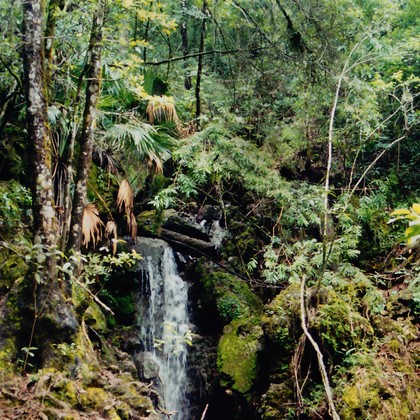
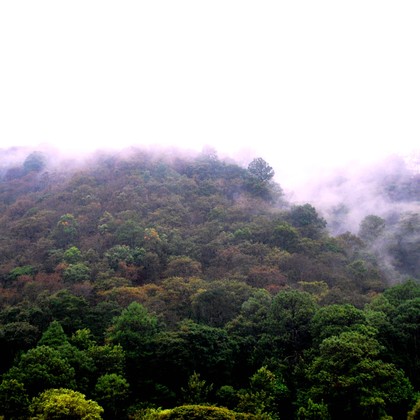
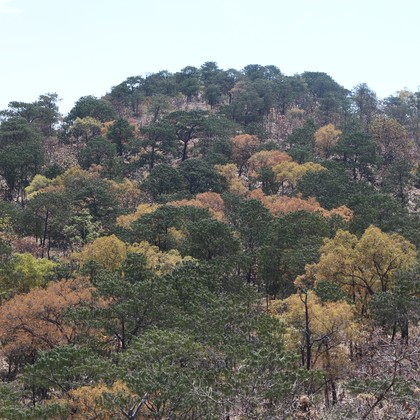
Cloud forest, humid pine-oak forest and oak forest with many epiphytes, forest edges, clearings with flowering shrubs and herbs, and gardens in mountain villages, mainly between about 1500 and 3000 m. Outside the breeding season also lower, to about 900 m. It often forages low at small flowers in the understorey and along forest edges.
Where the bird is most at home, classified by the vegetation units of Mexico and Central America.

Range and movements
Only in Mexico. In the Sierra Madre Occidental from Chihuahua and Sinaloa through Durango, Nayarit and Jalisco, in the Sierra Madre Oriental of Tamaulipas, San Luis Potosí, Querétaro, Hidalgo and Veracruz, and in the highlands of central and southern Mexico, from Michoacán, the State of México and Morelos to Puebla, Guerrero and Oaxaca, west of the Isthmus of Tehuantepec.
- Resident
- Summer visitor (c. Apr–Sep)
- Winter visitor (c. Oct–Mar)
- dark = core range, pale = thinly spread
How and when to look
In the cloud forest and pine-oak forest of Oaxaca and Veracruz, for example around Xalapa and in the Sierra Juárez, at low flowering herbs and shrubs along forest edges. A bird hanging among the flowers like a large insect is often this species.
Conservation status
Least Concern. The species has a fairly large range, but is vulnerable to the loss of cloud forest and mountain forest through deforestation and conversion to farmland.
Scientific name
Selasphorus heloisa | (Lesson & Delattre, 1839)
Lesson & Delattre described the species in 1839 as Ornismya Heloisa; because it was later moved to another genus, the author and year stand in brackets. The genus Selasphorus was introduced in 1832 by Swainson. Selasphorus is Greek, from selas 'light, flame' and -phoros 'bearing': 'light-bearer', after the fiery, glittering throat. heloisa honours Héloïse Boucard (fl. 1854), the partner of the French collector Adolphe Delattre, co-describer of the species. The specimen the first description was based on came from Xalapa and Coatepec, Veracruz, Mexico.