All species › Passerines › Crows, jays and magpies › Bushy-crested Jay
Position in the tree Birds Aves › Birds with a flexible palate Neognathae › All other modern birds Neoaves › Landbirds Telluraves › Falcons, parrots and passerines Australaves › Falcons and passerines Eufalconimorphae › Parrots and passerines Psittacopasserae
Bushy-crested Jay | Cyanocorax melanocyaneus
Geelooggaai | Chara centroamericana
The Bushy-crested Jay is a black-and-blue jay with a bushy crest on the forehead and a bright yellow iris, which moves in groups through montane forest and coffee plantations. It occurs only in the highlands of northern Central America. In the guide area it lives from Guatemala to Nicaragua.

Voice
Noisy. Loud, harsh calls, often in series, and rattling and clicking sounds.
Recording: Max Noack — CC BY-NC-SA 4.0 · shortened to the first 60 s, mono · xeno-canto
Identification
30–33 cm, with a long tail. Head, throat and breast black; a short, bushy crest on the forehead. Back, wings and tail blue; belly blue to purplish blue, more violet in the south of the range. Iris bright yellow in adults; bill and legs black. Male and female are alike.
Confusion species
Steller's Jay Cyanocitta stelleri has a long, pointed crest, a dark eye and a blackish-blue body without a sharp division between black and blue; it lives higher, in conifer forest. Unicolored Jay Aphelocoma unicolor is entirely blue, without a black breast. Yucatan Jay Cyanocorax yucatanicus and San Blas Jay Cyanocorax sanblasianus look very similar but have a black belly and occur outside its range.
Habitat
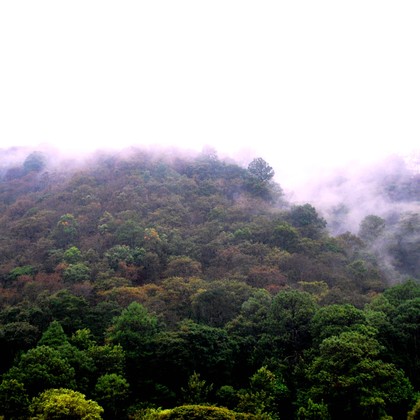
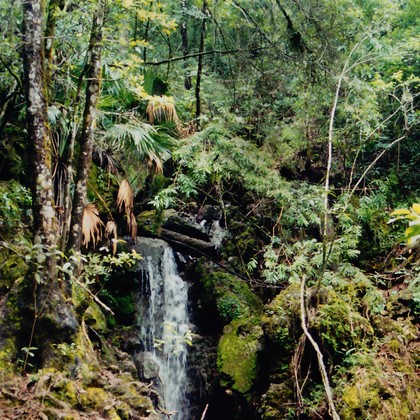
Pine-oak forest, oak woodland, cloud-forest edges, secondary forest and semi-open country with trees in the hills and mountains; also shade coffee. It eats insects, small vertebrates and fruit. It lives in groups.
Where the bird is most at home, classified by the vegetation units of Mexico and Central America.



Range and movements
Highlands of Guatemala, El Salvador, Honduras and northern and central Nicaragua. It does not occur outside the guide area.
- Resident
- dark = core range, pale = thinly spread
How and when to look
Groups often visit shade-coffee plantations and forest edges in the highlands of Guatemala and Honduras.
Conservation status
Not threatened. Fairly common in forest and semi-open country in the highlands.
Scientific name
Cyanocorax melanocyaneus | (Hartlaub, 1844)
Hartlaub described the species in 1844 as Garrulus (Cyanocorax) melanocyaneus; because it was later moved to another genus, the author and year stand in brackets. The genus Cyanocorax was introduced in 1826 by Boie. Cyanocorax is Greek, from kuanos 'dark blue' and korax 'raven': a 'blue raven', after the blue colours of many species. melanocyaneus is Greek, from melas 'black' and kuaneos 'dark blue', after the black head and breast and blue body. The specimen the first description was based on came from Guatemala.