All species › Swifts › Swifts › Chestnut-collared Swift
Position in the tree Birds Aves › Birds with a flexible palate Neognathae › All other modern birds Neoaves › Birds of the elements Elementaves › Nightjars and swifts Strisores
Chestnut-collared Swift | Streptoprocne rutila
Bruinkraaggierzwaluw | Vencejo cuello castaño
The Chestnut-collared Swift is a medium-sized, dark swift of the mountains and hills of Mexico and Central America. Small and larger flocks hunt over forested slopes and valleys, often together with White-collared Swifts and smaller swifts. Adult males can be recognised in good light by the chestnut collar; many other birds look plain blackish brown at a distance.

Voice
Buzzy, crackling calls reminiscent of static electricity, often run together into a fast twitter: bzzz-tzz-tzz-tzz. Flocks call a lot, especially at roosting and nesting sites.
Recording: Mitch Lysinger — CC BY-NC-SA 4.0 · converted to mono · xeno-canto
Identification
12–14 cm, dark sooty brown, with fairly broad, sickle-shaped wings and a short, square or slightly notched tail without projecting spines. The male has a broad chestnut band across the throat and upper breast that continues around the neck to the nape. In the female the band is narrower, incomplete or absent. Juveniles almost lack the collar and have pale feather edges. In poor light or against the sky the collar disappears.
Confusion species
White-collared Swift Streptoprocne zonaris is much larger and has a white collar. American Black Swift Cypseloides niger is larger, with longer, narrower wings and a longer tail. White-chinned Swift Cypseloides cryptus and Spot-fronted Swift Cypseloides cherriei are similar in size and plain dark, but never have a chestnut collar; females and juveniles without a collar often cannot be told from them in the field. Swifts of the genus Chaetura, such as Vaux's Swift Chaetura vauxi, are smaller, with a paler throat or rump and faster, fluttering wingbeats.
Habitat
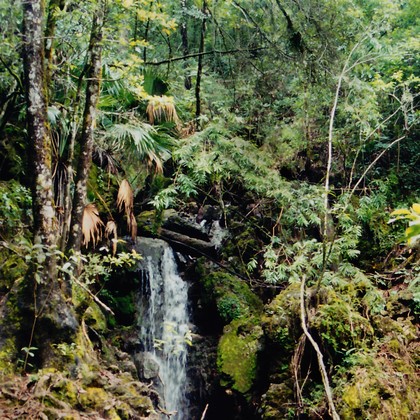
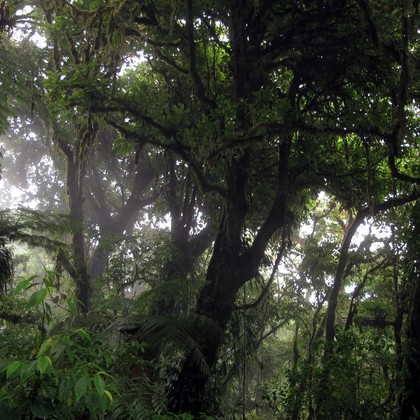
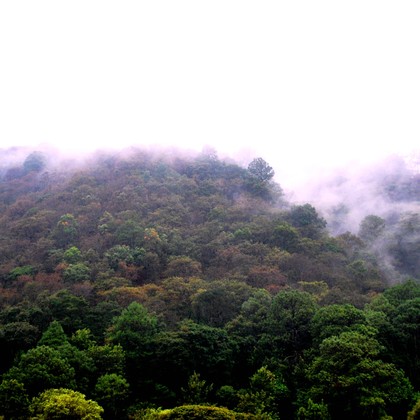
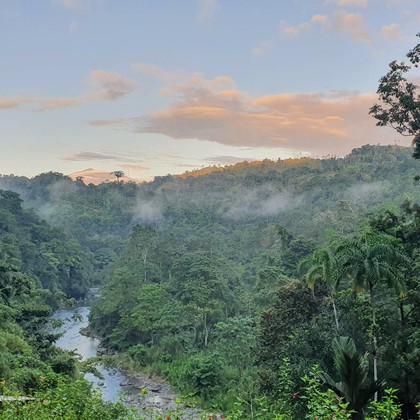
Hunts over montane forest, cloud forest, pine-oak forest and foothill forest, and over valleys, river gorges and clearings at the forest edge; mainly between about 500 and 2500 m, lower in bad weather. Feeds on flying insects. Nests on ledges and in niches of damp, shady rock faces near water, in gorges, beside or behind waterfalls and sometimes in culverts or under bridges. The nest is a cup of moss, ferns and liverworts with mud.
Where the bird is most at home, classified by the vegetation units of Mexico and Central America.


Range and movements
In Mexico on the Pacific slope from south-western Chihuahua, Durango and Sinaloa south through Nayarit, Jalisco, Michoacán and Guerrero to Oaxaca, and on the Gulf slope from Hidalgo and Puebla through Veracruz to Chiapas; also in the central highlands around Morelos and Mexico City. Further in the mountains of Guatemala, Belize (Maya Mountains), El Salvador, Honduras, northern Nicaragua, Costa Rica and Panama, there mainly in Chiriquí, Bocas del Toro and Veraguas and locally east to Darién. Outside the guide area in the Andes and the coastal ranges of Venezuela south to Bolivia, and on Trinidad.
- Resident
- dark = core range, pale = thinly spread
How and when to look
Scan flocks of swifts over mountain valleys, for example in the Central Valley and the Talamanca of Costa Rica, in the highlands of Chiapas and Guatemala or in Chiriquí. In good light and from the side the chestnut collar of males is visible. At waterfalls and gorges the birds come in to roost in the evening.
Conservation status
Not threatened. The species has a large range and is locally common in the guide area. Disturbance of nest sites at waterfalls and in gorges is a possible local risk.
Scientific name
Streptoprocne rutila | (Vieillot, 1817)
Vieillot described the species in 1817 as Hirundo rutila; because it was later moved to another genus, the author and year stand in brackets. The genus Streptoprocne was introduced in 1906 by Oberholser. Streptoprocne is Greek, from streptos 'collar' and Procne, the figure of Greek myth turned into a swallow, after the coloured collar. rutila is Latin for 'reddish, golden-red', after the chestnut collar. The specimen the first description was based on came from the Guianas (not specified).