All species › Waders, gulls and terns › Plovers and lapwings › Collared Plover
Position in the tree Birds Aves › Birds with a flexible palate Neognathae › All other modern birds Neoaves › Birds of the elements Elementaves › Cranes and waders Gruimorphae
Collared Plover | Anarhynchus collaris
Halsbandplevier | Chorlo de collar
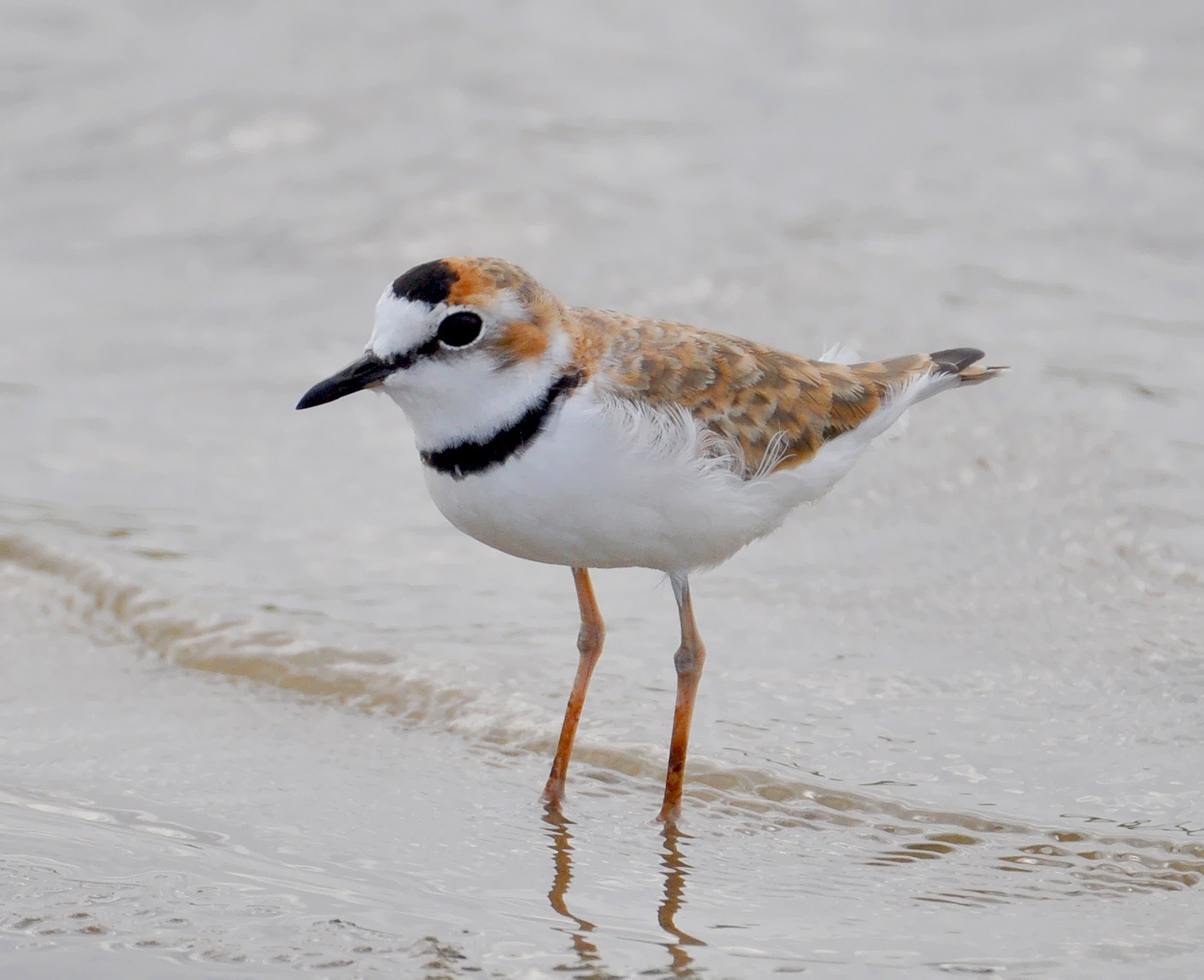
The Collared Plover is a small, slender plover with a narrow black breast band and, unlike most related plovers, no white hind collar. It lives on sandy beaches, mudflats and the sand and gravel bars of rivers in the lowlands, from western and southern Mexico to Panama. The guide area forms the northern limit of a range that extends deep into South America.
Voice
A sharp, short peek or keet, sometimes in a rapid series; also a soft chip.
Recording: JAYRSON ARAUJO DE OLIVEIRA — CC BY-NC-SA 4.0 · converted to mono · xeno-canto
Identification
14–15 cm. Small and slight, with a thin black bill and fairly long, yellowish to flesh-coloured legs. The upperparts are sandy brown, the underparts white. Adults have a narrow, complete black breast band, a black band across the forecrown above the white forehead and rufous on the hindcrown and behind the eye; there is no white hind collar. Juveniles largely lack the black and rufous, and the breast band is often incomplete. In flight a narrow, faint white wing bar.
Confusion species
Semipalmated Plover Charadrius semipalmatus is stockier and darker, with a white hind collar, a short bill with an orange base and orange legs. Snowy Plover Anarhynchus nivosus is paler, with a white hind collar, dark legs and only patches on the sides of the breast. Wilson's Plover Anarhynchus wilsonia is larger, with a much heavier bill and a broad breast band. Juvenile Collared Plovers with an incomplete breast band resemble Snowy Plovers, but lack the white hind collar and have pale legs.
Habitat
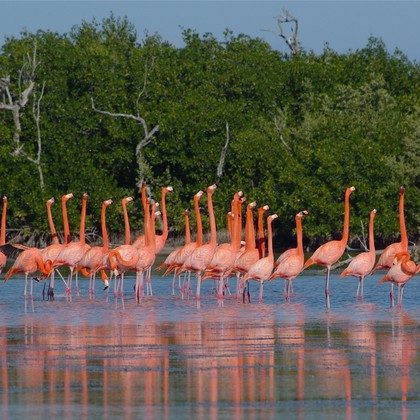
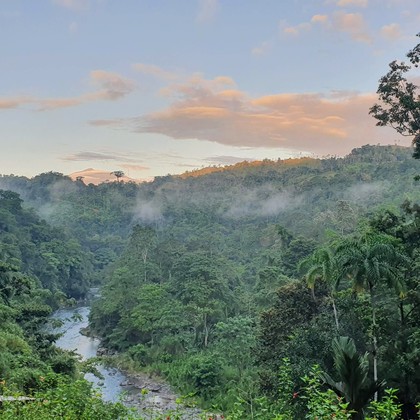
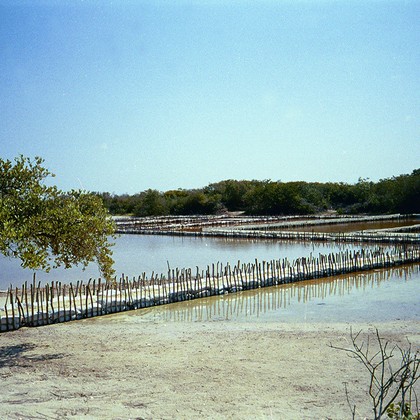
Sandy beaches, mudflats and the edges of coastal lagoons, and inland the sand and gravel bars of rivers; locally also the bare shores of lakes and reservoirs. Mainly in the lowlands. Feeds on small insects and crustaceans, often on dry sand above the tideline. The nest is a bare scrape on sand or gravel.
Where the bird is most at home, classified by the vegetation units of Mexico and Central America.

Range and movements
In Mexico mainly on the Pacific slope, from Sinaloa and Nayarit to Chiapas, with most records in Michoacán, Guerrero, Oaxaca and Colima, also inland along rivers; on the Gulf side locally in Veracruz and Tabasco. In Central America along the Pacific coast from Guatemala to Panama and along larger rivers; scarcer on the Caribbean side, rare in Belize and El Salvador. Outside the guide area across much of South America, south to Argentina.
- Resident
- dark = core range, pale = thinly spread
How and when to look
On dry sandbars along rivers and on quiet beaches, usually alone or in pairs; the bird is most noticeable when it runs across the sand in short sprints and then stops dead.
Conservation status
Not threatened. In the guide area local and usually in small numbers; beach recreation and disturbance of riverbanks can affect breeding sites.
Scientific name
Anarhynchus collaris | (Vieillot, 1818)
Vieillot described the species in 1818 as Charadrius collaris; because it was later moved to another genus, the author and year stand in brackets. The genus Anarhynchus was introduced in 1832 by Quoy & Gaimard. Anarhynchus is Greek, from ana- 'backward' and rhunkhos 'bill', after the sideways-bent bill of the wrybill, the type species of the genus. collaris is Latin for 'of the neck, collared', after the black breast band. The specimen the first description was based on came from Paraguay.