All species › Swifts › Hummingbirds › Honduran Emerald
Position in the tree Birds Aves › Birds with a flexible palate Neognathae › All other modern birds Neoaves › Birds of the elements Elementaves › Nightjars and swifts Strisores
Honduran Emerald | Amazilia luciae
Hondurese amazilia | Amazilia hondureña
The Honduran Emerald is the only bird species found only in Honduras. It lives in a few isolated dry interior valleys, in thorn forest and scrub with columnar cacti. For a long time there were hardly any records; only after its rediscovery in the 1980s and 1990s did its range become better known.

Voice
A dry, hard chit, and in chases a short, rattling twitter.
Recording: Alfonso Auerbach — CC BY-NC-SA 4.0 · converted to mono · xeno-canto
Identification
9–10 cm, with a straight, fairly long bill: the upper mandible is black, the lower mandible pink with a dark tip. The upperparts are green to bronze-green, with a bronze-green tail. Throat and breast are glittering blue-green, with pale feather bases giving a scaly pattern; belly and flanks are pale grey to whitish. The female has less gloss on throat and breast and more white on the throat.
Confusion species
Cinnamon Hummingbird Amazilia rutila has cinnamon underparts and a red bill. Rufous-tailed Hummingbird Amazilia tzacatl has a red bill, a grey belly and a rufous tail. White-bellied Emerald Chlorestes candida is smaller, has a white throat and breast with green flanks and lives in humid forest. Azure-crowned Hummingbird Saucerottia cyanocephala has a blue crown and a white throat and breast.
Habitat
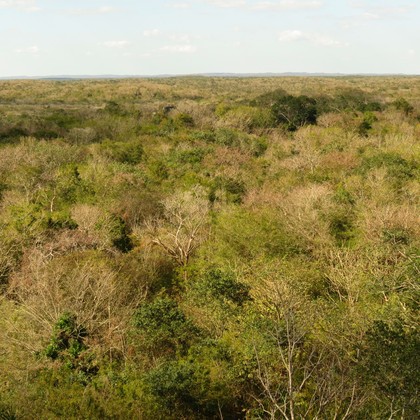
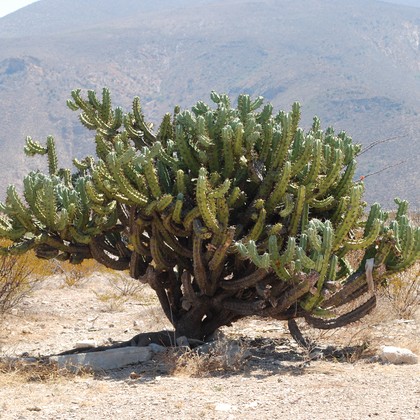
Dry thorn forest, scrub with columnar cacti and semi-deciduous forest in the rain shadow of the mountains, with adjacent forest edges, at about 150 to 750 m. It feeds at flowers of shrubs, vines and cacti.
Where the bird is most at home, classified by the vegetation units of Mexico and Central America.

Range and movements
Endemic to Honduras. Known from a few isolated dry valleys: the valley of the Río Aguán in Yoro and Colón, the Agalta valley in Olancho, and dry valleys in Santa Bárbara and Cortés; in recent years also found near Gracias in Lempira.
- Resident
- dark = core range, pale = thinly spread
How and when to look
In the reserve for this species near Olanchito in the Río Aguán valley, Yoro, and in the Agalta valley near Gualaco and San Esteban, Olancho. Best early in the morning at flowering shrubs in the thorn forest.
Conservation status
Vulnerable. The world population is small and the range fragmented. Dry thorn forest in the interior valleys has largely been converted to pasture and plantations; part of the habitat is now protected.
Scientific name
Amazilia luciae | (Lawrence, 1868)
Lawrence described the species in 1868 as Thaumatias Luciae; because it was later moved to another genus, the author and year stand in brackets. The genus Amazilia was introduced in 1843 by Lesson. Amazilia comes from Amazili, an Inca heroine in Jean-François Marmontel's novel Les Incas (1777). luciae honours Lucy Stone Brewer (1854–1921), daughter of the American ornithologist Thomas Mayo Brewer. The specimen the first description was based on came from Honduras.