All species › Passerines › Ovenbirds and woodcreepers › Ivory-billed Woodcreeper
Position in the tree Birds Aves › Birds with a flexible palate Neognathae › All other modern birds Neoaves › Landbirds Telluraves › Falcons, parrots and passerines Australaves › Falcons and passerines Eufalconimorphae › Parrots and passerines Psittacopasserae
Ivory-billed Woodcreeper | Xiphorhynchus flavigaster
Ivoorsnavelmuisspecht | Trepatroncos bigotudo
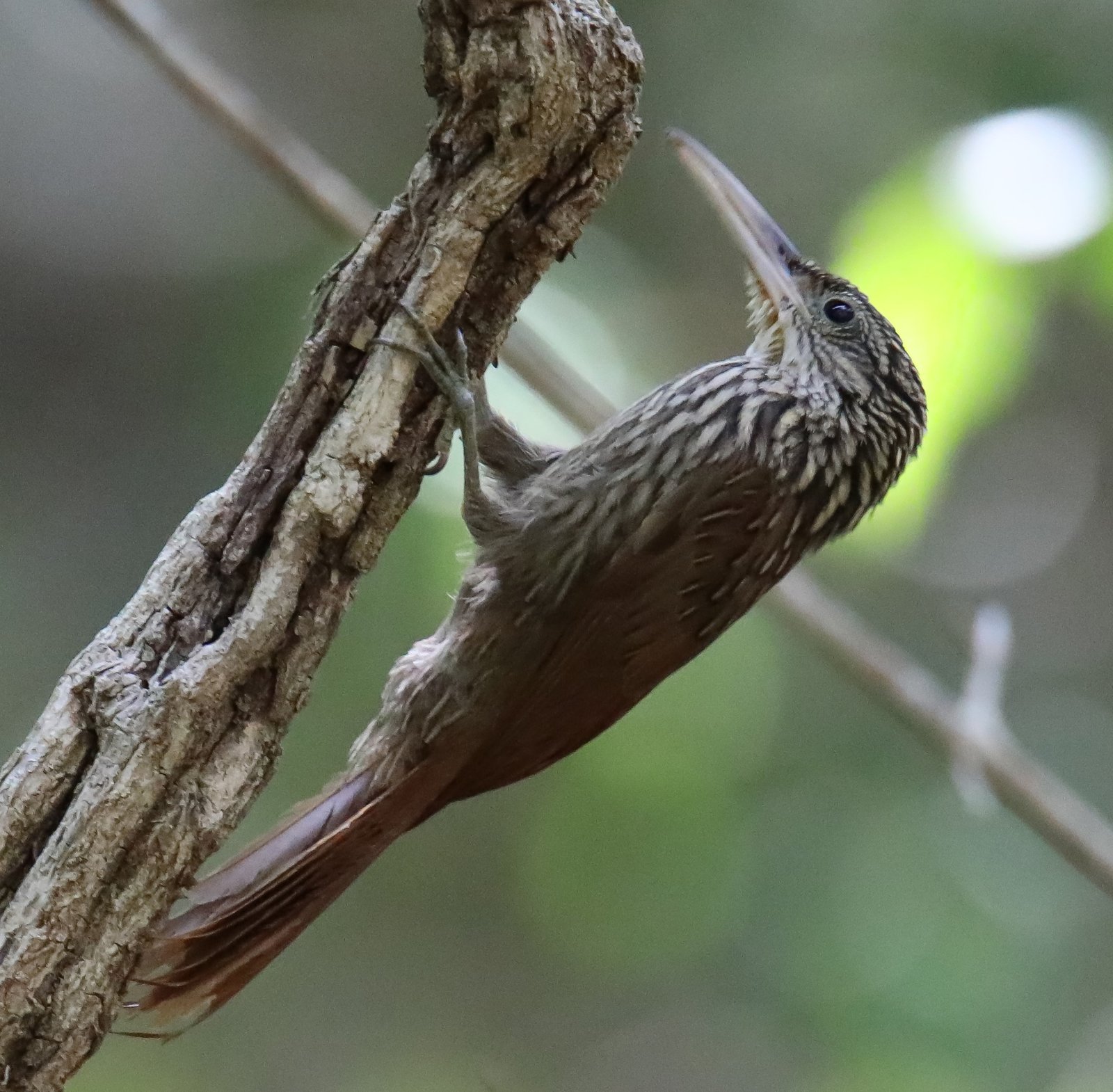
The Ivory-billed Woodcreeper is the commonest large woodcreeper of Mexico and northern Central America, recognised by its long, pale, ivory-coloured bill. It lives in a wide range of forest types, from humid lowland forest to dry forest and mangroves. Its loud, laughing song is a familiar sound in the lowlands.
Voice
A loud, rapid series of whistles that accelerates and descends, like a laugh. Also a sharp, dry call.
Recording: Paul Driver — CC BY-NC-SA 4.0 · shortened to the first 60 s, mono · xeno-canto
Identification
22–25 cm. Bill long, slightly curved and pale ivory to horn-coloured. Throat buff with an indistinct dark malar stripe. Head and neck brown with fine buff spots and streaks; breast brown with buff, dark-edged teardrop streaks. Back olive-brown with pale streaks on the nape; wings and tail rufous. Male and female are alike.
Confusion species
Cocoa Woodcreeper Xiphorhynchus susurrans has a dark upper mandible and lives mainly further south; the two species overlap in north-western Costa Rica and adjacent Nicaragua. Spotted Woodcreeper Xiphorhynchus erythropygius has a darker bill and round spots and lives higher in the mountains. Streak-headed Woodcreeper Lepidocolaptes souleyetii is smaller, with a thin bill. Strong-billed Woodcreeper Xiphocolaptes promeropirhynchus is much larger, with a heavier bill.
Habitat
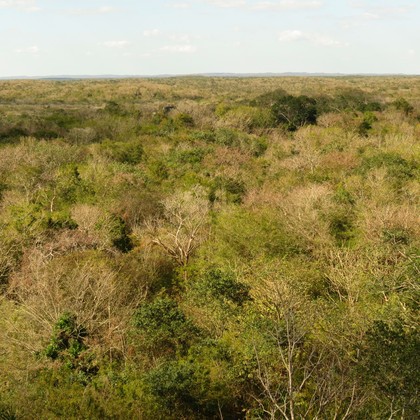
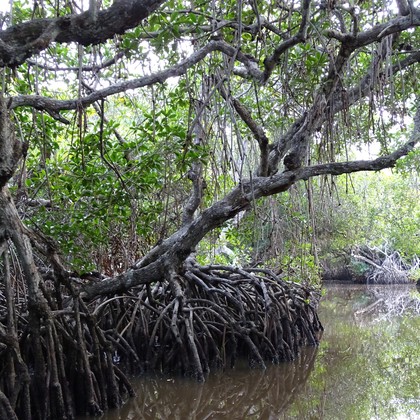
Humid and dry lowland and foothill forest, seasonal forest, gallery forest, mangroves, forest edges, secondary forest and plantations with trees. It forages on trunks and branches at all levels for insects and other invertebrates and often joins mixed flocks. It nests in a tree cavity.
Where the bird is most at home, classified by the vegetation units of Mexico and Central America.





Range and movements
From western and eastern Mexico (on the Pacific slope from Sinaloa, on the Caribbean slope from Tamaulipas) and the Yucatán Peninsula through Belize, Guatemala, El Salvador, Honduras and Nicaragua to north-western Costa Rica. Found only in the guide area.
- Resident
- dark = core range, pale = thinly spread
How and when to look
Easy to see at Tikal in Guatemala, in Belize and on the Yucatán Peninsula, where it occurs in most woods and parks with large trees.
Conservation status
Not threatened. Common and well adapted to secondary forest and semi-open country with trees.
Scientific name
Xiphorhynchus flavigaster | Swainson, 1827
Swainson described the species in 1827 and placed it straight away in the genus where it still stands. He introduced the genus Xiphorhynchus in that same work. Xiphorhynchus is Greek, from xiphos 'sword' and rhunkhos 'bill', after the long, straight bill. flavigaster combines Latin flavus 'yellow' with Greek gastēr 'belly', after the yellowish belly. The specimen the first description was based on came from Temascaltepec, Mexico.