All species › Pelicans, herons and ibises › Herons, egrets and bitterns › Little Blue Heron
Position in the tree Birds Aves › Birds with a flexible palate Neognathae › All other modern birds Neoaves › Birds of the elements Elementaves › Tropicbirds and waterbirds Phaethoquornithes › Core waterbirds Aequornithes
Little Blue Heron | Egretta caerulea
Kleine blauwe reiger | Garceta azul
The Little Blue Heron is a medium-sized, slender heron; adults are entirely dark slate-blue, juveniles entirely white. It hunts slowly and quietly in shallow water. In the guide area it is a common resident of coasts and lowland waters from Mexico to Panama, joined in winter by birds from North America.

Voice
Usually silent. At the colony and when disturbed a hoarse, rasping gerr and croaking sounds.
Recording: Valerie Heemstra — CC BY-NC-SA 4.0 · converted to mono · xeno-canto
Identification
56–74 cm. A slender heron with a rather thick, slightly drooping bill. Adults are dark slate-blue, with a purplish-maroon head and neck; in breeding plumage they have long, shaggy plumes on the head, neck and back. The bill is grey-blue with a black tip, the lores grey-blue and the legs dull greenish to grey. Juveniles are white with dark tips to the primaries, greenish legs and the same two-toned bill. During the moult into adult plumage, in their first spring, they are irregularly blotched blue and white. The sexes are alike.
Confusion species
Juveniles resemble Snowy Egret Egretta thula, which however has an all-black bill, black legs with yellow feet and no dark wingtips. Tricolored Heron Egretta tricolor has a white belly and a longer, thinner bill. Reddish Egret Egretta rufescens is larger, with a pink bill with a black tip and a shaggy, rufous neck. Great Blue Heron Ardea herodias is much larger and paler grey.
Habitat
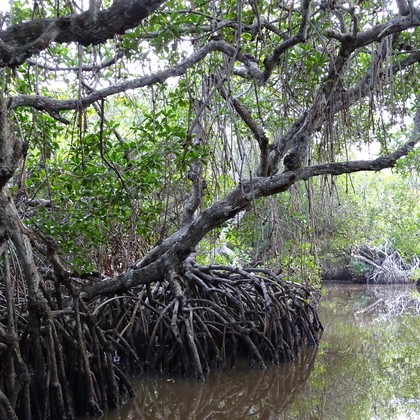
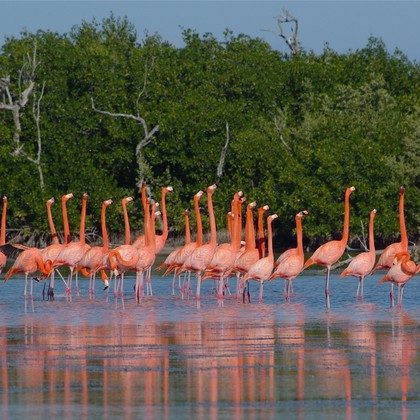
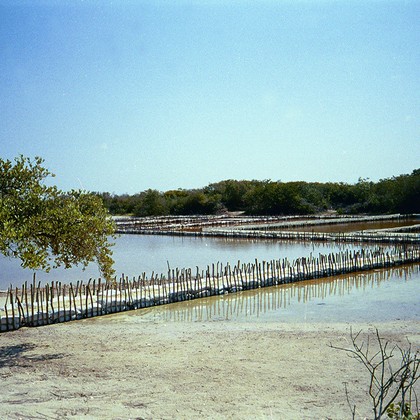
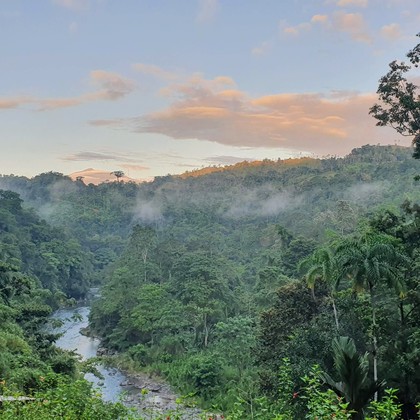
Mangroves, tidal flats, coastal lagoons and salt pans, but also freshwater marshes, ponds, riverbanks, rice fields, fish farms and wet meadows in the lowlands. It hunts mostly by standing still or walking slowly, for fish, crabs, frogs and insects. It breeds in colonies, often together with other herons, in mangroves or shrubs over water.
Where the bird is most at home, classified by the vegetation units of Mexico and Central America.



Range and movements
In Mexico along the Pacific coast from Baja California Sur and Sonora south to Chiapas, and along the Gulf coast from Tamaulipas through Veracruz and Tabasco to the whole Yucatán Peninsula; scarcer inland, mainly at large lakes and marshes. Further in the lowlands of all of Central America, along both coasts and in freshwater wetlands, from Belize and Guatemala to Panama. Outside the guide area in the eastern and southern United States, the Caribbean and South America, south to Peru and southern Brazil.
- Resident
- dark = core range, pale = thinly spread
How and when to look
Seen almost anywhere along the coast, for example in the mangroves and lagoons near San Blas in Nayarit, at Celestún and Río Lagartos in Yucatán and on the Gulf of Nicoya in Costa Rica. Blue-and-white blotched birds in spring are young birds moulting into adult plumage.
Conservation status
Not threatened. In the guide area common and widespread, but locally sensitive to mangrove clearance and disturbance of breeding colonies.
Scientific name
Egretta caerulea | (Linnaeus, 1758)
Linnaeus described the species in 1758 as Ardea caerulea; because it was later moved to another genus, the author and year stand in brackets. The genus Egretta was introduced in 1817 by Forster. Egretta comes from Provençal aigrette, the name for the little egret, a diminutive of aigron 'heron'. caerulea is Latin for 'blue', after the slate-blue plumage of the adult. The specimen the first description was based on came from South Carolina.