All species › Passerines › New World warblers › Louisiana Waterthrush
Position in the tree Birds Aves › Birds with a flexible palate Neognathae › All other modern birds Neoaves › Landbirds Telluraves › Falcons, parrots and passerines Australaves › Falcons and passerines Eufalconimorphae › Parrots and passerines Psittacopasserae
Louisiana Waterthrush | Parkesia motacilla
Louisianawaterlijster | Chipe arroyero
The Louisiana Waterthrush is the larger of the two waterthrushes and breeds along clear, flowing streams in deciduous forest in the eastern United States. It leaves the breeding grounds early and is one of the first North American warblers to appear in the guide area in autumn. Here it winters along fast-flowing streams and rivers in forest, mainly in the foothills.
Voice
The call is a sharp, metallic chip, slightly fuller than that of Northern Waterthrush. The song begins with two to four clear, descending whistles and ends in a rapid, fading series. In winter mainly the call.
Recording: Jacob Saucier — CC BY-NC-SA 4.0 · shortened to the first 60 s, mono · xeno-canto
Identification
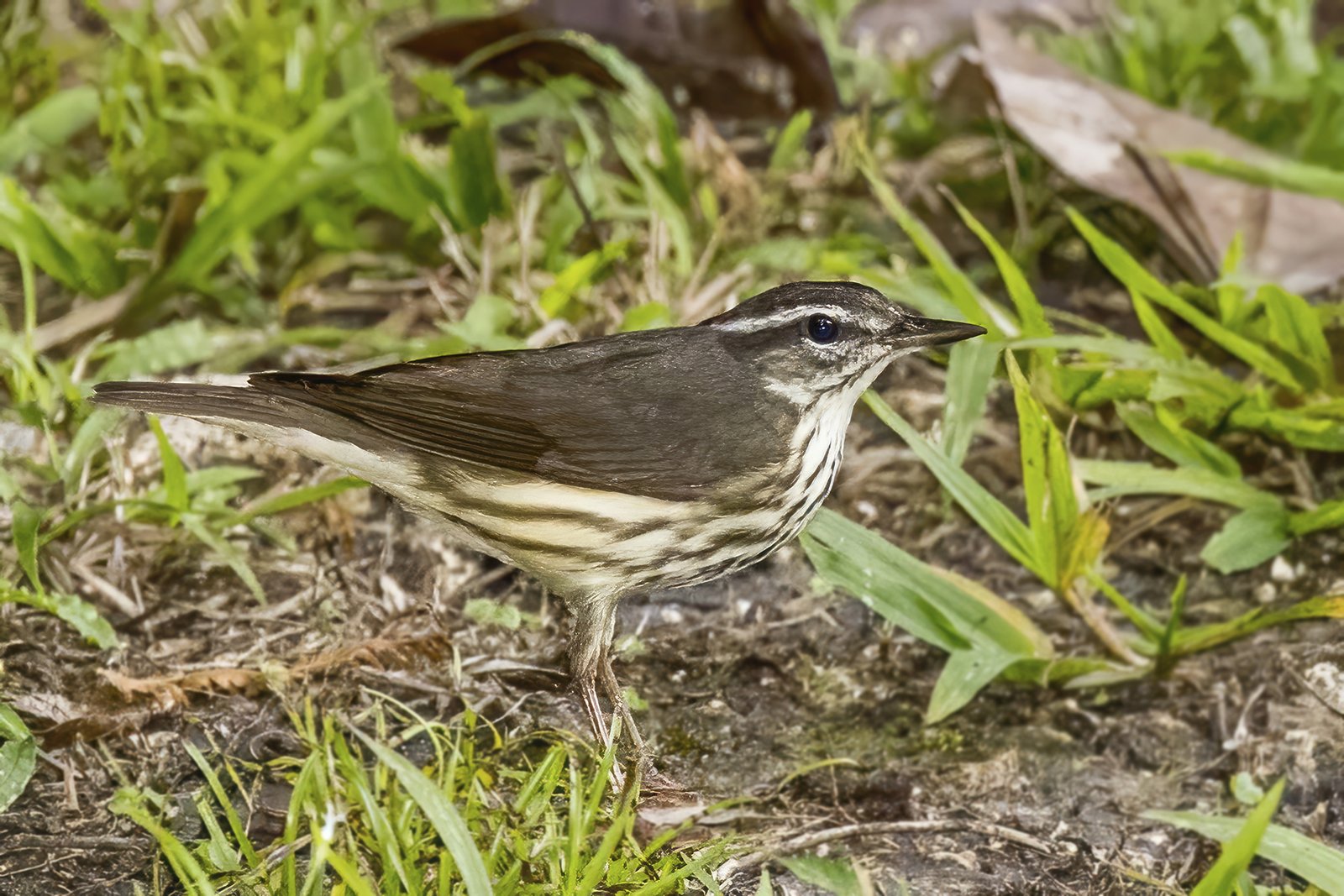
14–16 cm. Upperparts greyish olive-brown. A long, pure white supercilium that broadens behind the eye. Throat white and usually unstreaked. Underparts white with dark brown streaks on breast and flanks; rear flanks and undertail coverts warm buff. Bill fairly long and heavy; legs bright pink. It bobs slowly, with a swaying movement of rear body and tail. The sexes are alike.
Confusion species
Northern Waterthrush Parkesia noveboracensis has a narrower, often yellowish supercilium that narrows towards the rear, a streaked throat, denser streaking on yellowish or dull white underparts without buff flanks, a shorter bill and a quicker bobbing action; it lives mainly at still water and in mangrove. Buff-rumped Warbler Myiothlypis fulvicauda (Honduras to Panama) also lives along streams and swings its tail, but has unstreaked underparts and a buff-yellow rump and tail base.
Habitat
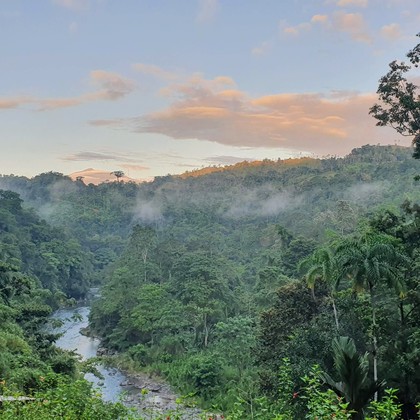
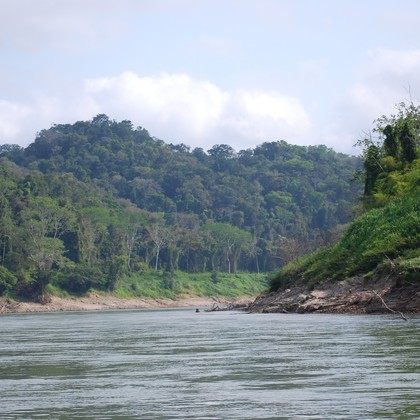
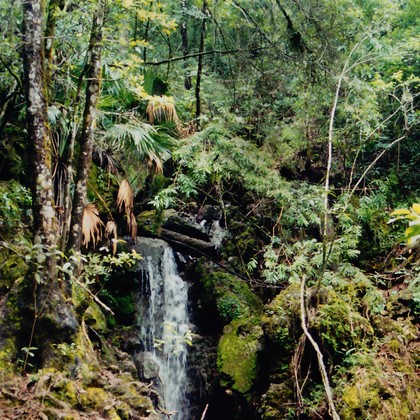
In winter fast-flowing, clear streams and small rivers in humid forest, gallery forest and shade coffee, from the lowlands to about 1500 m, most often in the foothills. It walks over stones and along the bank, searching for aquatic insects and their larvae, snails and other small animals.
Where the bird is most at home, classified by the vegetation units of Mexico and Central America.



Range and movements
Breeds in the eastern United States and extreme southern Ontario. Winters from northern Mexico through Central America to Panama, in the Caribbean and scarcely in north-western South America. In the guide area widespread on both slopes, from southern Sonora and Nuevo León southwards, mainly along streams in hill country and at lower middle elevations.
- Winter visitor (c. Oct–Mar)
- dark = core range, pale = thinly spread
How and when to look
Present along forest streams from late July or August, well before most other North American warblers. The call above the sound of running water is often the first sign.
Conservation status
Not threatened (LC). Widespread. Sensitive to pollution and siltation of streams, both on the breeding grounds and in the wintering area.
Scientific name
Parkesia motacilla | (Vieillot, 1809)
Vieillot described the species in 1809 as Turdus motacilla; because it was later moved to another genus, the author and year stand in brackets. The genus Parkesia was introduced in 2008 by Sangster. Parkesia is named after the American ornithologist Kenneth Carroll Parkes (1922–2007), long-time curator of birds at the Carnegie Museum. motacilla is Latin for 'wagtail', after the constant tail-bobbing. The specimen the first description was based on came from Kentucky.