All species › Passerines › Swallows › Mangrove Swallow
Position in the tree Birds Aves › Birds with a flexible palate Neognathae › All other modern birds Neoaves › Landbirds Telluraves › Falcons, parrots and passerines Australaves › Falcons and passerines Eufalconimorphae › Parrots and passerines Psittacopasserae
Mangrove Swallow | Tachycineta albilinea
Mangrovezwaluw | Golondrina manglera
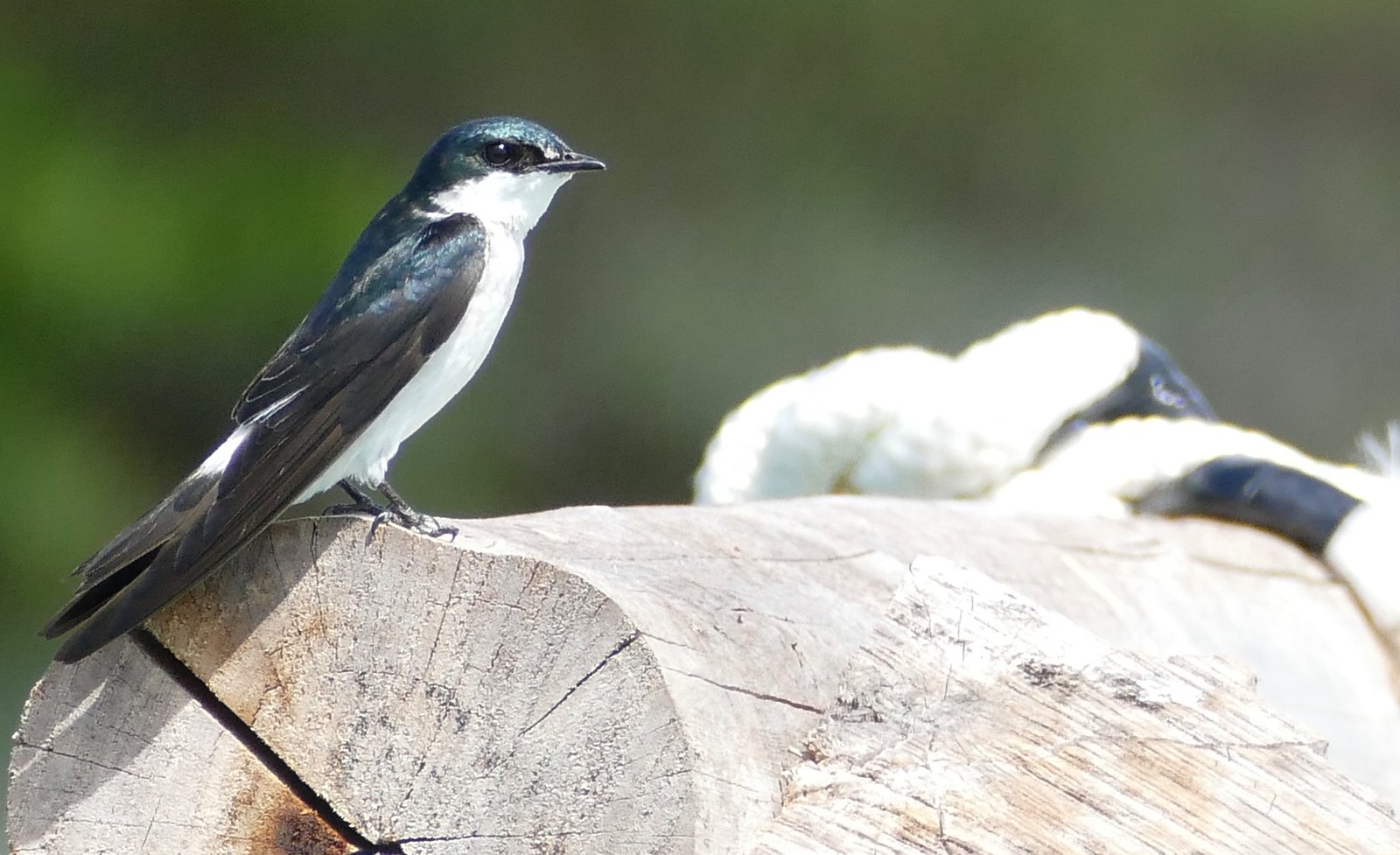
The Mangrove Swallow is a small swallow with glossy blue-green upperparts, a white rump and white underparts. It hunts low over rivers, lagoons and lakes and rests on branches, posts and buoys in or close to the water. The species occurs only in the guide area, from Mexico to Panama.
Voice
A buzzy, slightly grating jreet or chrrt, also a short twitter in flight.
Recording: Isain Contreras Rodríguez — CC BY-NC-SA 4.0 · converted to mono · xeno-canto
Identification
11–12 cm. Upperparts glossy blue-green, with a conspicuous white rump. A narrow white line runs above the lores from the bill to the eye. Underparts white. Tail short and barely notched. Juveniles are greyish brown above, with a white rump and a dull grey breast.
Confusion species
Tree Swallow Tachycineta bicolor (winter only) is larger and lacks the white rump and the white line above the lores. Violet-green Swallow Tachycineta thalassina has white patches only on the sides of the rump, more white around the eye and lives mainly in the mountains. Bank Swallow Riparia riparia is brown above and has a brown breast band.
Habitat
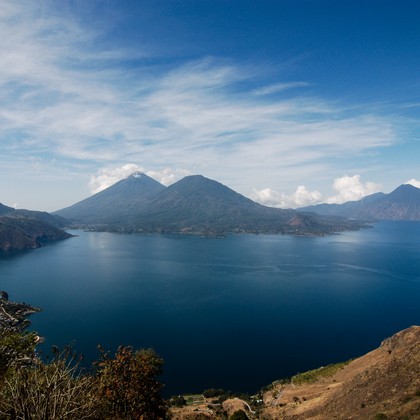
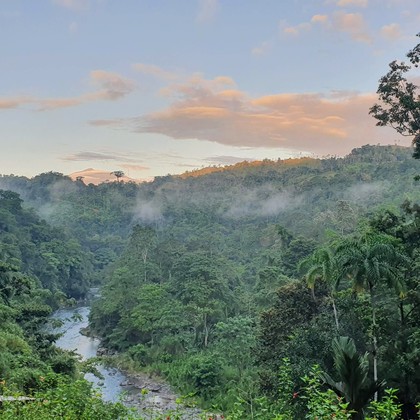
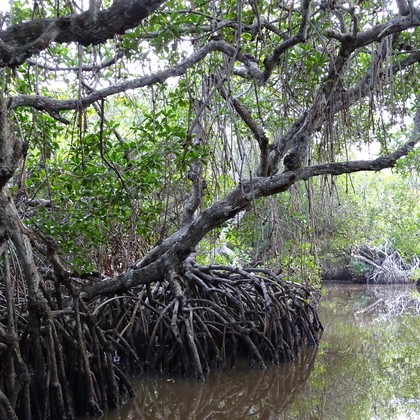
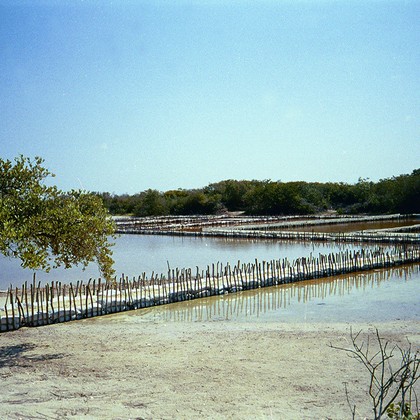
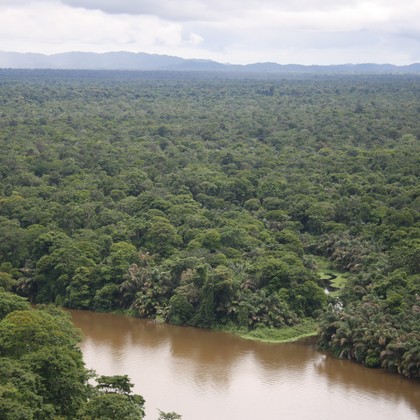
Open water in the lowlands: rivers, lakes, coastal lagoons, mangroves, marshes and flooded forest, also rice fields and fish ponds. Hunts flying insects low over the water. Nests in cavities such as old woodpecker holes, holes in posts and crevices in buildings, usually over or close to water.
Where the bird is most at home, classified by the vegetation units of Mexico and Central America.


Range and movements
Resident in the lowlands of both slopes, from northern Mexico throughout Central America to Panama; locally higher along rivers and lakes inland. Does not occur outside the guide area.
- Resident
- dark = core range, pale = thinly spread
How and when to look
Easily seen on boat trips on rivers and lagoons, such as at Tortuguero and Caño Negro in Costa Rica and on Gatún Lake in Panama. It often perches on branches sticking out of the water.
Conservation status
Not threatened. Common along water in the lowlands.
Scientific name
Tachycineta albilinea | (Lawrence, 1863)
Lawrence described the species in 1863 as Petrochelidon albilinea; because it was later moved to another genus, the author and year stand in brackets. The genus Tachycineta was introduced in 1851 by Cabanis. Tachycineta is Greek, from takhukinētos 'moving quickly', after the fast, agile flight. albilinea is Latin, from albus 'white' and linea 'line', after the white markings, such as the thin white line above the eye and the white rump. The specimen the first description was based on came from along the Panama Railroad, Panama.