All species › Waders, gulls and terns › Plovers and lapwings › Pacific Golden-Plover
Position in the tree Birds Aves › Birds with a flexible palate Neognathae › All other modern birds Neoaves › Birds of the elements Elementaves › Cranes and waders Gruimorphae
Pacific Golden-Plover | Pluvialis fulva
Aziatische goudplevier | Chorlito dorado siberiano
The Pacific Golden-Plover breeds in Siberia and western Alaska and winters mainly around the Pacific Ocean, from Southeast Asia to Australia and the islands of Polynesia. In the guide area it is a vagrant, not a native species. Most records come from the Pacific coast of Mexico, where a bird occasionally winters.
Voice
A sharp, two-syllable chu-weet, clearer and more distinctly articulated than the call of American Golden-Plover; also a short cheet. In vagrants the call is a useful clue.
Recording: Xiangrong Yan — CC BY-NC-SA 4.0 · converted to mono · xeno-canto
Identification
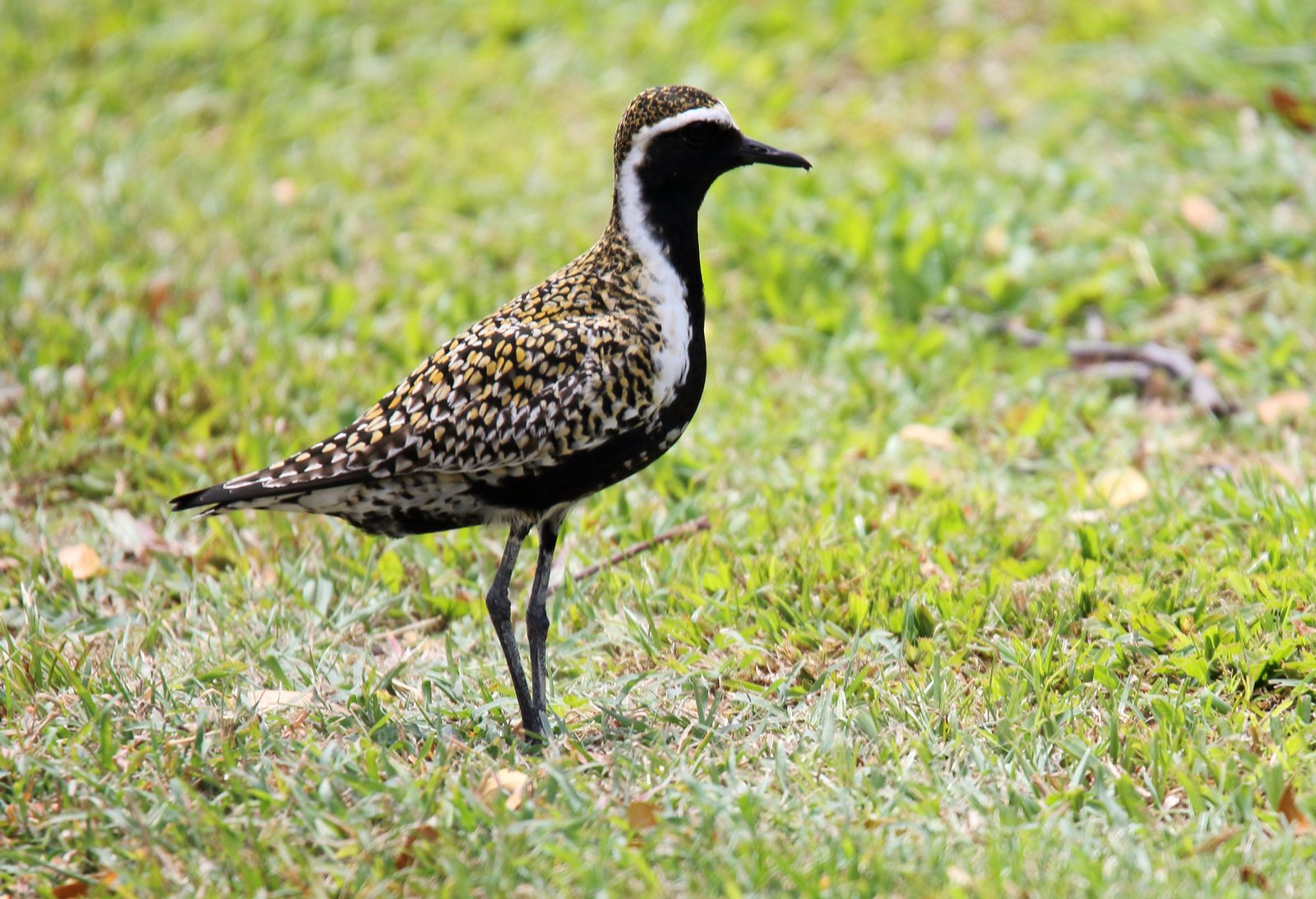
23–26 cm. Slightly smaller and more slender than the American Golden-Plover, with relatively longer legs, a slightly larger bill and a shorter primary projection: at rest usually only two or three primary tips extend beyond the tertials, and the tertials reach far back. In non-breeding plumage often more warmly golden on back, breast and face, with a yellowish supercilium. In breeding plumage black from face to belly, but with a white band that continues from the side of the neck along the flanks, and white-mottled undertail coverts. In flight a faint wing bar, a dark rump and a grey underwing; the toes project slightly beyond the tail.
Confusion species
American Golden-Plover Pluvialis dominica is the main confusion risk: it is somewhat stockier and shorter-legged, with a longer primary projection, and usually greyer outside the breeding season. In breeding plumage the American shows entirely black underparts without white flanks. Black-bellied Plover Pluvialis squatarola is larger, with a white rump and black axillaries. Single birds can only be identified with a good view of these features, or by call.
Habitat
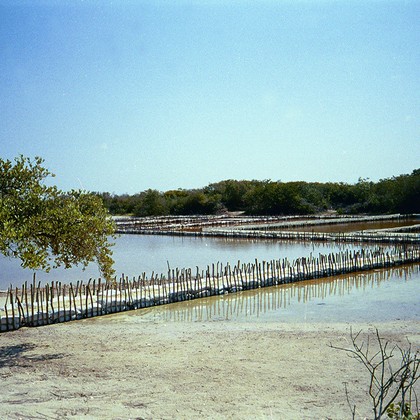
Salt pans, dry margins of coastal lagoons, mudflats and beach flats, and short grassland near the coast; often together with Black-bellied Plovers or other shorebirds.
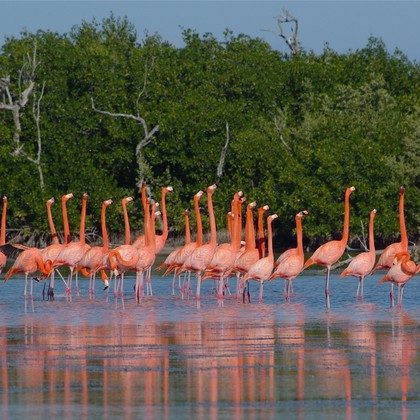
Where the bird is most at home, classified by the vegetation units of Mexico and Central America.


Range and movements
A few records along the Pacific coast of Mexico, mainly in Baja California and Baja California Sur and in Colima, with further reports from Nayarit and Oaxaca. Elsewhere in Central America a few records, including a long-staying bird on the Gulf of Nicoya in Costa Rica and reports from Nicaragua and Belize. Beyond the guide area it breeds on the tundra of northern Siberia and western Alaska and winters from East Africa and southern Asia to Australia and the islands of the Pacific, including Hawaii; in California a scarce but annual winter visitor.
How and when to look
Golden-plovers on the Pacific coast of Mexico, especially on salt pans and dry lagoon beds in winter, are worth a close look. The short primary projection, the long legs and the call are the best features; a photo of the wing tip at rest helps with identification.
Conservation status
Not threatened globally. In the guide area a vagrant with no regular presence; there is no evidence of a trend.
Scientific name
Pluvialis fulva | (Gmelin, 1789)
Gmelin described the species in 1789 as Charadrius fulvus; because it was later moved to another genus, the author and year stand in brackets. The genus Pluvialis was introduced in 1760 by Brisson. Pluvialis is Latin for 'relating to rain', from pluvia 'rain', from the old belief that these plovers flocked when rain was imminent. fulva is Latin for 'tawny, yellowish-brown', after the golden spangling of the upperparts. The specimen the first description was based on came from Tahiti.