All species › Passerines › Tyrant flycatchers and allies › Pale-eyed Pygmy Tyrant
Position in the tree Birds Aves › Birds with a flexible palate Neognathae › All other modern birds Neoaves › Landbirds Telluraves › Falcons, parrots and passerines Australaves › Falcons and passerines Eufalconimorphae › Parrots and passerines Psittacopasserae
Pale-eyed Pygmy Tyrant | Atalotriccus pilaris
Bleekoogdwergtiran | Mosquerito ojiblanco
The Pale-eyed Pygmy Tyrant is a small, olive tyrant flycatcher of dry woodland and scrub, with a strikingly pale iris. In the guide area it is scarce and local, occurring only in a small area on the Pacific side of Panama. It usually keeps low and hidden in dense growth.

Voice
Dry ticking notes and short, dry trills, often repeated from dense scrub.
Recording: GABRIEL LEITE — CC BY-NC-SA 4.0 · converted to mono · xeno-canto
Identification
9–10 cm. Upperparts olive-green, head greyer with buffish lores. Iris pale, whitish to pale yellow. Wings dark with two yellowish wing-bars and yellow edges to the tertials. Tail fairly long for a pygmy tyrant. Throat and breast whitish with faint grey streaks, belly pale yellow. Bill fairly short and dark. Sexes alike.
Confusion species
Northern Bentbill Oncostoma cinereigulare also has a pale iris, but has a thick, bent bill and a yellow belly, and lives in more humid forest. Common Tody-Flycatcher Todirostrum cinereum has a black face, a long, flat bill and bright yellow underparts. Tyrannulets such as Southern Beardless Tyrannulet Camptostoma obsoletum have a small crest and a dark iris.
Habitat
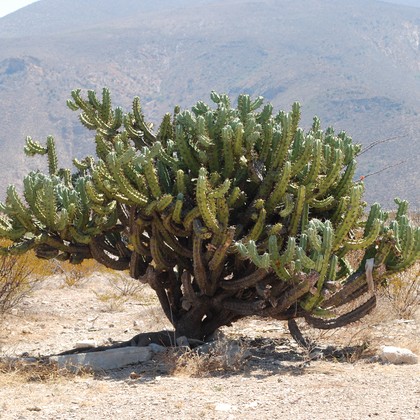
Dry deciduous woodland, thorn scrub, scrubby forest edges and gallery forest in dry regions; in the guide area in the lowlands. It forages low in dense growth for insects, with short sallies to leaves.
Where the bird is most at home, classified by the vegetation units of Mexico and Central America.



Range and movements
In the guide area only locally on the Pacific side of Panama. Outside the guide area in northern Colombia, Venezuela and western Guyana.
- Resident
- dark = core range, pale = thinly spread
How and when to look
In Panama a species to search for deliberately in dry scrub on the Pacific side; listen for the dry ticking calls in dense scrub.
Conservation status
Not threatened. Widespread across its range as a whole, but in the guide area only local and little recorded; dry forest on the Pacific side of Panama has largely been converted to farmland.
Scientific name
Atalotriccus pilaris | (Cabanis, 1847)
Cabanis described the species in 1847 as C[olopterus] pilaris; because it was later moved to another genus, the author and year stand in brackets. The genus Atalotriccus was introduced in 1905 by Ridgway. Atalotriccus is Greek, from atalos 'delicate, tender' and trikkos 'small bird'; in ornithology triccus denotes a tyrant flycatcher. pilaris is here Latin for 'hairless' (from pilus 'hair'), meaning 'crestless': the species lacks the distinct crest of its relatives. The specimen the first description was based on came from near Cartagena, Bolívar, Colombia.