All species › Parrots › African and New World parrots › Red-lored Amazon
Position in the tree Birds Aves › Birds with a flexible palate Neognathae › All other modern birds Neoaves › Landbirds Telluraves › Falcons, parrots and passerines Australaves › Falcons and passerines Eufalconimorphae › Parrots and passerines Psittacopasserae
Red-lored Amazon | Amazona autumnalis
Geelwangamazone | Loro cachete amarillo
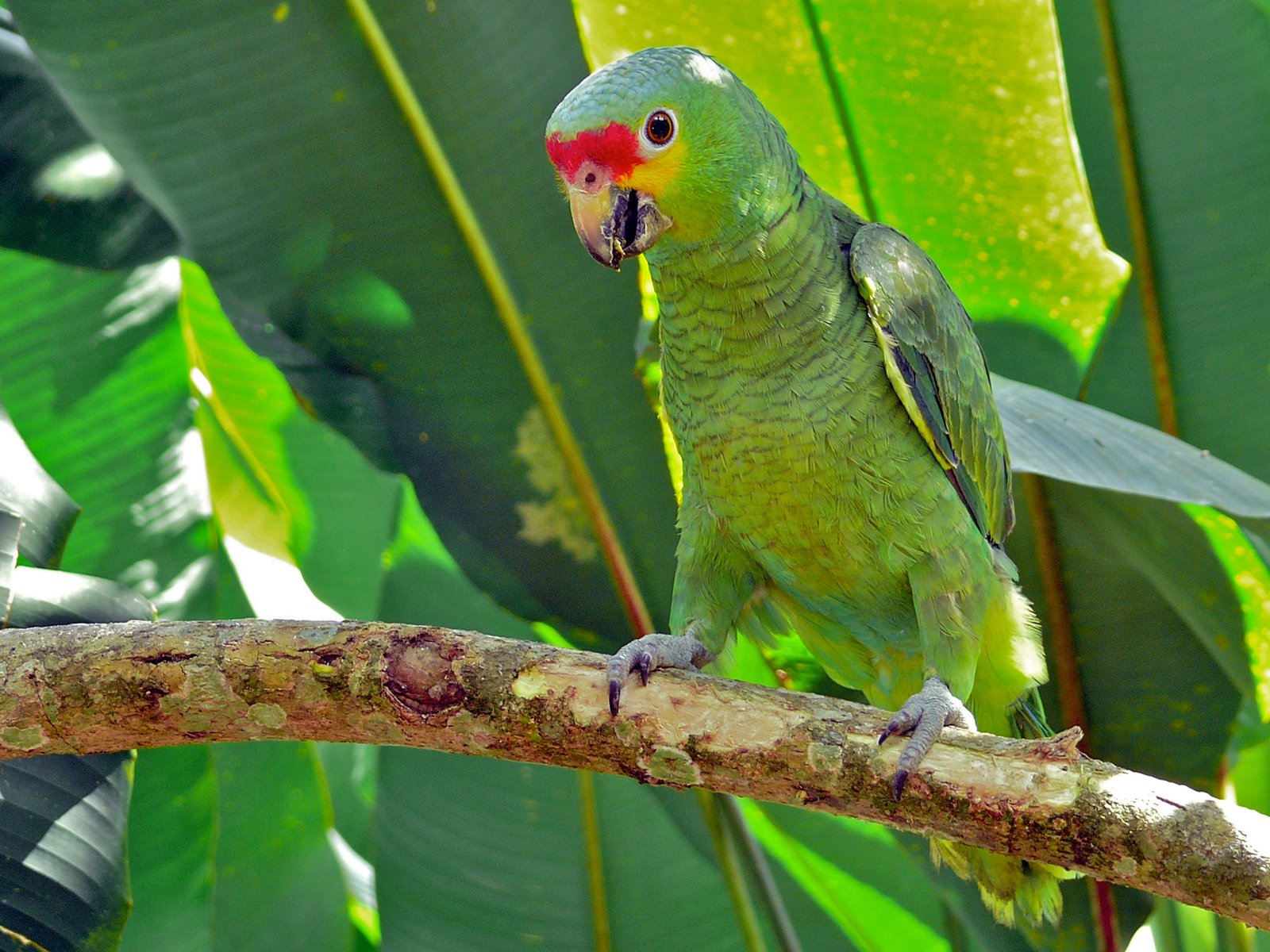
The Red-lored Amazon is a medium-sized amazon with a red forehead and, in the north of the guide area, yellow cheeks. It is the most widespread amazon of the guide area, from northeastern Mexico to Panama, and in many humid lowlands the amazon most often seen. Outside the breeding season hundreds of birds sometimes gather at a roost.
Voice
Loud and shrill; a sharp ak-ak or kee-ok, often in duets between partners, and in flight a series of screeching calls. At roosts the noise is deafening.
Recording: Juan Freile — CC BY-NC-SA 4.0 · converted to mono · xeno-canto
Identification
32–35 cm. Mostly green, with a red forehead and lores and a lilac-blue crown. A red speculum shows on the secondaries, the primaries are blue and the tail is green with a yellowish-green tip. The bill is horn-coloured with a dark tip. Birds from Mexico to Honduras (A. a. autumnalis) have yellow cheeks; from southern Honduras and Nicaragua southwards (A. a. salvini) the cheeks are green with at most a little yellow. Male and female are alike; young birds have less red and yellow.
Confusion species
The Red-crowned Amazon Amazona viridigenalis, in Tamaulipas and northern Veracruz, has a red crown and green cheeks. The White-fronted Amazon Amazona albifrons and the Yucatan Amazon Amazona xantholora are smaller and have a white forehead, the Yucatan Amazon also yellow lores. The Mealy Amazon Amazona farinosa is larger, has no red on the head and a broad white eye-ring. The Yellow-crowned Amazon Amazona ochrocephala in Panama has a yellow forehead and a red bend of the wing.
Habitat
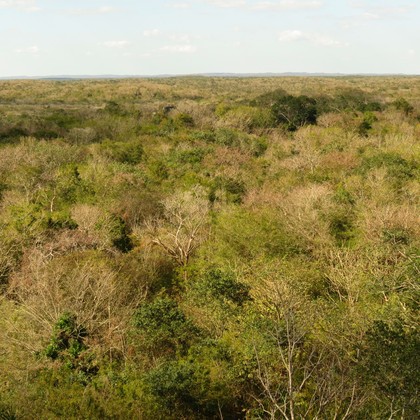
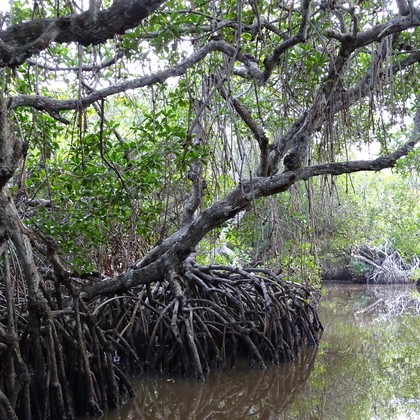
Humid lowland and foothill forest, semi-deciduous forest, forest edges, gallery forest, mangroves and semi-open country with scattered large trees, also plantations; mostly below 1000 m. It eats fruit, seeds, nuts and flowers in the canopy. It nests in a tree cavity.
Where the bird is most at home, classified by the vegetation units of Mexico and Central America.





Range and movements
On the Caribbean side of Mexico from southern Tamaulipas and eastern San Luis Potosí through Veracruz, northern Oaxaca, Tabasco, Chiapas and the Yucatán Peninsula to Belize, Guatemala and Honduras; further through Nicaragua, Costa Rica and Panama, where it also occurs in many places on the Pacific side. Records on the Pacific side of western Mexico and in cities such as Monterrey probably involve escaped cage birds. Outside the guide area in northwestern South America.
- Resident
- dark = core range, pale = thinly spread
How and when to look
At sunset groups fly calling loudly to communal roosts, for example at Tikal in Guatemala, in Belize and in the Caribbean lowlands of Costa Rica. The red speculum and red forehead are best seen on birds flying low overhead.
Conservation status
Not threatened. In Mexico and parts of Central America it has declined through trapping for the cage-bird trade and deforestation, but it is still widespread and common in many places.
Scientific name
Amazona autumnalis | (Linnaeus, 1758)
Linnaeus described the species in 1758 as Psittacus autumnalis; because it was later moved to another genus, the author and year stand in brackets. The genus Amazona was introduced in 1830 by Lesson. Amazona comes from 'Amazone', the French name Buffon gave to various tropical American parrots because they came from the Amazon region. autumnalis is Latin for 'autumnal' (autumnus 'autumn'), perhaps after the yellow, orange and red tones in the plumage; the reason is not recorded. The specimen the first description was based on came from southern Mexico.