All species › Passerines › Wrens › Rock Wren
Position in the tree Birds Aves › Birds with a flexible palate Neognathae › All other modern birds Neoaves › Landbirds Telluraves › Falcons, parrots and passerines Australaves › Falcons and passerines Eufalconimorphae › Parrots and passerines Psittacopasserae
Rock Wren | Salpinctes obsoletus
Amerikaanse rotswinterkoning | Chivirín saltarroca
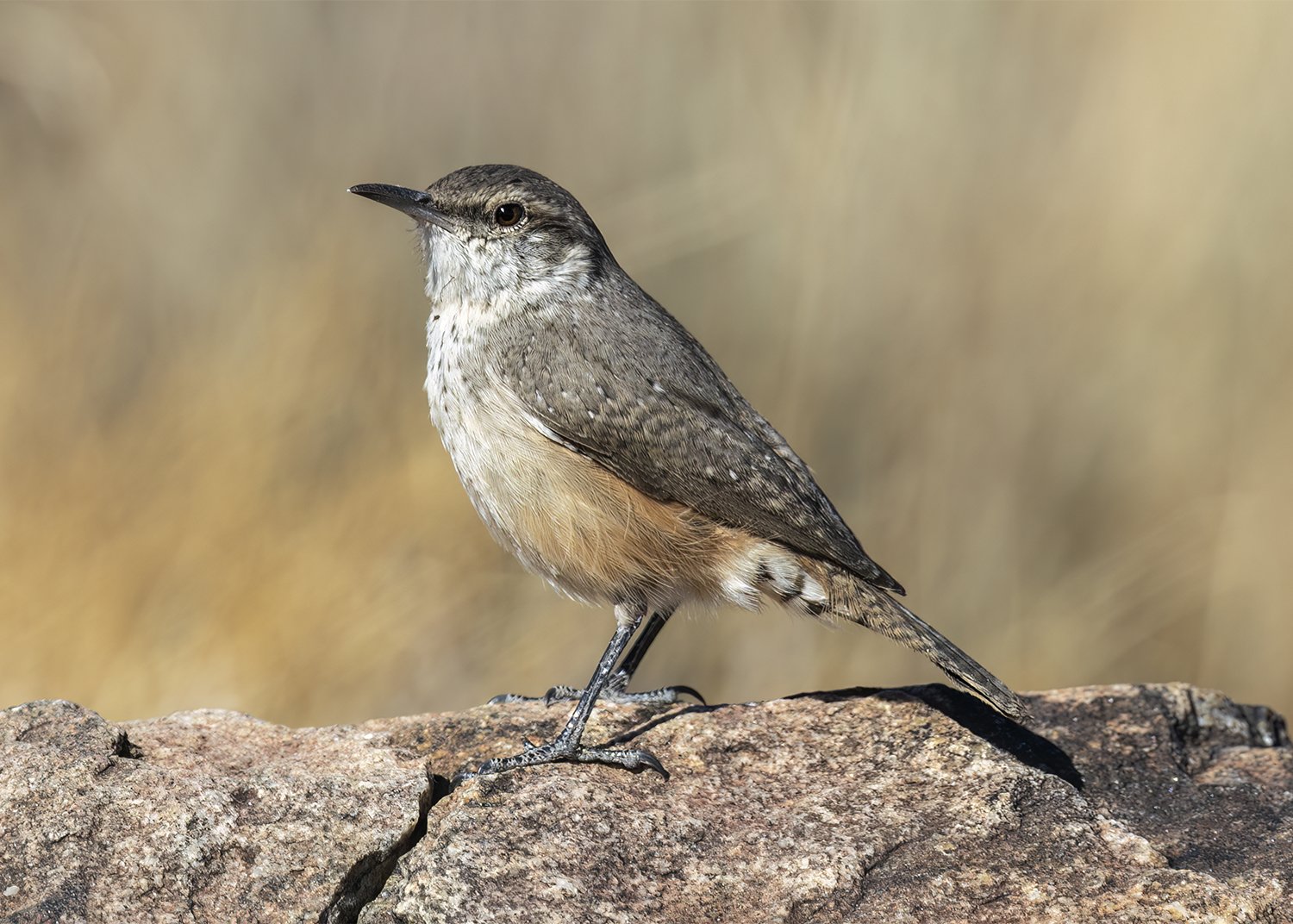
The Rock Wren is a pale, grey-brown wren of rocky slopes, lava fields and quarries. It bobs conspicuously up and down on the rocks and creeps into crevices in search of insects. In the guide area it lives from northern Mexico through the highlands to Nicaragua and very locally in Costa Rica.
Voice
The song is a varied series of repeated phrases, such as chewee-chewee-chewee or tri-tri-tri, each followed by a different motif. The call is a clear, rising tee-keer.
Recording: Manuel Grosselet — CC BY-NC-SA 4.0 · converted to mono · xeno-canto
Identification
13–15 cm. Upperparts grey-brown, finely speckled with white and black; rump cinnamon. Pale supercilium. Throat and breast dull white with fine dark streaks, flanks and lower belly pale buff. Tail with a black band and buff tips to the outer feathers, visible when the tail is spread. Bill long, thin and slightly decurved.
Confusion species
Canyon Wren Catherpes mexicanus has a bright white throat and breast, a rufous belly and an even longer bill. Bewick's Wren Thryomanes bewickii has unspotted upperparts, a clear white supercilium and a long, black-barred tail, and lives in scrub.
Habitat
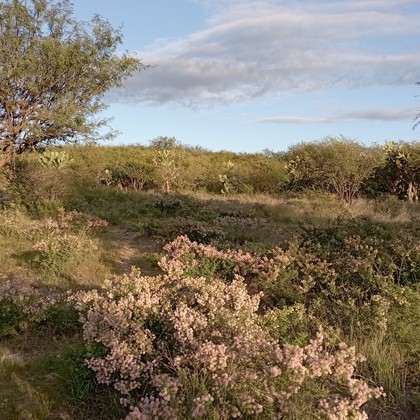
Rocky slopes, scree, cliffs, lava fields, quarries and stony desert, from sea level to above 3500 m; in Central America mainly on volcano slopes. It searches between and under stones for insects and spiders. It often lines the nest entrance with a path of small pebbles.
Where the bird is most at home, classified by the vegetation units of Mexico and Central America.



Range and movements
Baja California and its offshore islands, northern and central Mexico, and south through the highlands of southern Mexico, Guatemala, El Salvador and Honduras to Nicaragua; very locally in north-western Costa Rica. Outside the guide area in western North America, north to south-western Canada.
- Resident
- dark = core range, pale = thinly spread
How and when to look
Watch boulders and lava rocks in open country: the bird bobs repeatedly on them and gives its clear tee-keer.
Conservation status
Not threatened. Widespread and locally common. A subspecies of San Benedicto Island in the Revillagigedo Archipelago disappeared after the volcanic eruption of 1952.
Scientific name
Salpinctes obsoletus | (Say, 1822)
Say described the species in 1822 as Troglodytes obsoleta; because it was later moved to another genus, the author and year stand in brackets. The genus Salpinctes was introduced in 1847 by Cabanis. Salpinctes is Greek for 'trumpeter', after the loud, ringing song. obsoletus is Latin for 'worn out, dull, indistinct', after the drab, faintly marked plumage. The specimen the first description was based on came from near the junction of Plum Creek and the South Platte River, Colorado.